Ontario to lift most mask mandates March 21, remaining public health orders April 27
Advertisement
Read this article for free:
or
Already have an account? Log in here »
To continue reading, please subscribe:

Digital Subscription
One year of digital access for only $205*
- Enjoy unlimited reading on winnipegfreepress.com
- Read the E-Edition, our digital replica newspaper
- Access News Break, our award-winning app
- Play interactive puzzles
*First annual payment billed as $205.00 + GST for one year. This annual subscription will automatically renew at $233.00 + GST every 52 weeks (10% off the regular annual price of $259.35). Offer available to new and qualified returning subscribers only. Cancel any time.
To continue reading, please subscribe:
Add Free Press access to your Brandon Sun subscription for only an additional
$1 for the first 4 weeks*
- Enjoy unlimited reading on winnipegfreepress.com
- Read the E-Edition, our digital replica newspaper
- Access News Break, our award-winning app
- Play interactive puzzles
*Your next Brandon Sun subscription payment will increase by $1.00 and you will be charged $17.95 plus GST for four weeks. After four weeks, your payment will increase to $24.95 plus GST every four weeks.
Read unlimited articles for free today:
or
Already have an account? Log in here »
Hey there, time traveller!
This article was published 09/03/2022 (1672 days ago), so information in it may no longer be current.
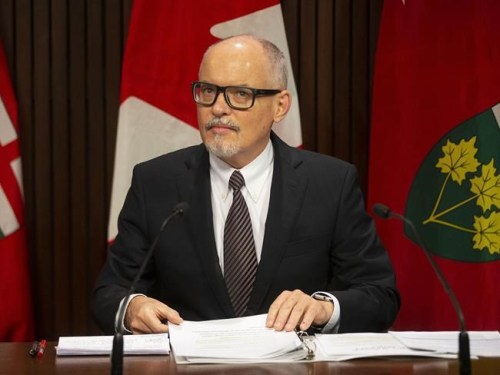
TORONTO – Ontario is removing most mask mandates on March 21 and ending all remaining public health orders a month later, shifting the onus of protection from COVID-19 to individuals – a move some experts worry comes too quickly.
Improving health indicators, such as a stable test positivity rate and declining hospitalizations, as well as Ontario’s high vaccination rates and the availability of antiviral treatments, allow for these steps, the chief medical officer of health said Wednesday.
“You have to recognize you can’t mandate masking forever, that it has to be eventually an individual choice based on an individual’s risk assessment,” Dr. Kieran Moore said.
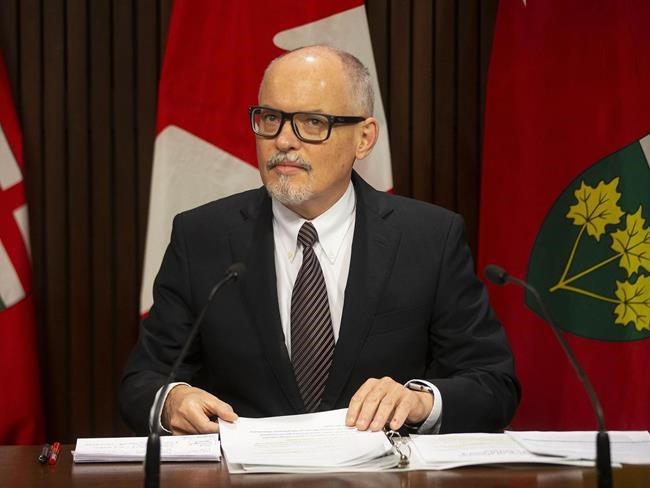
“We’re at that point by March 21, that we’re asking Ontarians to do an individual assessment, acknowledging that the risk remains, but that we’re well over the peak of activity across Ontario and we have to learn to live with this virus.”
The announcement comes as 1,974 new COVID-19 cases were reported Wednesday, though Moore has said limits on testing mean the true number is likely 10 times higher.
Moore said masking requirements may need to return if a new variant emerges. In the meantime, he encouraged people to be kind to those who choose to continue wearing masks and said he would personally keep wearing one in a mall or busy big-box store. Moore also “strongly recommended” those who are vulnerable to keep masking.
Premier Doug Ford said at an unrelated announcement Wednesday that the world has learned a lot since March 2020 and Ontario is in much better shape now.
“We’re going to move forward cautiously, and if someone wants to keep (a mask) on, God bless them, and good for them,” he said in Brantford, Ont. “But I know a lot of people don’t want to keep them on.”
Dr. Gerald Evans, an infectious diseases physician and member of Ontario’s science advisory table, was one of several experts to say the province’s timeline is too rushed.
The removal of capacity limits, vaccine certificates and mask mandates is happening in a relatively short amount of time, he said, and mask requirements should have been kept in place until the weather gets warmer and virus activity naturally diminishes.
“I’m as anxious as anyone to get out of the pandemic and to go back to something that was what we had before 2020, but on the other hand, we have to be very careful,” Evans said.
“There’s a kind of almost a narrative being driven here that everything’s over. We’re all done. Let’s just move forward. And I think we need to just do that with a little bit more … time-based caution.”
Dr. Peter Juni, the scientific director of the science advisory table, said it would help keep the pandemic under control if “most people” keep wearing masks as a default for the next month or so.
“I think to wear them a bit longer beyond March 21 absolutely wouldn’t hurt,” he said.
The next step in Ontario’s reopening will come on March 14, when mandatory vaccinate-or-test policies end for workers in schools, child-care settings, hospitals and long-term care.
Individual organizations can keep their own requirements in place, and most hospitals have said they will continue their strict vaccine mandates. The CEO of AdvantAge Ontario, which represents municipal and non-profit long-term care homes, called the move to end vaccine mandates for long-term care “irresponsible.”
On March 21, masking requirements in most settings will be removed – including in schools and child-care settings – except for public transit, and health-care and congregate settings such as long-term care. Toronto’s top doctor has recommended the city’s mask mandates expire in lockstep with Ontario’s.
The province will continue to send masks and rapid antigen tests to schools and businesses.
A coalition of children’s hospitals had urged the province to keep masks in schools for at least two weeks after March break, saying that public health measures are what have kept schools open.
“We encourage everyone to continue masking in schools, if they are able,” the hospitals wrote Wednesday. “We all want the pandemic to be a memory for our kids, not part of their day-to-day. But we’re not quite there yet.”
The major teachers unions expressed concern that lifting mask mandates in schools so soon would lead to another disruption to in-person learning and some suggested the move is politically driven.
“Unfortunately, it appears that a fast-approaching June election is influencing politicians’ decisions to lift COVID-19 safety measures,” Karen Brown, president of the Elementary Teachers’ Federation of Ontario, wrote in a statement.
Moore said his decisions are based on science and “have not been affected by any understanding of the political system.”
Concerns were raised, however, over the apparent lack of consultation with the province’s independent expert group of science advisers. Juni said the science table wasn’t consulted on the mask mandate removal or the rest of the timeline, and noted that the group is working on new virus projections.
On April 27, all remaining mask rules will be lifted and remaining emergency orders and directives will end, except isolation requirements for those who’ve tested positive for COVID-19 or have symptoms. The Ontario Hospital Association said hospitals would keep masking rules and other safety measures past that date.
Isolation guidelines were changed Wednesday for close contacts, with the province eliminating them for non-household close contacts, and loosening them for household members of someone with COVID-19 or who is symptomatic.
The government also slightly expanded eligibility for PCR tests Wednesday, including residents in home and community care. Testing was sharply curtailed late last year when Omicron infections drove demand to untenable levels.
Limited PCR access makes it harder to detect new variants, Evans said.
Ontario is also updating its reporting on COVID-19 deaths starting Friday. It will classify whether COVID-19 caused a death, contributed to a death, or if the cause of death is unknown or missing. It will also report deaths by vaccination status and age group, and remove from the cumulative total any deaths now classified as being unrelated to COVID-19.
This report by The Canadian Press was first published March 9, 2022.