Open U.S. land border could drain tourists southward, Canadian operators worry
Advertisement
Read this article for free:
or
Already have an account? Log in here »
To continue reading, please subscribe:

Digital Subscription
One year of digital access for only $205*
- Enjoy unlimited reading on winnipegfreepress.com
- Read the E-Edition, our digital replica newspaper
- Access News Break, our award-winning app
- Play interactive puzzles
*First annual payment billed as $205.00 + GST for one year. This annual subscription will automatically renew at $233.00 + GST every 52 weeks (10% off the regular annual price of $259.35). Offer available to new and qualified returning subscribers only. Cancel any time.
To continue reading, please subscribe:
Add Free Press access to your Brandon Sun subscription for only an additional
$1 for the first 4 weeks*
- Enjoy unlimited reading on winnipegfreepress.com
- Read the E-Edition, our digital replica newspaper
- Access News Break, our award-winning app
- Play interactive puzzles
*Your next Brandon Sun subscription payment will increase by $1.00 and you will be charged $17.95 plus GST for four weeks. After four weeks, your payment will increase to $24.95 plus GST every four weeks.
Read unlimited articles for free today:
or
Already have an account? Log in here »
Hey there, time traveller!
This article was published 08/11/2021 (1786 days ago), so information in it may no longer be current.
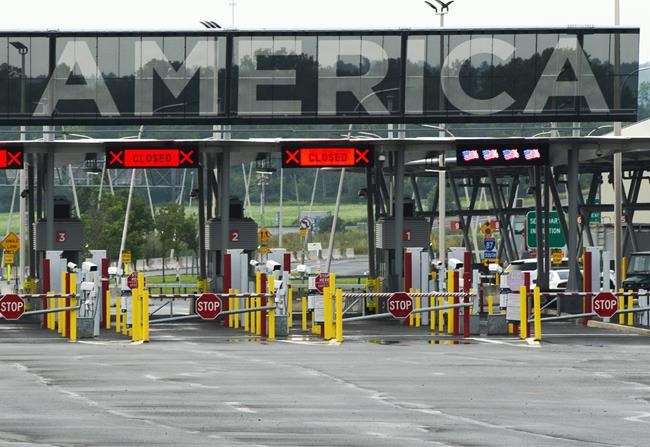
MONTREAL – Tourism operators are of two minds about the opening of the U.S. land border Monday.
An end to the 20-month closure of the world’s longest undefended frontier marks a sign that restrictions are loosening and more international leisure travel may be on the horizon.
Then again, if Canadians start to stream south for vacations and shopping sprees, they aren’t spending their money on destinations here.
Chris Bloore, chief executive of the Tourism Industry Association of Ontario, says local visits to hot spots ranging from Niagara Region vineyards to the boutique hotels of Prince Edward County will undoubtedly decline after receiving a boost last summer.
“There is definitely going to be a reduction in some numbers, for sure. That’s absolutely inevitable,” he said.
“But as we start to welcome international visitors now back to Canada, as we try and push for PCR testing, changes to protocols, we’re hoping to make sure that we’re looking further afield to people as well to try and bring them to us.”
Travel and tourism organizations are lobbying the federal government, which opened its border to Americans in August, to end the ongoing COVID-19 test requirement to enter the country.
Currently, any Canadian returning home by land who wants to avoid quarantine needs to provide a recent molecular test that shows a negative result. Non-residents who test positive are turned away at the border.
At a cost of $150 to $300 per test, that can be a pricey proposition, particularly for families.
Chief public health officer Dr. Theresa Tam said Friday that test rules for vaccinated travellers need to be re-examined, especially for short trips. As it stands, Canadians can even get tested on home turf before their trip, as long as they return within 72 hours.
“Unless Canada changes that regulation or that order of not requiring a PCR test to re-enter the country, I don’t think you’re going to see large volumes of people heading into the United States,” said Walt Judas, head of British Columbia’s tourism association. That holds true for both day trippers and vacationers, he said.
However, some areas will feel the pinch more sharply.
Vancouver Island and British Columbia’s Okanagan Valley will likely see a major drop in Canadian trailer and campervan drivers as snowbirds flock south.
“Small communities like Osoyoos managed to retain a lot of Canadians who camped in their RVs for the duration of the winter. So those folks will likely do as they’ve done in years previous and head into the U.S.,” Judas said.
It’s not just the campgrounds that will feel the impact of fewer visitors.
“They’re all users of other venues and facilities and visit grocery stores and they eat in restaurants, some might even choose to stay in a hotel for a bit of a getaway that’s more localized,” he said.
Meanwhile, the ongoing lag in corporate travel — domestically and internationally — hurts stakeholders ranging from airport hotels to mountain resorts and downtown convention centres, as well as attendant services such as catering, housekeeping and audiovisual companies.
But Tourism Industry Association of Canada CEO Beth Potter says a border that lets visitors filter through in both directions for non-essential travel is one more step on the path to pre-pandemic levels of activity.
“More and more Canadians have discovered that Canada has a lot to offer,” she said. “We hope to see that trend continue next summer. And at the same time we would expect to see a return of American visitors as well.”
One incentive for Ontarians to stay put is the province’s staycation tax credit. Premier Doug Ford’s government on Thursday rolled out a plan for the measure, which would give residents a 20-per-cent personal income tax credit for money spent in-province on leisure and accommodations in 2022.
The credit ranges up to a maximum of $1,000 for an individual and $2,000 for a family, yielding a credit ceiling of $200 or $400 respectively.
Despite a more productive year than 2020, 2021 saw tourism activity remain well below that of the pre-pandemic era. In August, activity notched 41 per cent beneath the level reached in the same period two years earlier, according to Statistics Canada.
However, August marked the third consecutive month where tourism increased, “and was much improved from May, when overall tourism activity was 69.3 per cent below the pre-pandemic level,” the agency said Monday.
Nova Scotia, Ontario and B.C. remained far below pre-pandemic levels, while Quebec and Alberta saw tourism fall by a more moderate 37-to-39 per cent, according to StatCan.
Overall tourism from fellow Canadians was down by nearly 22 per cent in August compared with August 2019, while activity from international visitors was down by more than 83 per cent.
This report by The Canadian Press was first published Nov. 8, 2021.
Related Articles
Cross-border bustle, with a catch
Advertisement Advertise With Us
Advertisement Advertise With Us