Provinces sitting on millions in unspent federal pandemic spending, report says
Advertisement
Read this article for free:
or
Already have an account? Log in here »
To continue reading, please subscribe:
Digital Subscription
One year of digital access for only $1.44 a week*
- Enjoy unlimited reading on winnipegfreepress.com
- Read the E-Edition, our digital replica newspaper
- Access News Break, our award-winning app
- Play interactive puzzles
*Billed as $5.77 plus GST every four weeks. After 52 weeks, price increases to the regular rate of $19.95 plus GST every four weeks. Offer available to new and qualified returning subscribers only. Cancel any time.
To continue reading, please subscribe:
Add Free Press access to your Brandon Sun subscription for only an additional
$1 for the first 4 weeks*
- Enjoy unlimited reading on winnipegfreepress.com
- Read the E-Edition, our digital replica newspaper
- Access News Break, our award-winning app
- Play interactive puzzles
*Your next Brandon Sun subscription payment will increase by $1.00 and you will be charged $17.95 plus GST for four weeks. After four weeks, your payment will increase to $24.95 plus GST every four weeks.
Read unlimited articles for free today:
or
Already have an account? Log in here »
Hey there, time traveller!
This article was published 26/01/2021 (2093 days ago), so information in it may no longer be current.
OTTAWA – A new report on billions of dollars the federal government has sent to provinces to help safely reopen the economy suggests much of the money is sitting unused.
Today’s report also suggests that federal efforts to stretch the financial impact of those dollars is falling short as many provinces have bucked cost-matching requests.
The analysis by the Canadian Centre for Policy Alternatives says six out of 10 provinces haven’t spent all the money the federal government has sent their way, including for things like personal protective equipment.
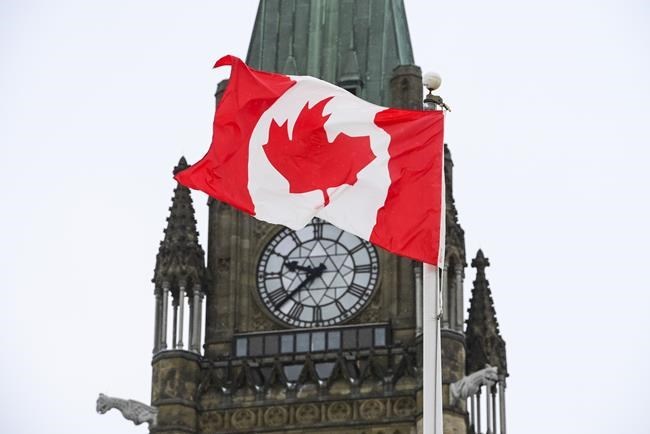
Author David Macdonald says some of the money may yet be spent, but notes the longer it remains unspent, the less likely it ever will be spent.
Macdonald’s analysis is based on a review of provincial and federal spending announcements, reconciling duplications, as well as provincial spending documents.
Federal and provincial governments are allocating hundreds of billions in direct spending and liquidity support to help workers, families, front-line workers and businesses make it through the pandemic.
The federal treasury has managed the lion’s share of COVID-19 spending — accounting for about $8 in every $10 of aid, according to the federal Finance Department’s math.
“They are the ones spending the money, they’re the ones creating the funds and to a large degree setting the agenda of where they would like those funds to go,” Macdonald said.
Included in the spending is $24 billion the federal Liberals sent to provinces in the fall under the “safe restart” agreement that was supposed to help make it safer for daycares, schools and businesses to reopen.
The report notes that money is sitting idle from a fund aimed at topping up the wages of workers deemed essential like those in long-term care facilities and grocery stores. Provincial governments were supposed to chip in for part of the top-up.
Macdonald says six out of 10 provinces haven’t used the money available to them, with Alberta leaving the most on the table by far at almost $336 million.
He also says some return-to-class money hasn’t been spent, particularly in Quebec.
Other provinces like Prince Edward Island, Nova Scotia and New Brunswick appear to have ignored a federal request to match funding to cash-strapped municipalities, Macdonald says.
There is no immediate explanation for why, but Macdonald says it was possible that the federal government decided to give smaller provinces a break on the cost-matching requirements to ease the strain on their own finances.
He notes that larger provinces did pony up matching dollars.
Combined, the underspending and lack of cost-matching raise questions for the government about its plan to spend between $70 billion and $100 billion over three years to prod an economic recovery from the COVID-19 pandemic.

Macdonald says the stimulus bump from the planned spending could be diminished if provinces don’t spend money sent to them, or don’t match funding when asked.
That may require the Liberals to put tight rules on forthcoming spending, he says.
“If provinces aren’t willing to go along, there may well be provinces that would be left out of, say, new federal spending on child care and new federal spending on long-term care if they’re unwilling to go along with federal priorities or federal standards,” he said.
“Otherwise, the provinces are clearly going to call the federal bluff.”
This report by The Canadian Press was first published Jan. 26, 2021.