Third-dose COVID-19 vaccine studies give organ transplant recipients hope

Advertisement

Advertise with us

It's been more than one month since Tina Proulx received a second dose of a COVID-19 vaccine. But while other fully vaccinated Canadians venture out from their pandemic cocoons, the double-lung transplant recipient mostly stays put.

Read this article for free:


or

Already have an account? Log in here »

To continue reading, please subscribe:

Subscribe and receive a limited-edition Free Press branded hat or tote.

Digital Subscription

One year of digital access for only $205*

  • Enjoy unlimited reading on winnipegfreepress.com
  • Read the E-Edition, our digital replica newspaper
  • Access News Break, our award-winning app
  • Play interactive puzzles

*First annual payment billed as $205.00 + GST for one year. This annual subscription will automatically renew at $233.00 + GST every 52 weeks (10% off the regular annual price of $259.35). Offer available to new and qualified returning subscribers only. Cancel any time.

To continue reading, please subscribe:

Add Free Press access to your Brandon Sun subscription for only an additional

$1 for the first 4 weeks*

  • Enjoy unlimited reading on winnipegfreepress.com
  • Read the E-Edition, our digital replica newspaper
  • Access News Break, our award-winning app
  • Play interactive puzzles
Start now

*Your next Brandon Sun subscription payment will increase by $1.00 and you will be charged $17.95 plus GST for four weeks. After four weeks, your payment will increase to $24.95 plus GST every four weeks.

Hey there, time traveller!
This article was published 28/06/2021 (1903 days ago), so information in it may no longer be current.

It’s been more than one month since Tina Proulx received a second dose of a COVID-19 vaccine. But while other fully vaccinated Canadians venture out from their pandemic cocoons, the double-lung transplant recipient mostly stays put.

Proulx, who takes medication that keeps her body from rejecting her new lungs while suppressing her immune system, isn’t sure how much protection she gets from two jabs of a COVID-19 vaccine.

But she hopes there’ll be a way to boost that immunity in the future.
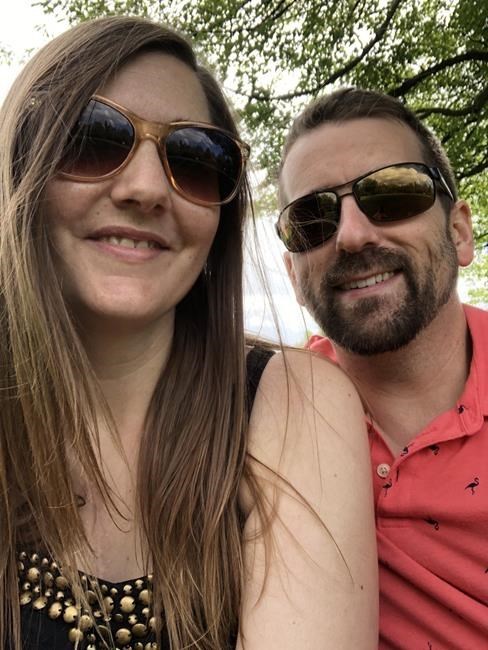
Tina Proulx, an Ottawa resident and double-lung transplant recipient, and her husband Joel are shown in this undated handout image. Proulx isn't sure how much protection she has after two doses of a COVID-19 vaccine, but if a third dose can boost her protection, she would take it. THE CANADIAN PRESS/HO

Recent small studies from the United States and France suggest that while regular, two-dose series of mRNA vaccines don’t produce many COVID-19 antibodies in organ transplant recipients, a third dose can elevate antibody levels in some, potentially offering higher levels of protection. Toronto’s University Health Network is conducting its own randomized trial study, with results expected next month.

Canada’s National Advisory Committee on Immunization currently recommends a two-dosed series, preferably of an mRNA vaccine, for immunosuppressed individuals. But the agency said in a recent statement it “continues to closely monitor emerging evidence.”

Proulx said just knowing scientists are evaluating how vaccines work in immunocompromised people gives her hope. And she wouldn’t hesitate to get an extra dose if Health Canada authorized it.

“I’ll take a third, a fourth, a fifth, I’ll take as many doses as they need me to,” the Ottawa resident said. “Anything to get that same confidence everybody else has.”

Proulx, now 38, was diagnosed at 19 with pulmonary hypertension, a condition in which blood vessels in the lungs are narrowed, causing the heart to work harder to circulate blood. She lived with the condition for years before receiving a new set of lungs in 2015.

When COVID-19 first started circulating last year, Proulx’s doctor told her there was a 30 to 50 per cent chance she wouldn’t survive if she caught the virus. And while vaccines have helped slow transmission, Proulx said knowing she’s likely not as protected as others gives her “a lot of concerns.”

Dr. Deepali Kumar, a transplant infectious disease physician at UHN, said that’s a worry facing many of her patients, who need to be more cautious until scientists get a clearer understanding of vaccine effectiveness among the immunocompromised.

The U.S. study, which involved just 30 participants who received different vaccines at varying intervals, showed eight had no antibodies after two doses, but they developed some following a third shot. Six others who had some antibody activity after a two-dose series, saw those levels amplified by an extra jab.

The French study, which doled out Pfizer-BioNTech on a set schedule, saw boosts in antibody prevalence among 67 of 99 transplant recipients one month after their third dose.

While the studies show promise, Kumar said more research is needed.

UHN’s trial involves 120 participants, 60 of which received a third Moderna vaccine two months after dose 2, while the other half got a placebo. Kumar hopes the systematic approach to UHN’s study will offer additional insight.

But, she added, antibody levels don’t necessarily reflect how protected a person is.

“That’s the big gap,” Kumar said.

“It would make sense that if antibodies are lower, protection is also lower. But one of the problems is … we don’t have an antibody level to say, ‘OK this level will protect you.’ We don’t have that number.”

COVID-19 vaccines also seem to generate T-cell responses, Kumar said, and those, like antibodies, help stave off the virus.

T-cell levels are harder to measure, said Steven Kerfoot, an immunologist with Western University, and most studies won’t include them.

“A real immune response is large and complex,” he said. “Your T-cells are different than my T-cells. So it’s not a simple test.”

Kerfoot said that while the third-dose studies showed boosted antibodies among some participants, it didn’t work for everyone. That means many will likely still be susceptible even after a potential third dose.

Proulx said organ transplant recipients have always had to rely on those around them to protect themselves, noting that COVID-19 community transmission drops as more people are vaccinated.

While Proulx’s life hasn’t changed much since she got her second dose last month — she and husband Joel still rely on curbside pick-up rather than venturing into stores or restaurants — she’s looking forward to being able to see friends and hug her mom, which she hasn’t done in 16 months.

As provinces start to reopen, Proulx said she’s not as concerned as she was when previous lockdowns were lifted.

“It has been very, very difficult watching other people move on when we’ve basically been in Phase 1 (of restrictions) this entire time,” she said. “But there are a lot of people vaccinated now and if we can control the spread amongst everybody else, that puts transplant patients in a better place.”

This report by The Canadian Press was first published June 28, 2021.
Report Error Submit a Tip

More Stories

The port of Churchill — but done right

Editorial 4 minute read Preview

The port of Churchill — but done right

Editorial 4 minute read Yesterday at 2:00 AM CDT

The seagoing grain carrier wasn’t christened with a champagne bottle. There was no confetti or streamers. Nevertheless, the Aug. 31 event marking the first shipment of grain to be loaded at the Port of Churchill since 2020 was celebrated like the launch of a brand new vessel.

The presence of the federal minister of northern and arctic affairs, provincial cabinet ministers and leaders and elders from several northern First Nations signalled that the fast-tracked process of refurbishing and buffing up Manitoba’s deep-water seaport gem is gaining momentum.

For OneNorth, the partnership of 29 First Nations and 12 northern communities which owns the Port of Churchill and the Hudson Bay Railway (both operated by the Arctic Gateway Group) the event heralded a new beginning. It’s been eight years since OneNorth purchased the port and railroad, and six years since grain was moved by rail through Manitoba and then by ship to European markets. Two more grain shipments, plus shipments of potash and critical minerals, will continue through the fall.

When Prime Minister Mark Carney solicited the premiers to suggest “nation-building” projects following his election in 2025, Premier Wab Kinew pitched a Manitoba trade corridor that would move wheat, critical minerals, potash and energy (oil or liquid natural gas) through the Port of Churchill.

Read
Yesterday at 2:00 AM CDT

Downtown no place to be after dark, huge majority of Winnipeggers say in survey

Joyanne Pursaga 8 minute read Preview

Downtown no place to be after dark, huge majority of Winnipeggers say in survey

Joyanne Pursaga 8 minute read Friday, Sep. 11, 2026

Most Winnipeggers are afraid to walk alone downtown and believe the city needs more police officers, a new survey finds.

Winnipeg Police Service released its 2026 citizen survey Friday.

Downtown safety appears to remain a major concern, with just 44 per cent saying they feel very or reasonably safe walking alone in the area during the day. The number plummets to eight per cent overall at night, down from nine per cent in 2024, the last time the survey was conducted.

This year, 14 per cent of men felt very or reasonably safe walking alone downtown at night, compared to just three per cent of women.

Read
Friday, Sep. 11, 2026

Canadians loving Carney’s decision to stand tall against floundering U.S. bully

Tom Brodbeck 5 minute read Preview

Canadians loving Carney’s decision to stand tall against floundering U.S. bully

Tom Brodbeck 5 minute read Friday, Sep. 11, 2026

It’s hard to imagine a more dramatic political contrast than the one unfolding on opposite sides of the Canada-U.S. border.

Mark Carney is fighting a trade war with Donald Trump, taking the occasional verbal punch from the American president and imposing retaliatory tariffs on U.S. products.

And the prime minister is being rewarded for it politically.

Trump, meanwhile, is fighting pretty much everyone he can find — including some of America’s closest allies — and his own voters are increasingly giving him the political equivalent of a raised middle finger. That’s quite a tale of two leaders.

Read
Friday, Sep. 11, 2026

Retired sportscaster Scott Oake determined as fundraising for women's addictions treatment facility enters home stretch

Melissa Martin 4 minute read Preview

Retired sportscaster Scott Oake determined as fundraising for women's addictions treatment facility enters home stretch

Melissa Martin 4 minute read Thursday, Sep. 10, 2026

For now, the patch of land just east of the Victoria Hospital doesn’t look like much: just a field of rocks, mounded dirt, and concrete piles driven into the earth. Yet when Scott Oake looks over the site, he can already imagine how it will look in just over a year’s time, when the new Anne Oake Family Recovery Centre is expected to open.

It’s easier to picture this time around. In 2020, when the recently-retired CBC sportscaster and his late wife, Anne, were building their first labour of intermingled grief and love, the Bruce Oake Recovery Centre for men, it was hard for him to wrap his mind around how a raw construction site could transform into a welcoming addictions treatment facility.

When that centre opened in 2021, Oake found it looked “almost identical” to the architect’s renderings. So it’s easy to hope the Anne Oake Centre will be the same. It will be the first facility of its kind, its founders believe, not only in Canada but in North America: a place where 50 to 70 women can pursue sobriety while staying with their children.

“At Bruce Oake there’s a culture of love, and most of all a culture of hope,” Oake said, speaking at the site Thursday after a media conference to announce the final push of the centre’s fundraising campaign. “I can feel it every time I walk into that building. And I know it will be the same here.”

Read
Thursday, Sep. 10, 2026

Nifty neighbours also jonesing for geniality

Maureen Scurfield 4 minute read Yesterday at 2:01 AM CDT

DEAR MISS LONELYHEARTS: Recently, a new couple with no children moved onto our cul de sac, and everybody is taking notice! This attractive pair with no kids both drive amazing cars, work from home and leave their garage doors up a lot. Everybody on the street walks by to sneak a peek into the big garage at just about any time of day.

Lately, the man’s been out on his front lawn in a muscle shirt in the late afternoon, planting shrubs and putting up stylish fall-themed ornaments. At night they often leave the living-room curtains open. That makes for convenient viewing for curious neighbours like us!

A few days ago, my wife invited the new couple over for a barbecue and swim in our pool. They are really nice people, but mentioned that other people nearby have been pretty stand-offish. They wonder why. Should I tell them it’s probably just jealousy over their beautiful vehicles and enviable lifestyle, or should I just shut up?

—Wanting to Help, Sage Creek

Sunday-night auto aficionados work to steer away from unwelcome elements they say aren’t a part of their tradition

Zoe Pierce 12 minute read Preview

Sunday-night auto aficionados work to steer away from unwelcome elements they say aren’t a part of their tradition

Zoe Pierce 12 minute read Friday, Sep. 11, 2026

The red 1969 Dodge Coronet Super Bee out for a cruise on Portage Avenue draws admiring eyes from onlookers on a recent Sunday night, many of them seeing a specimen of the now-rare muscle car for the first time on a Winnipeg street. Or any other street, for that matter.

Longtime car enthusiast Bob Sudoma was behind the wheel, participating in the decades-old show-offy summer tradition.

The Sunday night cruise is built around a simple idea: proud car owners take their beloved vehicles for a spin to meet up with others of the same autophile ilk.

Less-fortunate appreciators, or just curious folks, also gather along the route to watch the highly-polished parade. Portage Avenue is one of cruise night’s best-known stretches.

Read
Friday, Sep. 11, 2026