WEATHER ALERT

Hockey families get creative in solving time, cost concerns

Advertisement

Advertise with us

PHILADELPHIA - Megan Lincoln couldn't put her son into hockey right away when he wanted to play.

Read this article for free:

or

Already have an account? Log in here »

To continue reading, please subscribe:

Subscribe and receive a limited-edition Free Press branded hat or tote.

Digital Subscription

One year of digital access for only $205*

  • Enjoy unlimited reading on winnipegfreepress.com
  • Read the E-Edition, our digital replica newspaper
  • Access News Break, our award-winning app
  • Play interactive puzzles

*First annual payment billed as $205.00 + GST for one year. This annual subscription will automatically renew at $233.00 + GST every 52 weeks (10% off the regular annual price of $259.35). Offer available to new and qualified returning subscribers only. Cancel any time.

To continue reading, please subscribe:

Add Free Press access to your Brandon Sun subscription for only an additional

$1 for the first 4 weeks*

  • Enjoy unlimited reading on winnipegfreepress.com
  • Read the E-Edition, our digital replica newspaper
  • Access News Break, our award-winning app
  • Play interactive puzzles
Start now

*Your next Brandon Sun subscription payment will increase by $1.00 and you will be charged $17.95 plus GST for four weeks. After four weeks, your payment will increase to $24.95 plus GST every four weeks.

Hey there, time traveller!
This article was published 15/03/2019 (2691 days ago), so information in it may no longer be current.

PHILADELPHIA – Megan Lincoln couldn’t put her son into hockey right away when he wanted to play.

She didn’t have the time to take off from work to shuttle him to practice or the money to pour into a traditionally expensive sport.

“Nothing is cheap,” Lincoln said. “There’s nothing about hockey that is cheap. Maybe some laces.”
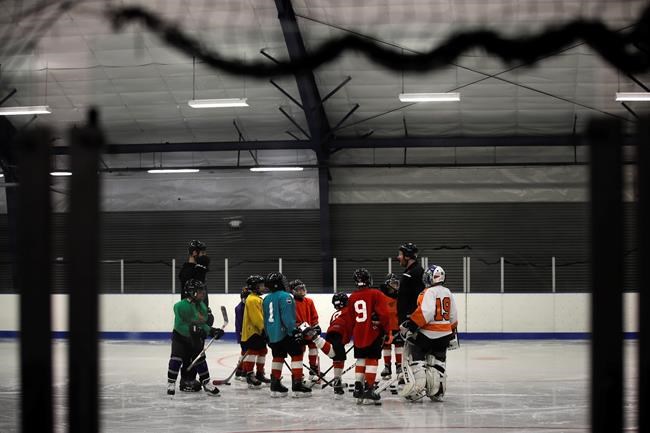
In this Feb. 21, 2019 photo Malakye Johnson (1) gathers with his teammates during a Snider Hockey practice at the Scanlon Ice Rink in Philadelphia. (AP Photo/Matt Rourke)

But Reggie Hunter became a hockey player when the family found out Snider Hockey was offering free equipment and instruction 20 minutes from their New Jersey home. He learned to play multiple positions over time as his great-grandfather drove him to and from the rink in Pennsauken. That was seven years ago. Hunter, now 21, went on to play junior hockey.

Many families wrestle with the time and money needed to play youth sports, but those challenges can be even more significant when it comes to hockey, with all of its equipment and rinks that are sometimes far away. For the less wealthy, having a child who dreams of hockey can look like a nightmare.

“The challenge is that hockey is a very unique sport and it’s a very expensive sport,” said NHL diversity ambassador Willie O’Ree, who broke the league’s colour barrier in 1958. “To go into a sport shop and outfit a 10- to a 13-year-old boy or girl, it costs about $800, and a lot of these families, they just can’t afford the money.”

The cost of protective equipment, sticks and ice time is one factor that keeps hockey lagging behind sports such as basketball and soccer in the U.S. among minority children. Snider Hockey program director Dan Rudd estimates the expenses of travel hockey alone can cost a family $2,000-$3,000 a year.

Steps are being taken to address those concerns, including programs like Snider Hockey in Philadelphia, Detroit Ice Dreams and Hockey is for Everyone, Future Goals and Learn to Play from the NHL and NHL Players’ Association. Many outfit kids with all they need to get on the ice.

Detroit Ice Dreams vice-president and program manager Cynthia Wardlaw likened the cost of her children playing hockey to a car bill or a mortgage bill.

“I would’ve never been able to afford hockey if it wasn’t for a program like this because it wouldn’t have ever fit in my budget,” Wardlaw said. “No matter how much my kid might’ve enjoyed it or liked it or loved it, I wouldn’t have been able to afford it. We have a lot of parents that are thankful for our program because they would’ve never been able to experience the game of hockey because hockey is very expensive.”

Neal Henderson, who founded the Fort Dupont Ice Hockey Club in Washington in 1978, said his organization outfits kids from head to foot with safe equipment. Some rinks rely on donated or used equipment that can be passed down from older to younger players.

Snider Hockey provides equipment, too, as part of almost $5 million in annual expenses. It also helps parents trying to figure out what to buy.

“Sometimes the parents don’t have the experience in the sport to understand what to look for, so they need mentors, they need subject matter experts,” said Jim Britt, the since-retired first employee of Snider Hockey. “They need coaching along the way to make sure they know a $500 piece of equipment isn’t necessarily better than a $300 piece of equipment or a $200 piece of equipment.”

Coaches are also part-time drivers at Snider Hockey, and parents run carpools for practices and games. Detroit Ice Dreams Founder Jason McCrimmon said he barters with city-run rinks by offering basic classes to get favourable ice time that allows kids to practice and play after school — hours more favourable than early in the morning or late at night.

Small-ice practices, where a team needs just a third of the rink, also helps organizations keep costs down.

“You divide the dollars you spend on an hour of ice by 60 instead of 20,” Snider Hockey executive vice-president Jan Koziara said. “It’s a huge return.”

NHL, NHLPA and USA Hockey assistance goes a long way as the organizations try to grow the game. Henderson believes the onus is still on parents to explore options.

“The parents have to make a sacrifice, and they have to make a sacrifice to become involved,” Henderson said. “(A child who asks their parents to play) knows the answer will be they’re too busy or they’ve got to work or they think that the price is too high. They have no idea of cost, and they don’t know what a commitment would be.”

___

Follow AP Hockey Writer Stephen Whyno on Twitter at https://twitter.com/SWhyno

___

More AP NHL: https://apnews.com/NHL and https://twitter.com/AP_Sports

Report Error Submit a Tip

More Stories

Trailblazer Kati Tabin brings PWHL championship trophy home to share success, inspire next generation

Grace Penner 6 minute read Preview

Trailblazer Kati Tabin brings PWHL championship trophy home to share success, inspire next generation

Grace Penner 6 minute read Saturday, Jul. 25, 2026

Starstruck kids and fans zigzagged throughout the rink, anxiously waiting to get an autograph from Kati Tabin and to see their role model on the same side of the glass.

Tabin, Montreal Victoire defender and Team Canada silver medallist, on Saturday came home to the rink where it all began, the Oakbank Community Club. She brought the PWHL championship trophy, the Walter Cup, won in her third season with the club, as well as her 2026 Milan Cortina Olympic medal.

The arena was packed to the brim with fans from all over coming to see Tabin — the local player who made history in women’s hockey. Hundreds of enthusiasts of all ages lined up with their Victoire or Team Canada merchandise, some waiting over two hours to see their idol.

Eight-year-old Loxley Cierzan came with her mother, Ainsley, and other family members to meet the one and only Tabin. Cierzan has loved seeing other girls grace the ice and play the competitive sport she adores. When the PWHL takeover stopped in Winnipeg in March, she not only got to watch the game but also a practice beforehand where Tabin signed her Victoire hat.

Read
Saturday, Jul. 25, 2026

What are we teaching children at the rodeo?

Danae Tonge 5 minute read 2:01 AM CDT

Every summer in Manitoba, rodeo season brings thousands of children to local rodeos and the Manitoba Stampede. They arrive with cowboy hats and cotton candy in hand, excitement in their eyes.

Yet, as a mother who works in education, I can’t help but wonder: what are we teaching them in those stands?

Inside classrooms, we teach children that kindness matters. We encourage empathy, discourage bullying and ask students to consider how their actions affect others. Students are taught that animals experience fear, pain and distress, just like us. Yet when school ends, we celebrate events built around chasing, restraining, roping and riding animals for entertainment.

This contradiction is difficult to ignore.

Students continue to criticize handling of MITT’s closure

Morgan Modjeski 5 minute read Preview

Students continue to criticize handling of MITT’s closure

Morgan Modjeski 5 minute read 6:00 AM CDT

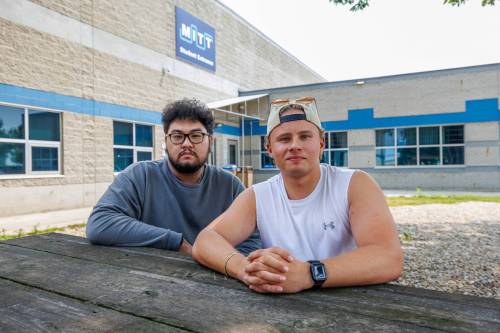
Students at a Manitoba trade college say their education has been hampered as a result of its impending closure and they blame government for a poor transition.

The provincial government announced in January it would close the Manitoba Institute of Trades and Technology because it was no longer financially viable following the federal government’s decision to cut the number of international students allowed to study in Canada.

Officials have said students would remain the top priority as 19 programs from MITT are set to be absorbed by Red River College Polytech.

Kieran Smith, an electrical applications student at MITT, said it feels like those in charge “don’t really care.”

Read
6:00 AM CDT

Visitors from across Canada make Somerset restaurant’s social media challenge a success

Zoe Pierce 3 minute read Preview

Visitors from across Canada make Somerset restaurant’s social media challenge a success

Zoe Pierce 3 minute read Saturday, Jul. 25, 2026

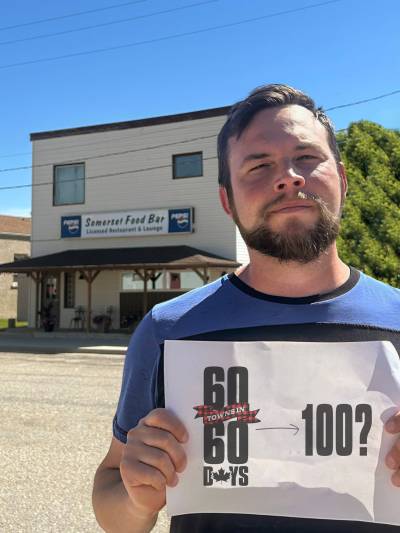
There may not be another restaurant in Manitoba that can say it has welcomed visitors from as many communities across the province and beyond as the Somerset Food Bar & Lounge has this summer.

In just over a two week span, visitors from more than 100 towns have come out to the family-owned restaurant tucked away in Somerset, a community of roughly 450 people in the Pembina Valley 130 kilometres southwest of Winnipeg.

It started as a challenge, “60 Towns in 60 Days,” where the restaurant wanted to document how many different places they could reach, as it often sees people travelling across Canada stop at the restaurant. The goal was also to encourage people to make a drive they normally wouldn’t.

“The more we started sharing, the more people really started getting behind it, and it turned into this really big thing fairly quickly,” said Jay Friesen, restaurant manager.

Read
Saturday, Jul. 25, 2026

Dropping the gloves to make the point

Editorial 4 minute read Preview

Dropping the gloves to make the point

Editorial 4 minute read Saturday, Jul. 25, 2026

In hockey parlance, it’s called “shedding,” the moment in a game when you are forced to deal with an instigator by dropping (shedding) your gloves for an all-out brawl.

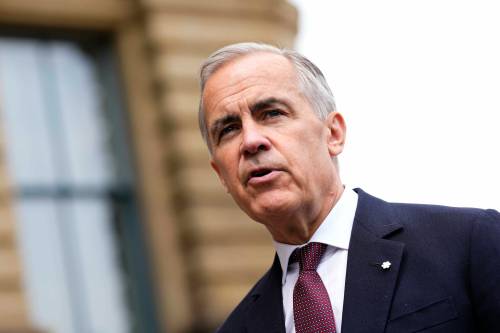
That term is a deep cut from hockey culture that Prime Minister Mark Carney — he of the “elbows up” phenomenon — may need to not only embrace but practise more often in the face of yet another round of overly punitive tariffs imposed by United States President Donald Trump.

To be fair, under Carney’s leadership, Canada has not exactly rolled over in the face of Trump’s bully-boy tactics.

Yes, Canada has made concessions to placate Trump to further a new continental trade agreement: investing more money to combat the cross-border flow of fentanyl that isn’t actually happening, stalling efforts to tax streaming companies as most European countries already do, and — most recently — giving Trump a cut of profits from the Canadian-made, Canadian-paid Gordie Howe bridge between Windsor and Detroit.

Read
Saturday, Jul. 25, 2026

An eroding Winnipeg neighbourhood looks to new foundations

Ian Bickis, The Canadian Press 6 minute read Preview

An eroding Winnipeg neighbourhood looks to new foundations

Ian Bickis, The Canadian Press 6 minute read Updated: 10:45 AM CDT

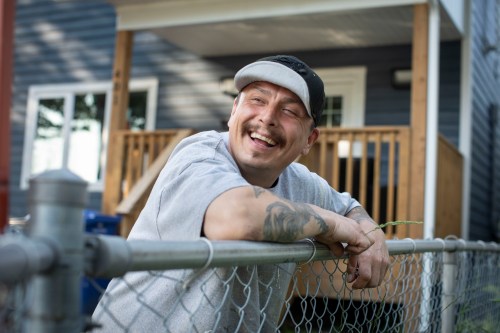
WINNIPEG - The lot Jesse Bettcher lives on in Winnipeg's North End used to be a pile of burnt rubble. Same with the one next door. And the one across the street.

But he's now the proud owner of a two-storey house with blue-grey siding and white trim, so new the orange construction fencing is still out front.

It's a dream home for Bettcher, and the latest hope for a city seeking to knock down, clean up and revitalize neighbourhoods that have seen hundreds of homes left vacant, leading to safety hazards and worries about the future.

He bought the house as part of a pilot project aimed at creating affordable home ownership. It let him and his family move out of a rental that he said was falling apart.

Read
Updated: 10:45 AM CDT