The good shepherd
When a crash killed his brother and sister-in-law, Jakob Dik knew exactly what to do about their 11 orphaned children
Advertisement
Read this article for free:
or
Already have an account? Log in here »
To continue reading, please subscribe:

Digital Subscription
One year of digital access for only $205*
- Enjoy unlimited reading on winnipegfreepress.com
- Read the E-Edition, our digital replica newspaper
- Access News Break, our award-winning app
- Play interactive puzzles
*First annual payment billed as $205.00 + GST for one year. This annual subscription will automatically renew at $233.00 + GST every 52 weeks (10% off the regular annual price of $259.35). Offer available to new and qualified returning subscribers only. Cancel any time.
To continue reading, please subscribe:
Add Free Press access to your Brandon Sun subscription for only an additional
$1 for the first 4 weeks*
- Enjoy unlimited reading on winnipegfreepress.com
- Read the E-Edition, our digital replica newspaper
- Access News Break, our award-winning app
- Play interactive puzzles
*Your next Brandon Sun subscription payment will increase by $1.00 and you will be charged $17.95 plus GST for four weeks. After four weeks, your payment will increase to $24.95 plus GST every four weeks.
Read unlimited articles for free today:
or
Already have an account? Log in here »
Hey there, time traveller!
This article was published 15/03/2014 (4553 days ago), so information in it may no longer be current.
KLEEFELD — Jakob Dik doesn’t know how people got his name or found his phone number.
But very soon after his brother and sister-in-law were killed in a highway collision, orphaning their 11 children, Jakob started to get phone calls.
People called from across Canada. Calls came from as far away as Toronto and Vancouver from people wanting to adopt.
The callers typically offered to take one or two of the children, who ranged in age from 18 months to 16 years. They were six boys, five girls. All blond.
Jakob recalled one phone call in particular. The man let it be known he was wealthy. He had a big house, a boat, a large library, and he could afford to have the child tutored at home.
Did he have a Bible? Jakob asked.
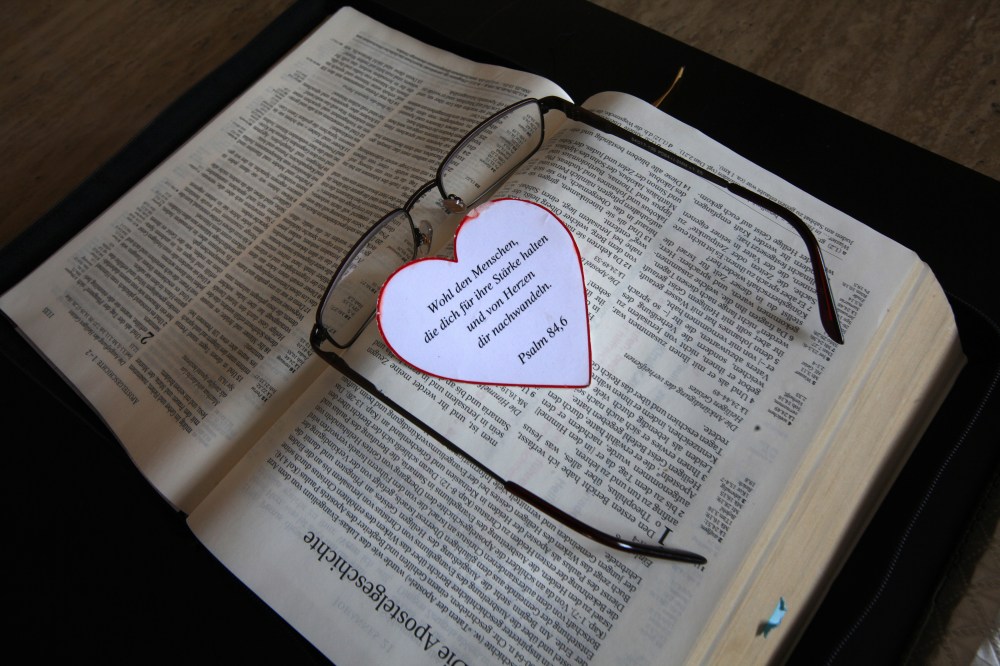
Jakob’s reading glasses rest atop a Bible opened on the coffee table in the living room. He reads the Bible to the children at night, he explained, then plays his seven-string guitar. Sometimes called a Russian guitar, the seventh string adds a bass element, a sort of gravitas. Jakob learned to play it while growing up in the Ural Mountains.
No, the caller said, he did not have a Bible. Having a big library and no Bible seemed incongruous to Jakob. His deceased brother, David, would want his children raised in a home that had a Bible.
It quickly became clear to Jakob he had a new role in life. The children weren’t going anywhere. He couldn’t bear to see them split apart. He and Lina, who already had four children of their own, would adopt them all.
***
Jakob and Lina were raised in Central Russia, in one of a string of small towns where people still spoke low German rather than Russian. Jakob’s last name, Dik, is a newer Russian spelling of Dyck, a familiar Mennonite name in Manitoba. Dyck is the old-style German spelling, he said. The couple is not Mennonite.
They moved to Germany in 1989, after Jakob completed his mandatory service in the Russian army. They lived in Bielefeld, a city about half the size of Winnipeg in northeast Germany near its border with the Netherlands.
But city life wasn’t for them. In 2005, they moved to just outside Kleefeld in southeastern Manitoba, where David had settled 18 months earlier. They wanted to return to a lifestyle they’d left behind in Russia, where they owned small acreages and kept chickens and a cow.
It’s hard for Jakob to recall that night of Jan. 23, 2010. Police knocked on the door and shooed away the children, telling them they wanted to speak to their father alone.
David and his wife, Elizabeth, the officers told Jakob, had gone out shopping and were travelling on Highway 52 when their Honda Civic began to fishtail on the slippery highway. It collided with a Chevrolet Trailblazer. They were both killed.
“At first they told me and I tried to blame my poor English that I didn’t understand,” Jakob recalled. “I tried to blame my English because I didn’t want to believe it was true.”
The officers had come for Jakob because they wanted someone the children of the deceased knew to break the news to them.
It was perhaps the hardest thing Jakob has had to do. He rode in the back seat of the police cruiser to their house. “It was never too much shock but so much responsibility now,” he said. “The only thing, on the way there, I was praying all the time that I could do it right for the kids.”
***
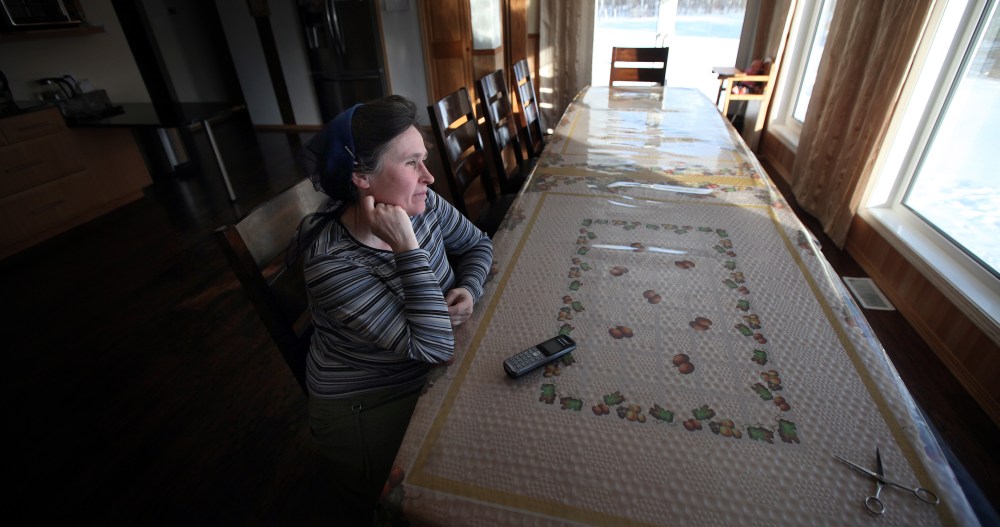
For the interview with the Free Press, which took place in the Dik house, Jakob felt more comfortable speaking in German and having his answers translated by his eldest son, David, 22. Lina would occasionally zip by and smile shyly. She didn’t think her English was good enough to join the interview.
The children didn’t go into hysterics when Jakob told them the news, but tears flowed freely. From the oldest to the youngest, they cried. “The smaller kids, they cried because the bigger kids were crying, but they didn’t actually follow what happened,” said Jakob, who, along with his wife, was 42 at the time.
He had never seen children so lost. “They were walking around like sheep without a shepherd. They didn’t know where to go or what to do.”
Jakob took the boys home and another brother took the girls. The children slept on old mattresses in the living room and hallway.
***
It became obvious what the couple had to do. Jakob had other brothers and a sister here, but they already had large families. As for Lina, she had always wanted more children.
“The smaller kids said, ‘Uncle Jakob and Aunt Lina will be our parents now,’ ” Jakob recalled.
It was what he and Lina were thinking. Not only could they keep the children together as one big family, but they could keep them near their cousins, aunts and uncles.
The first months were very hard times. Jakob would walk down the hall at night and hear one of the children crying in bed. The children struggled in school. Jakob got calls regularly. “The children would say they were sick and wanted to go home because they couldn’t concentrate on school.” So Jakob would drive out and pick them up and take them to Tim Hortons for a talk. “They asked the question, ‘Where are my parents now?’ “
In the evening, he would try to explain what had happened through Bible readings. “We’re human, and everyone has to die,” is part of what he told them. “My dad really tried to talk to the bigger kids, that they should look forward, not back,” said eldest son, David.
Meanwhile, Jakob had to square the situation with his own children. “He told us on the first day; he took me and my brothers aside, he said ‘From now on I will let you stay, but I will take more care of these kids than you, because they need parents,’ ” recalled David. “It was hard for us. We understand it, but we need parents, too.”
At the time, Jakob was working as an electrical apprentice for Arly Barkman. He has seen some of what the family has gone through.
“For Lina, it’s a handful and it’s tiring and it’s taxing, and it’s hard on her,” Barkman said. “They have such good intentions for these children, but it’s a big load and my heart goes out to them.”
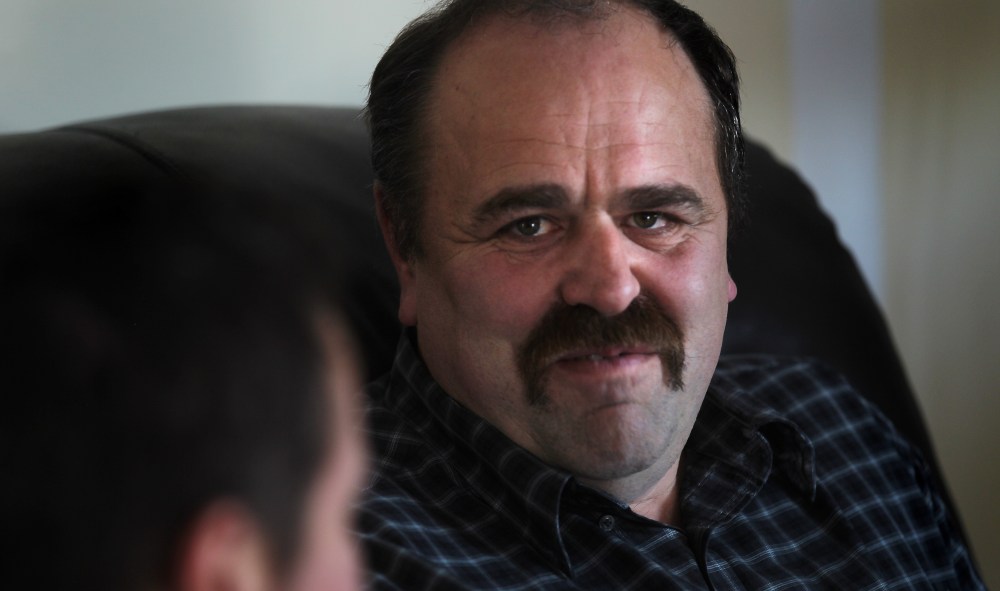
Barkman used one example to explain the kind of person Jakob is. Tradespeople will injure themselves from time to time, like smashing a finger, and then cuss a blue streak. Not Jakob. “Jake, when he does something to himself that really hurts, he’ll say, ‘That’s hard to get used to.’ He always said that.”
Jakob left Barkman’s employ two years ago and now builds houses with his eldest son, but he and Barkman remain friends. When he visits their household, Barkman says, “It’s a large family, but the kids are well-behaved. It’s not like a zoo.”
In the first months after the deadly crash, Jakob and Lina’s days ended at midnight or 1 a.m. and they would be up again at 5 a.m. He would park his truck on the side of the road and try to nap.
Their situation touched many people’s hearts. Their church, the Evangelical Christ Church in Mitchell, where the main language during services is German, helped set up a trust. Many people from their church and elsewhere donated money. People from church brought baking and other foods. Vans loaded with food would turn up at their door. Two families still bring food to their house four years later. “Those families said God told them to do this and they want to keep going,” said Jakob.
Jakob said one of the reasons he agreed to be interviewed is because he has so many people to thank. “I would love to say to the whole world: Thank you! I have no idea where all the money came from,” said Jakob.
They had no room for 14 children in their house (the couple’s eldest daughter had already moved out). The children were virtually sleeping in cupboards.
But not for long. Several contractors offered their services and refused to take payment. A man who grew up across the street from Jakob’s family in Russia but who did not want his name mentioned, built an addition onto the house. “My dad wanted to help, but he said ‘No, you be a dad; I’ll do this,’ ” said David.
Rudolf Fefler did the framing for a second floor. Andreas Rahn (currently in Bolivia volunteering to help build a hospital) did the plumbing, including enlarging the septic field.
Together, they converted the previous 1,400 square feet into a 4,400-square-foot home with three bathrooms. There are five bedrooms upstairs alone, branching off a narrow hallway.
Rahn did not know Jakob and Lina before the tragedy, but they have since become friends. “We are menschen. We have to help each other,” he said, sprinkling some German in with his English.
“Jake and Lina are heroic. It’s not easy. I think they don’t have enough money, but he has to work hard.”
As for the donations to the trust, Jakob wants people to know deacons at his church decided how the money was spent. It’s used up now. “I didn’t want people to think I used the money on myself,” he said.
Neither has Jakob spent the insurance money. It belongs to the kids, he said. A trustee has been put in charge and will pay out the money when each child turns 18.
In the Dik household, there’s not much money left over for the kids beyond the basics. They use a wood stove to reduce heating bills. The home has one computer, used only for educational purposes. However, the family lives on 10 acres, much of it forested, where the children can play. They also have three horses.
Last year, the family used some insurance money to take the younger children to Banff. They went in three vans.
***
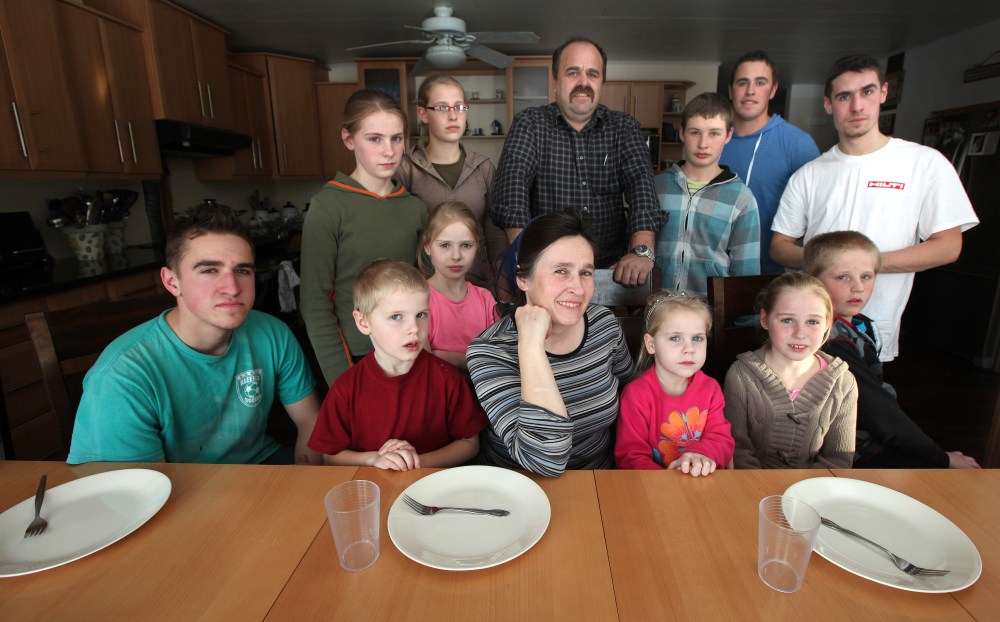
They are one family today: Jakob, 20, Daniel, 19, David, 19, Angelica, 17, Sam, 17, Johannes, 16, Hanna, 14, Anika, 13, Jonathan, 12, Helen, 10, Lisa, 8, Nathan, 7 and Nelly, 5. Lena, the oldest daughter, is married and moved out, as is oldest son David.
“We try not to split our family,” said Jakob. Old family photos from before have been taken down and just photos of the new expanded family are out now. “My dad’s point is always that when he dies, we will always stick together as a family,” said David.
The family is run like a platoon. After school, the children check a chart to see what their chores are that day. “My job today is cleaning the two living rooms,” said Angelica. The oldest kids rotate jobs and the youngest are on hand to support them. Every seven days, the kids get a “free day.”
There’s an entry room that is specifically devoted to taking off shoes and coats. It was built with that in mind by volunteers and includes a walk-in closet for shoes alone. You can’t afford to be looking for a matching shoe among 60 others.
In the morning, everyone has a place setting where they make their own lunch. The girls help their mom make dinner.
They eat at a six-metre table the Diks brought with them from Germany. It was intended for when their children had grandchildren. Now, they’ll probably need three of the tables when that day arrives. To go to church on Sundays, it takes three vehicles.
They have other chores. On their 10 acres they keep three horses, two sheep, some laying hens and a couple of dogs. Feeding the animals has largely become Jonathan’s job. Lisa, in Grade 3, is the top student in the family. Angelica is the artist.

Jakob told the children they could call him and Lina their aunt and uncle, or mother and father — whichever felt most natural. “I said, I’m your uncle but you’re free to call me that word,” he recalled.
The youngest were the first to start calling them Mom and Dad. It slowly worked its way up to the older kids. Now they all do. It was very moving for the couple. “I really respected it because they accepted us as Mom and Dad, and I tried even harder to be a dad for them,” Jakob said.
They have no regrets about their decision. “Now, I’m actually really happy,” Jakob said.
David said there’s another favourite saying of his father’s he hears when they’re working together. “He’ll always say there’s something we have to do, and I’ll say it’s impossible. He’ll say, ‘Impossible? Impossible is impossible.’ “
bill.redekop@freepress.mb.ca