Major milestones
Several famous things and events marked 50th anniversaries in 2018
Advertisement
Read this article for free:
or
Already have an account? Log in here »
To continue reading, please subscribe:

Digital Subscription
One year of digital access for only $205*
- Enjoy unlimited reading on winnipegfreepress.com
- Read the E-Edition, our digital replica newspaper
- Access News Break, our award-winning app
- Play interactive puzzles
*First annual payment billed as $205.00 + GST for one year. This annual subscription will automatically renew at $233.00 + GST every 52 weeks (10% off the regular annual price of $259.35). Offer available to new and qualified returning subscribers only. Cancel any time.
To continue reading, please subscribe:
Add Free Press access to your Brandon Sun subscription for only an additional
$1 for the first 4 weeks*
- Enjoy unlimited reading on winnipegfreepress.com
- Read the E-Edition, our digital replica newspaper
- Access News Break, our award-winning app
- Play interactive puzzles
*Your next Brandon Sun subscription payment will increase by $1.00 and you will be charged $17.95 plus GST for four weeks. After four weeks, your payment will increase to $24.95 plus GST every four weeks.
Read unlimited articles for free today:
or
Already have an account? Log in here »
Hey there, time traveller!
This article was published 01/12/2018 (2790 days ago), so information in it may no longer be current.
Half a century after it first premièred, the Beatles’ iconic White Album is back on the charts.
The 30-song double album that brought the world hits like While My Guitar Gently Weeps and Blackbird has been reissued to celebrate the 50th anniversary of its original release on Nov. 22, 1968.
The longest Beatles album by far, with a hefty 30 tunes, it was the band’s ninth studio album and was officially named The Beatles, although fans and the Beatles themselves commonly called it the White Album, because its plain white cover featured no graphics or text other than the band’s name embossed.
When it was first released five decades ago, it spent nine non-consecutive weeks at No. 1 between Dec. 28, 1968, and March 1, 1969.
The massive deluxe 50th anniversary remix — featuring 30 remastered tracks and 27 early acoustic demos — hit shelves and streaming services on Nov. 9 and debuted at No. 6 on Billboard’s Top 200 Albums chart. Earlier this week, it was sitting comfortably in the No. 30 spot.
The special reissued edition was overseen by Giles Martin, son of original Beatles producer George Martin. “It’s not for people that are going to buy it and listen to it over and over and have theories and write books. It’s for a generation that’s never heard a Beatles song,” the younger Martin told Variety.
A refurbished return from the Beatles isn’t the only historic item vying for our attention, as we see from today’s chart-topping list of Five Famous 50th Anniversaries in 2018:
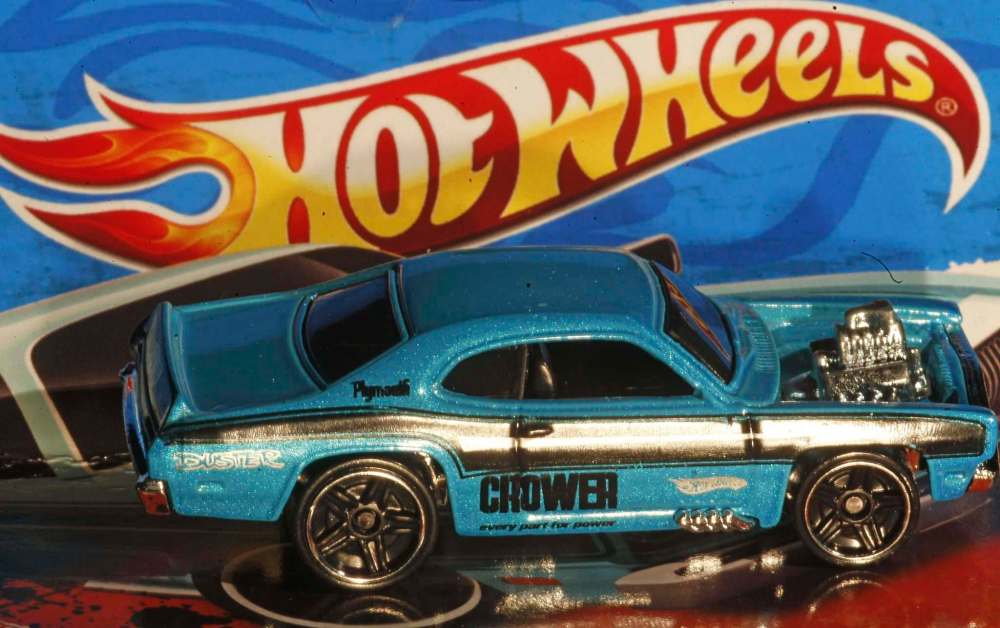
5) The golden anniversary: Hot Wheels
Five decades ago: If you didn’t have an extensive collection of Hot Wheels cars and signature orange track when you were a kid, you should stop reading this, because you are probably from some distant planet or have spent your entire life hiding in a cave.
What we are talking about here is one of the most iconic toys, little die-cast toy cars that were first introduced by American toy maker Mattel in 1968. As any kid worth his salt will tell you, Hot Wheels were the primary competitor for Matchbox cars, at least until 1997 when Mattel bought Tyco Toys, then owner of Matchbox.
Here’s what Mattel’s website boasts on its Hot Wheels page: “Elliot Handler co-founded Mattel with his wife, Ruth. She was the brains behind a little famous icon named Barbie (maybe you know her?). Elliot wanted to do for boys what Ruth did for girls. So, he nabbed a GM car designer and an actual rocket scientist and together, they created a toy car that looked cooler and performed better than anything else out there. The original Sweet 16 and iconic orange track revolutionized the toy car industry, and Hot Wheels die-cast cars are now the No. 1-selling toy in the world.” That’s it in a nutshell.
The cool thing about Hot Wheels is they were designed to be more like hot rods or fantasy cars as opposed to Matchbox toys, which were small-scale models of real production cars. According to carmagazine.com: “Mattel is based in California, which was at the time of Hot Wheels’ creation energized by the criss-crossing cultures of hot rodders, drag racers, surfers, beatniks and hippies. It all fed in to the early Hot Wheels range — which today still embraces flame jobs and side-exit exhausts at every opportunity.”
Since Day 1, Hot Wheels have been a staggering success, with more than six billion sold and, according to Mattel, 10 vehicles sold every second.
4) The golden anniversary: The Big Mac
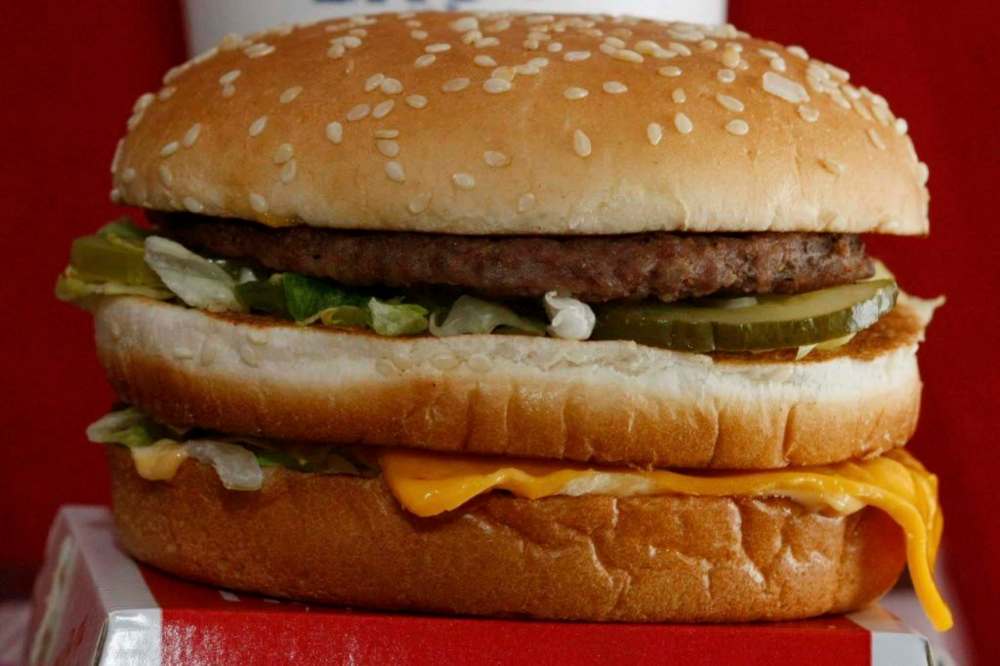
Five decades ago: This year, McDonald’s is celebrating the 50th anniversary of its signature sandwich, the Big Mac, although, technically speaking, it was invented in 1967.
The mastermind behind the Mac was a guy named Jim Delligatti, the owner of a Pittsburgh-area McDonald’s where it made its debut. “In the 1960s, many of his regular customers were workers returning from a long day at the steel mills. They would arrive at McDonald’s ravenously hungry, and Delligatti quickly realized that the simple single-patty cheeseburger wasn’t filling them up. So he started experimenting, putting two patties on one burger and adding pickles and onions as well,” according to a story in Reader’s Digest.
The hefty sandwich proved a hit and, with the blessing of franchise founder Ray Kroc, the Big Mac went countrywide in 1968, and the rest is pretty much history. “I felt that we needed a big sandwich,” Delligatti, who died in 2016, told Reuters in 2007. “But you couldn’t do anything unless they gave you permission.” Before becoming available throughout North America, McDonald’s tested other names — the Aristocrat and Blue Ribbon Burger — which failed miserably in the marketplace. “It was Esther Glickstein, a then-21-year-old secretary for McDonald’s advertising department, who first suggested calling it the Big Mac. She admitted that the higher-ups initially laughed the name off when she first suggested it, but she got the last laugh when the name stuck!” Reader’s Digest notes.
Whatever you call it, an estimated 1.3 billion Big Macs are sold each year, around 1,700 per minute. And a lot of those are gobbled by Wisconsin native Donald A. Gorske, 64, who this May pounded back his world-record 30,000th Mac. The guy has been eating at least one of the burgers every day since 1972, and doesn’t plan stopping any time soon. “If I go for 40,000, that’ll take me another 14 years or whatever like that,” the retired prison guard told ABC. “I don’t think people celebrate 35,000 at all, so we’re probably looking at 14 more years down the road, and I’ll be 78 years old then! So we’ll have to see how I’m doing then, you know?”
3) The golden anniversary: Canada’s first successful heart transplant
Five decades ago: It was exactly 50 years ago this month that a team of cardiac surgeons at Toronto’s St. Michael’s Hospital performed the first successful heart transplant in Canadian history.
A year earlier, South African doctor Christiaan Barnard had stunned the world, performing the first human-to-human heart transplant, though the recipient lived just 19 days after the operation.
In Canada, the race was on to become the first to replicate that operation. The first Canadian to receive a new heart was Albert Murphy, 59, a retired Quebec butcher who died within hours of the operation, performed in May 1968 at the Montreal Heart Institute.
In the following months, Toronto General and Toronto Western hospitals also attempted transplants, but none of the patients recovered. In the wake of these failures and amid a growing media frenzy, the team at St. Michael’s took their shot on Nov. 17, 1968. That night, Charles Perrin Johnston’s irreparably damaged heart was replaced with a healthy heart.
Before the surgery, according to the Globe and Mail, Dr. Clare Baker said to his wife, “You realize, if this doesn’t work, it may be the end of my entire career.” But it did work, and Johnston recovered remarkably well, taking up jogging several months later and living another 6½ years. The donor was an 18-year-old man who had been badly injured in an accident, leaving him brain-dead, but his heart was still beating.
At the time of his death, Johnston was the longest-lived male heart transplant recipient in the world. “We had to have confidence. And if anybody gave the image of being a confident performer, a confident surgeon, a capable surgeon, it was Dr. Clare Baker,” said Dr. John K. Wilson, one of the surgeons who assisted Baker, who died in 2010.
“We never had any hesitation,” Wilson, now 93, told the CBC this month. “We were ready. The team was ready… (Johnston) left the operating room like any other patient, with a beating heart.”
2) The golden anniversary: Pierre Elliott Trudeau elected prime minister
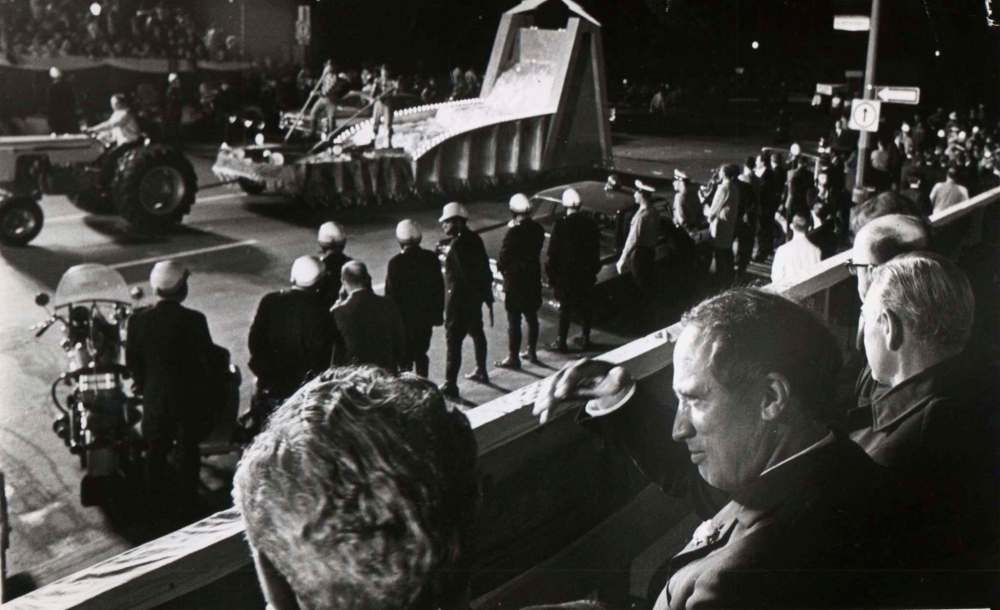
Five decades ago: The mere mention of Pierre Elliott Trudeau’s name can touch off heated political arguments throughout the country, especially in Western Canada. But there is no denying the man was one of the most charismatic, intellectual leaders in this country’s history.
Fifty years ago, on June 25, 1968, he was elected as Canada’s 15th prime minister. At the April 1968 Liberal leadership convention, Trudeau won on the fourth ballot, beating out prominent Liberals including Paul Martin Sr. and Paul Hellyer. He was sworn in as PM weeks later, and quickly called a general election. His flamboyant and charismatic personality seemed to mesh well with the changing attitudes of the late 1960s.
His election campaign was fuelled by the unprecedented phenomenon of “Trudeaumania,” wherein he was frequently mobbed by throngs of adoring, chanting youths. In a front-page article on June 1, 1968, the Winnipeg Free Press reported: “Winnipeg is gripped by Trudeaumania… My own personal interviews in seven of the 13 constituencies allocated to Manitoba by the new redistribution reveal that Prime Minister Pierre Elliott Trudeau is supported for his youthful style, his straightforward approach and the prospect of change his candidacy promises.”
On the eve of the 1968 vote, during the annual Saint-Jean-Baptiste Day parade in Montreal, rioting sovereignists flung rocks and bottles at the grandstand where he was seated, chanting “Trudeau au plateau!” (Trudeau — to the stake!). Refusing to take cover, Trudeau remained in his seat, stoically facing the rioters. That defiant image no doubt helped him handily win the election the next day. Here’s how he is remembered in the CBC digital archives: “He slid down banisters, dated movie stars and wore a red rose in his lapel. Pierre Elliott Trudeau is arguably the most charismatic prime minister in Canada’s history. But he was more than just charisma — Trudeau helped shape Canada with his vision of a unified, bilingual, multicultural ‘just society.’ Throughout his 16 years as prime minister, he faced some heavy criticism. But when Trudeau died on Sept. 28, 2000, the nation mourned the man who, in the words of one biographer, ‘haunts us still.’”
1) The golden anniversary: The assassinations of Martin Luther King and Robert Kennedy
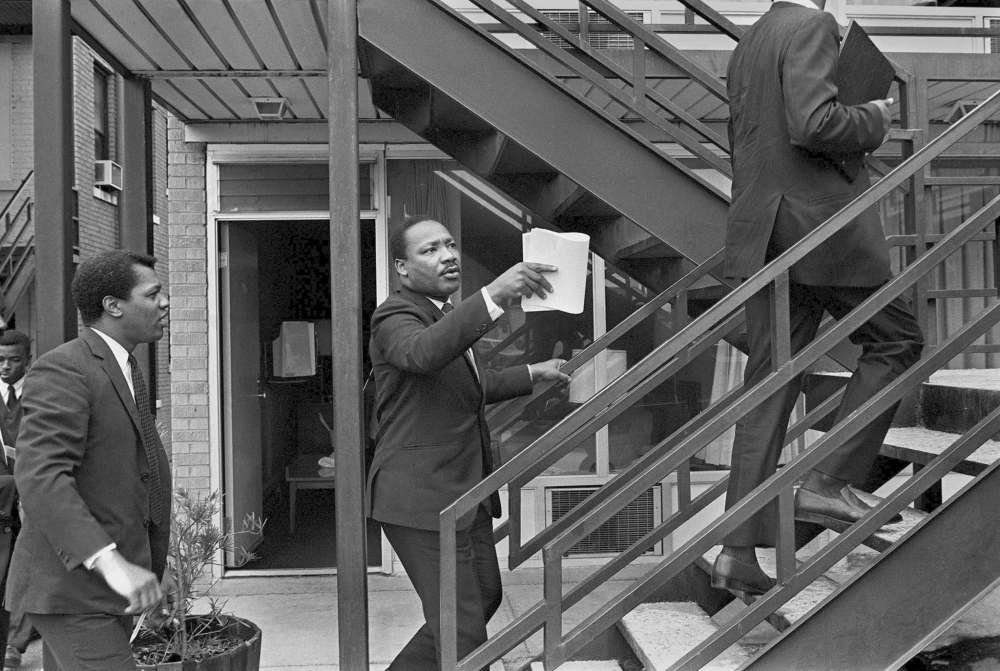
Five decades ago: For many, it’s hard to believe 50 years have passed since the shocking slayings of two giants, men who are still remembered by their initials: MLK (Rev. Martin Luther King, Jr.) and RFK (Robert F. Kennedy).
They were gunned down within two months of each other in the spring of 1968. King was 39 and Kennedy 42.
On Oct. 14, 1964, King won the Nobel Peace Prize for combating racial inequality through non-violent resistance. On the evening of April 4, 1968, King was fatally shot while standing on the balcony of a motel in Memphis, where the legendary civil rights crusader had travelled to support a sanitation workers strike. James Earl Ray, an escaped convict and known racist, pleaded guilty to the murder and was sentenced to 99 years in prison. He later recanted his confession, and died in 1998. King’s slaying sparked a wave of riots in major U.S. cities.
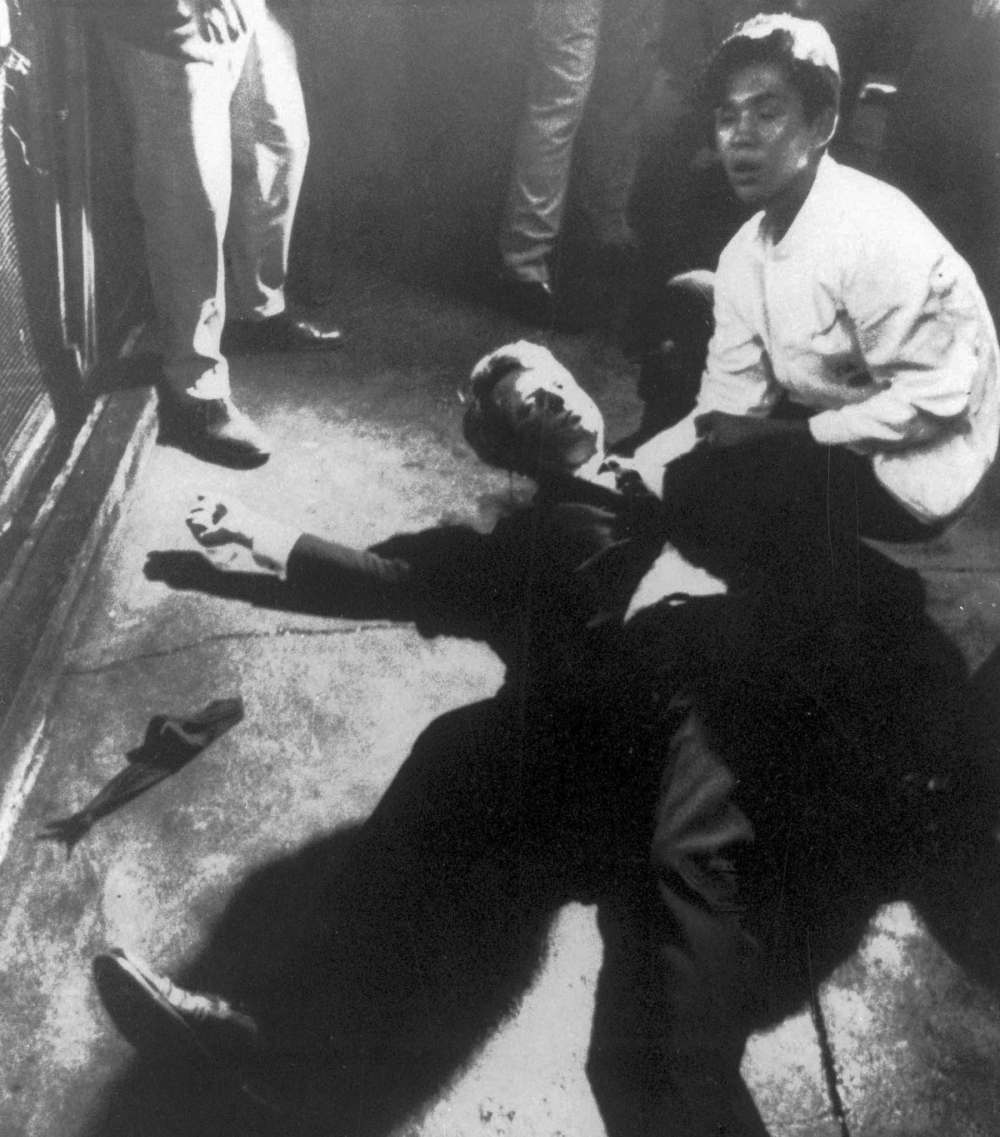
Two months later, on the evening of June 5, 1968, Robert Kennedy, younger brother of assassinated president John F. Kennedy, had just won the California Democratic Party primary. After thanking his supporters in a ballroom at the Ambassador Hotel in Los Angeles, he went through the hotel kitchen after being told it was a shortcut to a press room. In a crowded kitchen passageway, Kennedy turned to his left and shook hands with busboy just as Sirhan Sirhan, a 24-year-old Palestinian, opened fire with a .22-calibre revolver, hitting RFK three times.
Kennedy died early the following day. In a tragic twist, the teenage busboy who came to Kennedy’s aid, Juan Romero, died this October at age 68 after a heart attack. In a famous photo, Romero is seen cradling the mortally wounded Kennedy as he lay on the ground, struggling to keep the New York senator’s bleeding head from hitting the floor.
“I kneeled down to him and I could see his lips moving, so I put my ear next to his lips and I heard him say, ‘Is everybody OK?’ I said, ‘Yes, everybody’s OK.’ I put my hand between the cold concrete and his head just to make him comfortable,” Romero recalled years before his death.
doug.speirs@freepress.mb.ca