One small step for women in uniform
Military's relaxed dress code a meaningful move in the right direction

Advertisement
Read this article for free:
or
Already have an account? Log in here »
To continue reading, please subscribe:

Digital Subscription
One year of digital access for only $205*
- Enjoy unlimited reading on winnipegfreepress.com
- Read the E-Edition, our digital replica newspaper
- Access News Break, our award-winning app
- Play interactive puzzles
*First annual payment billed as $205.00 + GST for one year. This annual subscription will automatically renew at $233.00 + GST every 52 weeks (10% off the regular annual price of $259.35). Offer available to new and qualified returning subscribers only. Cancel any time.
To continue reading, please subscribe:
Add Free Press access to your Brandon Sun subscription for only an additional
$1 for the first 4 weeks*
- Enjoy unlimited reading on winnipegfreepress.com
- Read the E-Edition, our digital replica newspaper
- Access News Break, our award-winning app
- Play interactive puzzles
*Your next Brandon Sun subscription payment will increase by $1.00 and you will be charged $17.95 plus GST for four weeks. After four weeks, your payment will increase to $24.95 plus GST every four weeks.
Read unlimited articles for free today:
or
Already have an account? Log in here »
Hey there, time traveller!
This article was published 15/04/2019 (2661 days ago), so information in it may no longer be current.
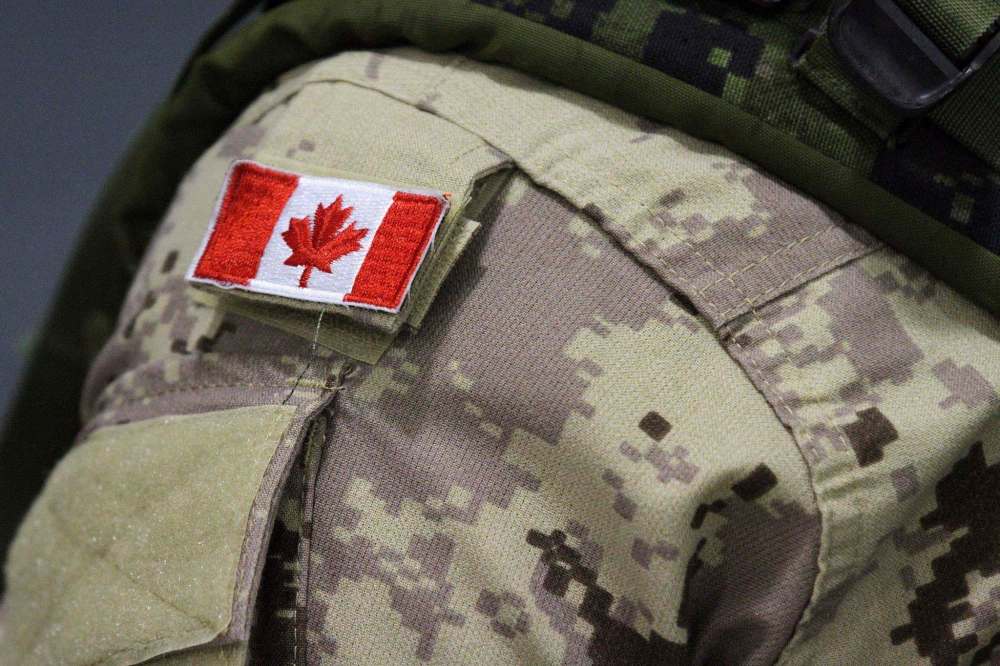
It’s a brave new world for the Canadian military: women can have ponytails, flats and bare legs now.
Last week, the Canadian Armed Forces (CAF) brought its dress code into this century. Women in uniform can now break from the bun-or-braid requirement, as well as opt for flats instead of pumps or oxfords with a five-centimetre heel and to go nylon-free if working in a skirt. (I’m honestly surprised there was no compulsory strand of pearls.)
The revisions to the dress code are meant to modernize the military, but they also come amid an ongoing effort by the CAF to recruit more women. Last year, it was reported that the Canadian military is falling short of its plan to have women make up 25 per cent of the Armed Forces by 2025-26. The numbers are growing, but slowly: currently, 15.7 per cent of the Armed Forces ranks are female, up from barely 15 per cent in 2016.
I’m guessing the reason women aren’t exactly champing at the bit to join the military — and I’m going out on a limb here — has less to do with the ability to wear a ponytail and more to do with the endemic bullying, harassment and sexism. It’s only been four years since former Supreme Court justice Marie Deschamps released her 2015 report on sexual misconduct in the Canadian military and the launch of Operation Honour. Changing a culture — and the public perception of that culture — will take time.
In the face of such huge systemic issues, it’s easy to say ponytails do not equal progress. But for the women serving in the CAF, this is a step in the right direction. Many of them were celebrating the change at the hashtag #PonyTailForGen on social media, sharing GIFs of Ariana Grande flipping her high pony and commiserating over headaches from too-tight buns.
Of course, there are rules around ponytails because this is still the military, not the gym. Ponytails must not go below the armpit. They must be at the centre back of the head. Some discretion is required; buns may still be more appropriate where safety is concerned.
The ponytail is a culture-spanning, centuries-old hairstyle that dates back to, I don’t know, whenever someone first looked at the rear end of a horse and thought, “Hmm, that looks good.” Ponytails are not, in fact, “for girls” and yet that is who the style is closely associated with.

Somehow, ponytails became the sneakers of hairstyles — and I say this as someone with a fondness for messy topknots, which are probably the flip-flops of hairstyles. Ponytails are sporty, informal, casual. Many people also believe a ponytail looks unprofessional, that it doesn’t convey polish and decorum, which is what military dress is all about. Ponytails are often associated with youth, and youth is often associated with inexperience. So, if you’re a woman who is, say, fighting to be taken seriously in a male-dominated field, it’s not hard to see how a ponytail might be problematic.
But here’s the thing: how someone wears their hair has nothing to do with how capable they are at their job. Ponytail, braid, bun, short, long, curly, straight — who cares? As long as someone is able to do their work effectively and safely, it shouldn’t matter. A ponytail might seem like a small thing, but for many women, it’s as freeing as being able to wear pants. And the CAF is recognizing that.
Now, if the military really wants to lead the way on ponytail-as-form-of-gender-expression, it should allow men to wear them, too.
jen.zoratti@freepress.mb.ca
Twitter: @JenZoratti
Jen Zoratti is a columnist and feature writer working in the Arts & Life department, as well as the author of the weekly newsletter NEXT. A National Newspaper Award finalist for arts and entertainment writing, Jen is a graduate of the Creative Communications program at RRC Polytech and was a music writer before joining the Free Press in 2013. Read more about Jen.
Every piece of reporting Jen produces is reviewed by an editing team before it is posted online or published in print – part of the Free Press‘s tradition, since 1872, of producing reliable independent journalism. Read more about Free Press’s history and mandate, and learn how our newsroom operates.
Our newsroom depends on a growing audience of readers to power our journalism. If you are not a paid reader, please consider becoming a subscriber.
Our newsroom depends on its audience of readers to power our journalism. Thank you for your support.
Jen Zoratti is a columnist and feature writer working in the Arts & Life department, as well as the author of the weekly newsletter NEXT. A National Newspaper Award finalist for arts and entertainment writing, Jen is a graduate of the Creative Communications program at RRC Polytech and was a music writer before joining the Free Press in 2013. Read more about Jen.
Every piece of reporting Jen produces is reviewed by an editing team before it is posted online or published in print – part of the Free Press‘s tradition, since 1872, of producing reliable independent journalism. Read more about Free Press’s history and mandate, and learn how our newsroom operates.
Our newsroom depends on a growing audience of readers to power our journalism. If you are not a paid reader, please consider becoming a subscriber.
Our newsroom depends on its audience of readers to power our journalism. Thank you for your support.
Advertisement Advertise With Us
Advertisement Advertise With Us