Rescuing rabbits no easy task
Foster home keeps abandoned small pets safe
Advertisement
Read this article for free:
or
Already have an account? Log in here »
To continue reading, please subscribe:

Digital Subscription
One year of digital access for only $205*
- Enjoy unlimited reading on winnipegfreepress.com
- Read the E-Edition, our digital replica newspaper
- Access News Break, our award-winning app
- Play interactive puzzles
*First annual payment billed as $205.00 + GST for one year. This annual subscription will automatically renew at $233.00 + GST every 52 weeks (10% off the regular annual price of $259.35). Offer available to new and qualified returning subscribers only. Cancel any time.
To continue reading, please subscribe:
Add Free Press access to your Brandon Sun subscription for only an additional
$1 for the first 4 weeks*
- Enjoy unlimited reading on winnipegfreepress.com
- Read the E-Edition, our digital replica newspaper
- Access News Break, our award-winning app
- Play interactive puzzles
*Your next Brandon Sun subscription payment will increase by $1.00 and you will be charged $17.95 plus GST for four weeks. After four weeks, your payment will increase to $24.95 plus GST every four weeks.
Read unlimited articles for free today:
or
Already have an account? Log in here »
Hey there, time traveller!
This article was published 05/06/2018 (2957 days ago), so information in it may no longer be current.
Every bunny needs a safe home and a warm place to sleep.
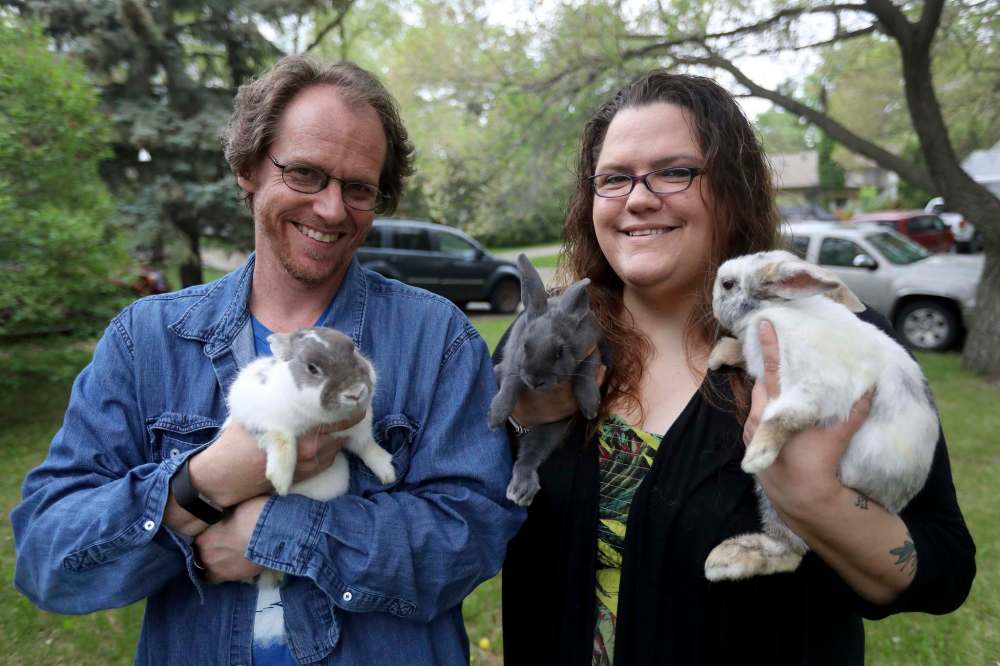
That’s why Cindy Hildebrand — who runs Popcorns and Binkies Rescue Haven for small animals with her husband, Jeff — spent a frigid -30 C Christmas Eve last year lying in the snow for an hour, patiently trying to coax a little white rabbit to safety.
Alice, a domestic rabbit, had been dumped by her owners and left to fend for herself in the wild. Hildebrand was contacted on Facebook by someone who had been putting out food for the bunny under a tree in Fort Richmond for a couple of months.
The tiny bunny was suffering in the bitter cold.
“It was about 7 p.m. on Christmas Eve and I said to my husband, ‘I’m catching this rabbit tonight. She’s coming home with us!’ I bundled up and I waited (for her to show up),” Cindy says.
“You have to move very slowly and quietly, but eventually, I was able to reach out and put a hand on her; my husband came running over and we were able to put her in a carrier and take her home.”
Rescuing rabbits, guinea pigs and hamsters is what Cindy and Jeff have been doing for the past year since starting Popcorns and Binkies, a non-profit, foster home-based rescue. They’ve also had a chinchilla, a hedgehog, rats and mice.
The unusual name of the rescue describes the leaping movements performed by rabbits (binkies) and guinea pigs (popcorns) that owners interpret as jumping for joy.
Over the past year, more than 60 of Cindy and Jeff’s rescued critters have been adopted. They have 60 animals in care right now and work with 30 foster families. To pay for it all, they hold fundraising events and accept donations. The Dakota Veterinary Hospital has partnered with them to provide care for the animals.
“It’s been a pretty successful year, but it’s been a lot of work,” says Cindy, who also has a full-time job.
“It’s been emotionally draining, but at the same time, it’s been more rewarding than either of us ever imagined. We’ve lost a couple despite our best efforts; we’ve had to say no to some, but we’ve saved lives. These are animals that otherwise that probably wouldn’t have survived.
“We see a lot of ugly stuff and it wears us down sometimes, but the thing we remember is they have nobody else speaking for them, so that keeps us going.”
The couple wants to spread the word about proper care for small pets such as rabbits and the importance of researching a pet’s needs before adopting.
That’s a major concern right now. Spring is when “Easter dump” bunnies are found — alive or dead. Popcorns and Binkies recently rescued two rabbits that were likely Easter dumps.
“Some people get rabbits for their kids for Easter. They think, ‘Oh, this is a great pet. We can throw it in a cage. It’ll be fine.’ Then they realize, ‘Holy crap, rabbits are a lot of work!’ and they go, ‘There’s rabbits outside; we can just dump the rabbit outside, that’s fine.’
“It’s not fine. It’s horrible,” Cindy says.
“Domestic bunnies dumped outside will either get attacked or starve to death or (meet) some other terrible end.”
She said domestic rabbits cannot survive the extreme temperatures of heat in the summer and cold in the winter. They’ve been fed by people, so in the wild, they don’t know how to find food, they don’t know where to hide from predators and they are unable to defend themselves.
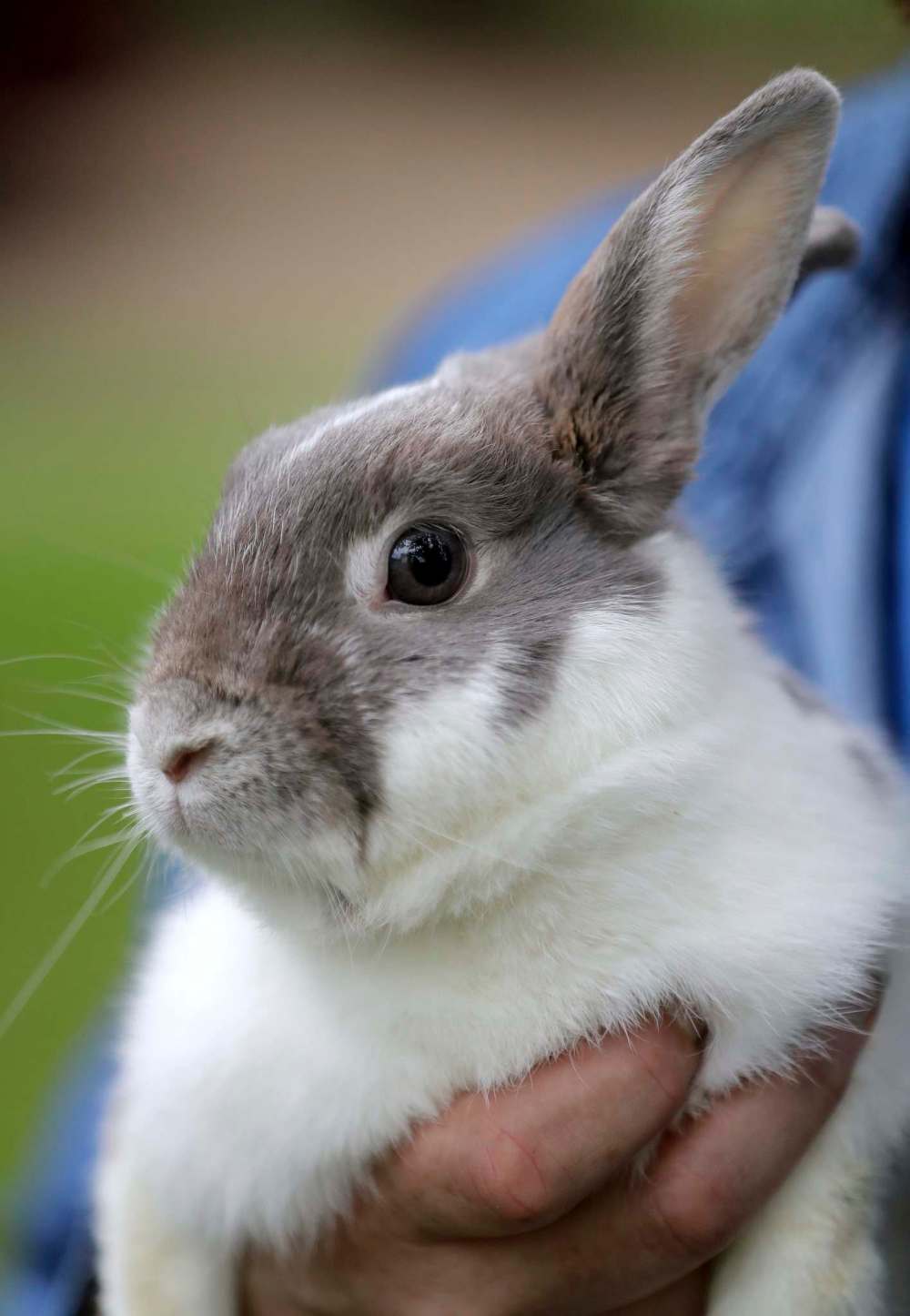
On May 5 at Maple Grove Rugby Park, Cindy and Jeff rescued Cinnabun, a female spotted dwarf-mix who has one ear that she can’t lift or move because it is permanently damaged from being attacked by another animal. Both of Cinnabun’s ears were covered in scabs from repeated frostbite. She gave birth to a litter shortly after coming into Popcorns and Binkies’ care.
“We know it’s not her first litter because of how she hid them, but it will be her last,” Cindy said, noting Cinnabun will be spayed when it is safe to do so. Most domestic rabbits can have litters every 32 days or so.
A few weeks ago in Transcona, residents saw a tiny grey rabbit with large ears and sent Popcorns and Binkies a Facebook message. Cindy and Jeff went out to rescue Mary Hoppins, a 2½-month-old New Zealand rabbit. She was malnourished — likely from her former owners separating her from her mother too soon and then abandoning her outside.
They rescued a black male New Zealand rabbit in January, during a cold snap that saw temperatures dip to -40 C, in an industrial area off Kenaston Boulevard with the help of Winnipeg Lost Cat Alert volunteers. The rabbit, now named Kimble, had been noticed by people looking out the window of a nearby restaurant who knew that wild rabbits aren’t black.
“The biggest thing is do your research before you adopt a rabbit. People think it’s just a cute little bunny, but it’s a lot of work,” Cindy said, noting she and Jeff welcome inquiries about rabbit care but that people should talk to a veterinarian.
A major misconception is that a rabbit can be kept in a cage, but that’s actually cruel and unhealthy, she said.
It’s best to let rabbits free-roam in a home. Rabbits need at least a 1.2-square-metre space — using an X-pen (like a large playpen for animals) to create an area for them — with towels or blankets underneath, a litter box and a bedding area that they can hide in.
Medical care and proper diet can be expensive for domestic rabbits. Their food should consists of 80 per cent hay, 15 per cent fresh vegetables and five per cent rabbit kibble. Timothy hay is recommended; rabbits need to chew on it constantly for nutrition and to wear down their teeth. Rabbits’ teeth grow continuously and, if not naturally worn down, can push painfully through their lips or jaws.
The Winnipeg Humane Society also takes in surrendered, abandoned or rescued rabbits, guinea pigs, birds, rats, hamsters and chinchillas. While the WHS doesn’t record specific critters outside of dogs and cats, Kyle Jahns said there were 704 “other” animals brought into the humane society in 2017. Rabbits are prevalent in the “other” category.
To assist the rescue or to apply to be a foster, email popcornsandbinkies@gmail.com.
ashley.prest@freepress.mb.ca
History
Updated on Tuesday, June 5, 2018 8:35 AM CDT: Fixes headline