EXPLAINER: Dirty bombs sow fear and panic, cause few deaths
Advertisement
Read this article for free:
or
Already have an account? Log in here »
To continue reading, please subscribe:

Digital Subscription
One year of digital access for only $205*
- Enjoy unlimited reading on winnipegfreepress.com
- Read the E-Edition, our digital replica newspaper
- Access News Break, our award-winning app
- Play interactive puzzles
*First annual payment billed as $205.00 + GST for one year. This annual subscription will automatically renew at $233.00 + GST every 52 weeks (10% off the regular annual price of $259.35). Offer available to new and qualified returning subscribers only. Cancel any time.
To continue reading, please subscribe:
Add Free Press access to your Brandon Sun subscription for only an additional
$1 for the first 4 weeks*
- Enjoy unlimited reading on winnipegfreepress.com
- Read the E-Edition, our digital replica newspaper
- Access News Break, our award-winning app
- Play interactive puzzles
*Your next Brandon Sun subscription payment will increase by $1.00 and you will be charged $17.95 plus GST for four weeks. After four weeks, your payment will increase to $24.95 plus GST every four weeks.
Read unlimited articles for free today:
or
Already have an account? Log in here »
Hey there, time traveller!
This article was published 24/10/2022 (1422 days ago), so information in it may no longer be current.
KYIV, Ukraine (AP) — Dirty bombs have long been feared as a potential weapon of terrorists because their main objective is to sow panic, confusion and anxiety by hurling radioactive dust and smoke into the atmosphere.
The Kremlin alleges that Ukraine is preparing to detonate a dirty bomb in order to blame it on Russia and force an escalation to the war that has entered its ninth month. Western countries have dismissed that claim as “transparently false.”
Although no dirty bomb attack has ever been recorded, two failed attempts to detonate such a device were reported in the southern Russian province of Chechnya more than two decades ago.
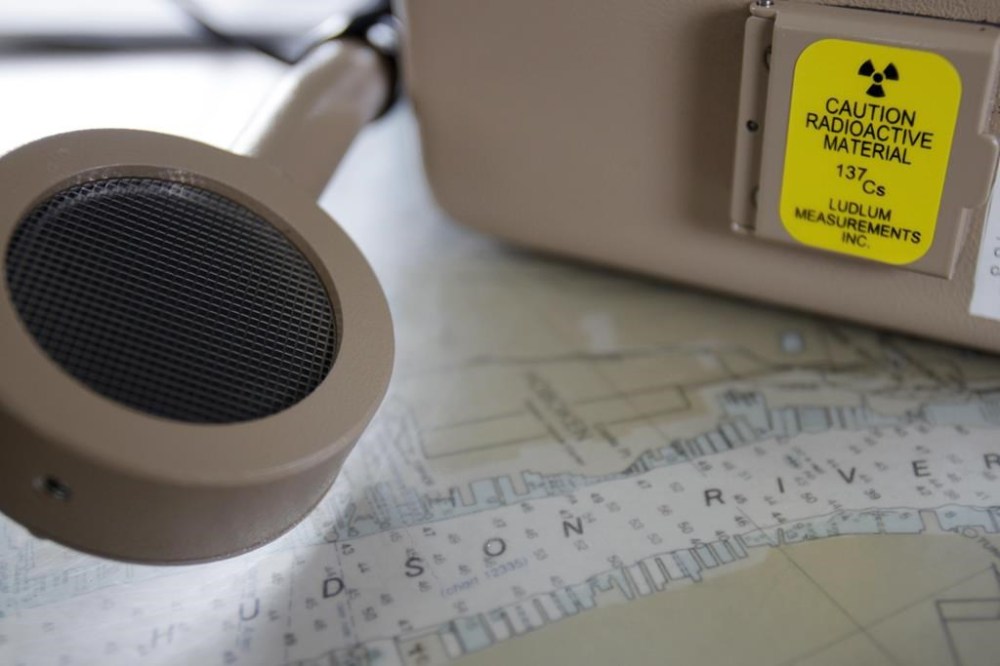
Here’s a look at what experts mean by the phrase “dirty bomb:”
___
HOW DOES A DIRTY BOMB WORK?
Technically known as radiological dispersion devices, dirty bombs are relatively primitive, imprecise weapons. They are much easier and cheaper to build than a nuclear device and also far less dangerous.
Dirty bombs use conventional explosives, such as dynamite, placed alongside radioactive material, which is then flung outward by the force of the blast. The amount of radioactive material dispersed, while dangerous, is not necessarily lethal.
The material used in the bomb could have been obtained from radioactive sources used in medicine and industry or from research facilities.
“A dirty bomb is really easy to make,” says Scott Roecker, vice president for the nuclear materials security program at The Nuclear Threat Initiative, a nonprofit based in Washington. “It’s a crude device.”
WHAT DAMAGE CAN A DIRTY BOMB CAUSE?
The number of casualties and the extent of damage from a dirty bomb depends on many variables.
A key factor is the amount and type of conventional explosives that are used, which determine the magnitude of the blast.
The quantity and type of radioactive materials released are other factors, as are weather conditions — and especially the wind — at the time of the blast. A potentially wide area could be contaminated.
Most dirty bombs would not discharge enough radiation to cause death or even severe illness.
Low levels of radiation exposure usually do not cause any symptoms. People may not know whether they have been exposed because radiation cannot be seen, smelled or tasted.
HOW DANGEROUS IS A DIRTY BOMB?
A dirty bomb would likely cause a limited number of deaths. Its main impact is psychological, which is why such devices are often referred to as “weapons of mass disruption.”
Dirty bombs are not for battlefield use, being deployed more obviously in urban areas, Roecker said.
“They’re more of a psychological weapon. When you’re trying to scare people, intimidate people, you’d use a weapon like this,” he said.

The radioactive dust and smoke can spread far and are dangerous if inhaled near the blast’s epicenter. The radioactive cloud would likely spread over several blocks, according to Roecker. But as radioactive material spreads through the atmosphere, it becomes less concentrated and less harmful.
Key factors in radiation exposure are what type of radiation it is, how long someone is exposed to it, and whether the radiation was absorbed through the skin, inhaled or consumed orally.
Specialized equipment is required to detect radiation. Contaminated homes, businesses and public services could be placed off-limits for months and need an expensive clean-up operation.
___
Follow all AP stories on the impact of the war in Ukraine at https://apnews.com/hub/russia-ukraine.
Related Articles
Ukraine hospital's staff fight dark memories of occupation
Advertisement Advertise With Us
Advertisement Advertise With Us