Boeing’s last 747 to roll out of Washington state factory
Advertisement
Read this article for free:
or
Already have an account? Log in here »
To continue reading, please subscribe:

Digital Subscription
One year of digital access for only $205*
- Enjoy unlimited reading on winnipegfreepress.com
- Read the E-Edition, our digital replica newspaper
- Access News Break, our award-winning app
- Play interactive puzzles
*First annual payment billed as $205.00 + GST for one year. This annual subscription will automatically renew at $233.00 + GST every 52 weeks (10% off the regular annual price of $259.35). Offer available to new and qualified returning subscribers only. Cancel any time.
To continue reading, please subscribe:
Add Free Press access to your Brandon Sun subscription for only an additional
$1 for the first 4 weeks*
- Enjoy unlimited reading on winnipegfreepress.com
- Read the E-Edition, our digital replica newspaper
- Access News Break, our award-winning app
- Play interactive puzzles
*Your next Brandon Sun subscription payment will increase by $1.00 and you will be charged $17.95 plus GST for four weeks. After four weeks, your payment will increase to $24.95 plus GST every four weeks.
Read unlimited articles for free today:
or
Already have an account? Log in here »
Hey there, time traveller!
This article was published 07/12/2022 (1396 days ago), so information in it may no longer be current.
SEATTLE (AP) — After more than half a century, the last Boeing 747 rolled out of a Washington state factory on Tuesday.
The 747 jumbo jet has taken on numerous roles — a cargo plane, a commercial aircraft capable of carrying nearly 500 passengers, and the Air Force One presidential aircraft — since it debuted in 1969. It was the largest commercial aircraft in the world and the first with two aisles, and it still towers over most other planes.
The plane’s design included a second deck extending from the cockpit back over the first third of the plane, giving it a distinctive hump that made the plane instantly recognizable and inspired a nickname, the Whale. More elegantly, the 747 became known as the Queen of the Skies.
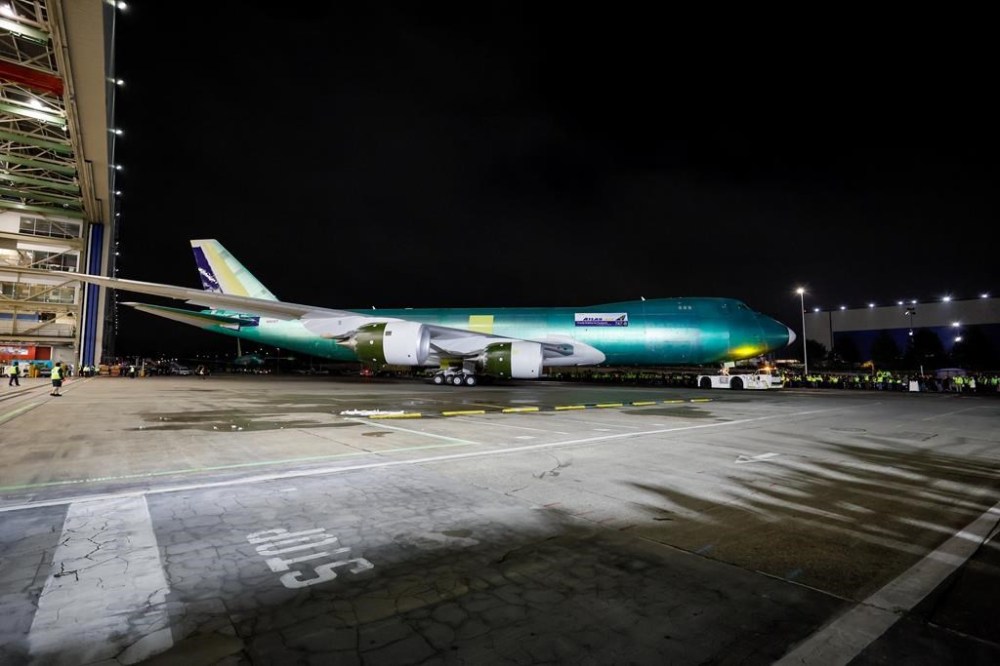
It took more than 50,000 Boeing employees less than 16 months to churn out the first 747. The company has completed 1,573 more since then.
But over the past 15 years or so, Boeing and its European rival Airbus released new widebody planes with two engines instead of the 747’s four. They were more fuel-efficient and profitable.
Delta was the last U.S. airline to use the 747 for passenger flights, which ended in 2017, although some other international carriers continue to fly it, including the German airline Lufthansa.
The final customer is the cargo carrier Atlas Air, which ordered four 747-8 freighters early this year. The last was scheduled to roll out of Boeing’s massive factory in Everett, Washington, on Tuesday night.
Boeing’s roots are in the Seattle area, and it has assembly plants in Washington state and South Carolina. The company announced in May that it would move its headquarters from Chicago to Arlington, Virginia.

The move to the Washington, D.C., area puts its executives closer to key federal government officials and the Federal Aviation Administration, which certifies Boeing passenger and cargo planes.
Boeing’s relationship with the FAA has been strained since deadly crashes of its best-selling plane, the 737 Max, in 2018 and 2019. The FAA took nearly two years — far longer than Boeing expected — to approve design changes and allow the plane back in the air.