Biden administration recommends major Alaska oil project

Advertisement

Advertise with us

JUNEAU, Alaska (AP) — The Biden administration released a long-awaited study Wednesday that recommends allowing a major oil development on Alaska's North Slope that supporters say could boost U.S. energy security but that climate activists decry as a “carbon bomb.”

Read this article for free:


or

Already have an account? Log in here »

To continue reading, please subscribe:

Subscribe and receive a limited-edition Free Press branded hat or tote.

Digital Subscription

One year of digital access for only $205*

  • Enjoy unlimited reading on winnipegfreepress.com
  • Read the E-Edition, our digital replica newspaper
  • Access News Break, our award-winning app
  • Play interactive puzzles

*First annual payment billed as $205.00 + GST for one year. This annual subscription will automatically renew at $233.00 + GST every 52 weeks (10% off the regular annual price of $259.35). Offer available to new and qualified returning subscribers only. Cancel any time.

To continue reading, please subscribe:

Add Free Press access to your Brandon Sun subscription for only an additional

$1 for the first 4 weeks*

  • Enjoy unlimited reading on winnipegfreepress.com
  • Read the E-Edition, our digital replica newspaper
  • Access News Break, our award-winning app
  • Play interactive puzzles
Start now

*Your next Brandon Sun subscription payment will increase by $1.00 and you will be charged $17.95 plus GST for four weeks. After four weeks, your payment will increase to $24.95 plus GST every four weeks.

Hey there, time traveller!
This article was published 01/02/2023 (1294 days ago), so information in it may no longer be current.

JUNEAU, Alaska (AP) — The Biden administration released a long-awaited study Wednesday that recommends allowing a major oil development on Alaska’s North Slope that supporters say could boost U.S. energy security but that climate activists decry as a “carbon bomb.”

The move — while not final — drew immediate anger from environmentalists who saw it as a betrayal of the president’s pledges to reduce carbon emissions and promote clean energy sources.

ConocoPhillips Alaska had proposed five drilling sites as part of its Willow project, and the approach listed as the preferred alternative by the U.S. Bureau of Land Management in the report calls for up to three drill sites initially. Even as the land agency released its report, the U.S. Interior Department said in a separate statement that it has “substantial concerns” about the project and the report’s preferred alternative, “including direct and indirect greenhouse gas emissions and impacts to wildlife and Alaska Native subsistence.”

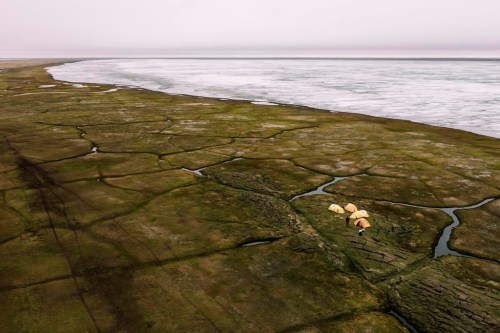
This Sunday, June 30, 2019, aerial photo released by Earthjustice shows the Alaska's North Slope in the Western Arctic on the edge of Teshekpuk Lake, Alaska. The Biden administration issued a long-awaited study on Wednesday, Feb. 1, 2023, that recommends allowing a major oil development on Alaska's North Slope, and the move — while not final — drew immediate anger from environmentalists who saw it as a betrayal of the president's pledges to reduce carbon emissions and promote clean energy sources. (Kiliii Yuyan for Earthjustice via AP)

The Bureau of Land Management, which falls under the Interior Department, also said in the report that identifying a preferred alternative “does not constitute a commitment or decision” and notes it could select a different alternative in the final decision.

Opponents have raised concerns about the impacts of oil development on wildlife, such as caribou, and efforts to address climate change.

The project is in the National Petroleum Reserve-Alaska, a vast region roughly the size of Indiana on Alaska’s resource-rich North Slope. ConocoPhillips Alaska says the project, at its peak, could produce an estimated 180,000 barrels of oil a day.

The Arctic Slope Regional Corporation, an Alaska Native corporation, and the Iñupiat Community of the Arctic Slope joined the North Slope Borough in praising the proposed alternative and calling on the administration to move ahead on the project. In a joint statement, they said advancing the project “is critical for domestic energy independence, job security for Alaskans and the right of Alaska Natives to choose their own path.”

Other Alaska Native groups have expressed concerns.

Leaders of the Native Village of Nuiqsut and city of Nuiqsut in a recent letter said they do not feel like the Bureau of Land Management is listening. The community is about 36 miles (58 kilometers) from the Willow project, in a remote region of Alaska’s far north.

The Bureau of Land Management’s “engagement with us is consistently focused on how to allow projects to go forward; how to permit the continuous expansion and concentration of oil and gas activity on our traditional lands,” Native Village of Nuiqsut President Eunice Brower and City of Nuiqsut Mayor Rosemary Ahtuangaruak wrote in a letter dated last week.

ConocoPhillips has estimated the project would create as many as 2,000 jobs during construction and 300 permanent jobs and generate between $8 billion and $17 billion in federal, state and local revenue in an area more than 600 miles (965 kilometers) from Anchorage.

Erec Isaacson, the president of ConocoPhillips Alaska, said in a statement the company believes the project will “benefit local communities and enhance American energy security while producing oil in an environmentally and socially responsible manner.” He said the review process “should be concluded without delay.”

The members of Alaska’s congressional delegation — Republican Sens. Lisa Murkowski and Dan Sullivan and Rep. Mary Peltola, a Democrat — all said they welcomed Wednesday’s environmental review and urged the administration to allow the project to move forward.

The project would bring miles of roads and hundreds of miles of pipeline to the area, disrupt animal migration patterns and erode habitat if it goes forward, said Earthjustice, an environmental group.
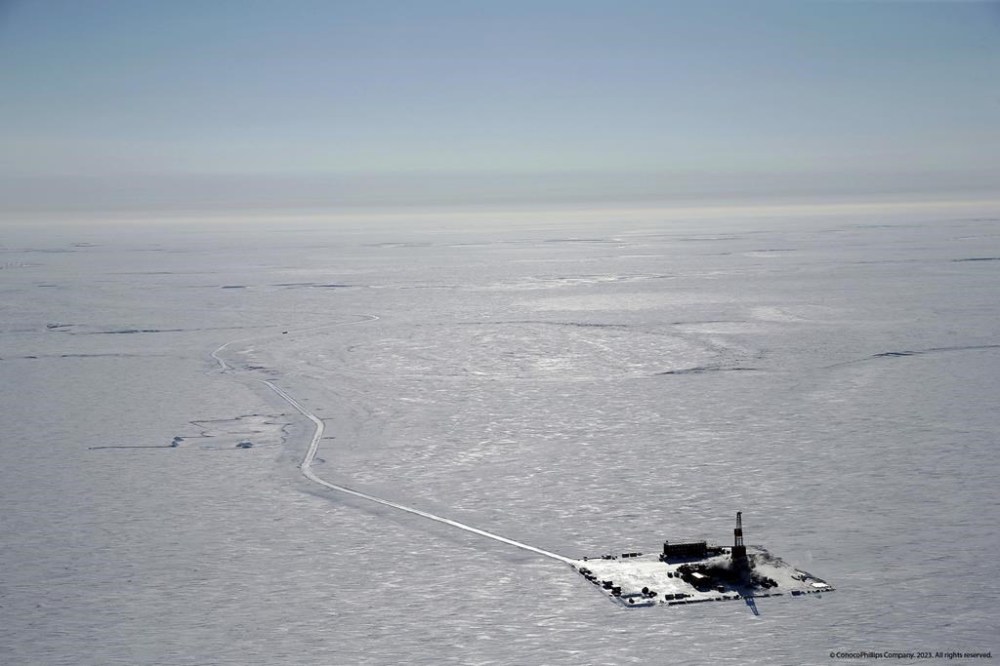
FILE - This 2019 aerial photo provided by ConocoPhillips shows an exploratory drilling camp at the proposed site of the Willow oil project on Alaska's North Slope. The Biden administration issued a long-awaited study on Wednesday, Feb. 1, 2023, that recommends allowing three oil drilling sites in the region of far northern Alaska. The move, while not final, has angered environmentalists who see it as a betrayal of President Joe Biden's pledges to reduce carbon emissions and promote green energy. (ConocoPhillips via AP)

Jeremy Lieb, an attorney with the group, said Willow is currently the largest proposed oil project in the U.S. He said it is “drastically out of step with the Biden administration’s goals to slash climate pollution and transition to clean energy.” President Joe Biden campaigned on pledges to end new drilling on public lands and has set an ambitious goal to cut greenhouse gas emissions in half by 2030.

Biden “will be remembered for what he did to tackle the climate crisis, and as things stand today, it’s not too late for him to step up and pull the plug on this carbon bomb,” Lieb said.

U.S. Interior Secretary Deb Haaland, who fought the Willow project as a member of Congress, has the final decision on whether to approve it, although top White House climate officials are likely to be involved. Haaland has multiple options, including outright approval or rejection or a middle ground that allows some drilling but blocks other development. A final decision is expected no sooner than early March.

Federal agencies have within the last week made two major decisions around resources in Alaska. Last week, the U.S. Department of Agriculture said it was reinstating restrictions on road-building and logging on the country’s largest national forest in southeast Alaska, the Tongass National Forest.

And on Tuesday, the U.S. Environmental Protection Agency said it was exercising its so-called veto authority under the federal Clean Water Act to block plans for a proposed copper and gold mine in a mineral-rich area of southwest Alaska because of concerns about its environmental impact on a rich Alaska aquatic ecosystem that supports the world’s largest sockeye salmon fishery.

___

Daly reported from Washington, D.C.
Report Error Submit a Tip

More Stories

Officer who shot dog dead after it bit him won’t face charges

Scott Billeck 3 minute read Preview

Officer who shot dog dead after it bit him won’t face charges

Scott Billeck 3 minute read Yesterday at 1:06 PM CDT

A Manitoba First Nations police officer will not face charges for fatally shooting a dog last year, despite the Crown describing the officer’s conduct as “concerning.”

The Independent Investigation Unit of Manitoba announced it would not recommend charges Monday, more than a year after the incident was reported to the police watchdog.

A Manitoba First Nations Police Service officer went to a home in Swan Lake First Nation to make an arrest in June 2025, the IIU said. No arrest was made as the person police were looking for was not there. As the officer was leaving, a dog chained outside bit him.

The officer later returned with a carbine rifle and shot and killed the dog.

Read
Yesterday at 1:06 PM CDT

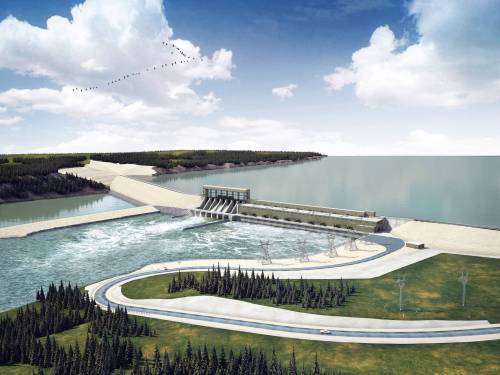
Take advantage of hydroelectric potential

Jerry Storie 5 minute read Preview

Take advantage of hydroelectric potential

Jerry Storie 5 minute read Yesterday at 2:00 AM CDT

Manitoba Hydro tells us that we are going to need significant new electricity generation over the coming decades.

Read
Yesterday at 2:00 AM CDT

Biden administration recommends major Alaska oil project

Becky Bohrer And Matthew Daly, The Associated Press 6 minute read Preview

Biden administration recommends major Alaska oil project

Becky Bohrer And Matthew Daly, The Associated Press 6 minute read Wednesday, Feb. 1, 2023

JUNEAU, Alaska (AP) — The Biden administration released a long-awaited study Wednesday that recommends allowing a major oil development on Alaska's North Slope that supporters say could boost U.S. energy security but that climate activists decry as a “carbon bomb.”

The move — while not final — drew immediate anger from environmentalists who saw it as a betrayal of the president's pledges to reduce carbon emissions and promote clean energy sources.

ConocoPhillips Alaska had proposed five drilling sites as part of its Willow project, and the approach listed as the preferred alternative by the U.S. Bureau of Land Management in the report calls for up to three drill sites initially. Even as the land agency released its report, the U.S. Interior Department said in a separate statement that it has “substantial concerns” about the project and the report's preferred alternative, “including direct and indirect greenhouse gas emissions and impacts to wildlife and Alaska Native subsistence.”

The Bureau of Land Management, which falls under the Interior Department, also said in the report that identifying a preferred alternative “does not constitute a commitment or decision” and notes it could select a different alternative in the final decision.

Read
Wednesday, Feb. 1, 2023

Paralyzed foster girl has system under a microscope

Chris Kitching 6 minute read Preview

Paralyzed foster girl has system under a microscope

Chris Kitching 6 minute read 2:00 AM CDT

An internal investigation by Manitoba’s Families Department is nearly complete in the case of a six-year-old girl who is paralyzed after being assaulted by her foster mother in Winnipeg.

The review by child-welfare officials is intended to prevent similar incidents, but it’s unlikely the public will learn the findings or recommendations.

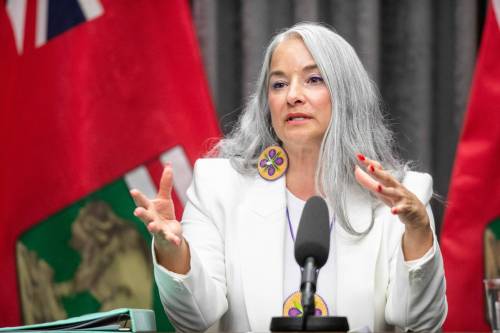
“We’re working closely with the (child and family services) authority to make sure that every recommendation is taken seriously and implemented,” Families Minister Nahanni Fontaine said Monday.

“They’re important (investigations) because they help us identify what went wrong so we can make those changes to ensure something like this tragedy never happens again.”

Read
2:00 AM CDT

Pair of banks abandoning Brandon’s downtown

Abiola Odutola 3 minute read Preview

Pair of banks abandoning Brandon’s downtown

Abiola Odutola 3 minute read 2:01 AM CDT

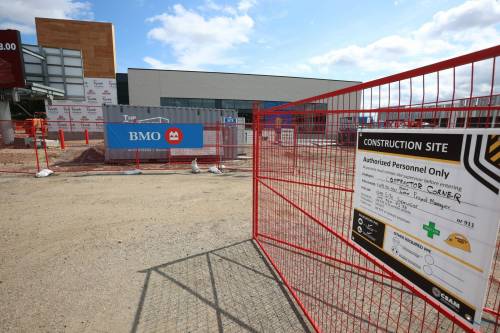
BRANDON — Two of Canada’s major banks are set to relocate from their longstanding downtown Brandon locations in October.

BMO will close its branch on Rosser Avenue and move to a new location on Park Avenue while Royal Bank of Canada’s Rosser branch will be consolidated with the existing RBC branch on 18th Street.

Neither bank owns its downtown property or could say what will happen to the buildings after they vacate.

BMO spokesperson Jeff Roman described the bank’s move to Park Avenue as an investment in the Brandon community.

Read
2:01 AM CDT

A grand jeté of climate-change denial

Gwynne Dyer 5 minute read Preview

A grand jeté of climate-change denial

Gwynne Dyer 5 minute read 2:00 AM CDT

The first hurricane to hit Hawaii in 34 years. The Mediterranean on fire from Spain to Greece. ‘Heat domes’ one after another for months on end in Europe and North America. Thousands of excess deaths. A record El Niño piled on top of an average global temperature up from +1.2 C five years ago. Predicted high for this year: +1.7 C.

Surely they’ll get it now, you think — but no, they won’t. It once seemed sensible to think that when the climate damage gets bad enough and the trend line becomes impossible to ignore, ‘they’ (meaning the climate change deniers and their fellow travellers) will finally accept that the threat is real and urgent action is necessary.

A few of them will, but most will not.

It is becoming clear that as the old position of flat disbelief in climate science becomes untenable, the preferred response among former deniers is to admit that climate change is big, dangerous and already well underway — but to insist that it is already too late and nothing can be done about it now.

Read
2:00 AM CDT