Why TikTok is being banned on gov’t phones in US and beyond
Advertisement
Read this article for free:
or
Already have an account? Log in here »
To continue reading, please subscribe:

Digital Subscription
One year of digital access for only $205*
- Enjoy unlimited reading on winnipegfreepress.com
- Read the E-Edition, our digital replica newspaper
- Access News Break, our award-winning app
- Play interactive puzzles
*First annual payment billed as $205.00 + GST for one year. This annual subscription will automatically renew at $233.00 + GST every 52 weeks (10% off the regular annual price of $259.35). Offer available to new and qualified returning subscribers only. Cancel any time.
To continue reading, please subscribe:
Add Free Press access to your Brandon Sun subscription for only an additional
$1 for the first 4 weeks*
- Enjoy unlimited reading on winnipegfreepress.com
- Read the E-Edition, our digital replica newspaper
- Access News Break, our award-winning app
- Play interactive puzzles
*Your next Brandon Sun subscription payment will increase by $1.00 and you will be charged $17.95 plus GST for four weeks. After four weeks, your payment will increase to $24.95 plus GST every four weeks.
Read unlimited articles for free today:
or
Already have an account? Log in here »
Hey there, time traveller!
This article was published 28/02/2023 (1277 days ago), so information in it may no longer be current.
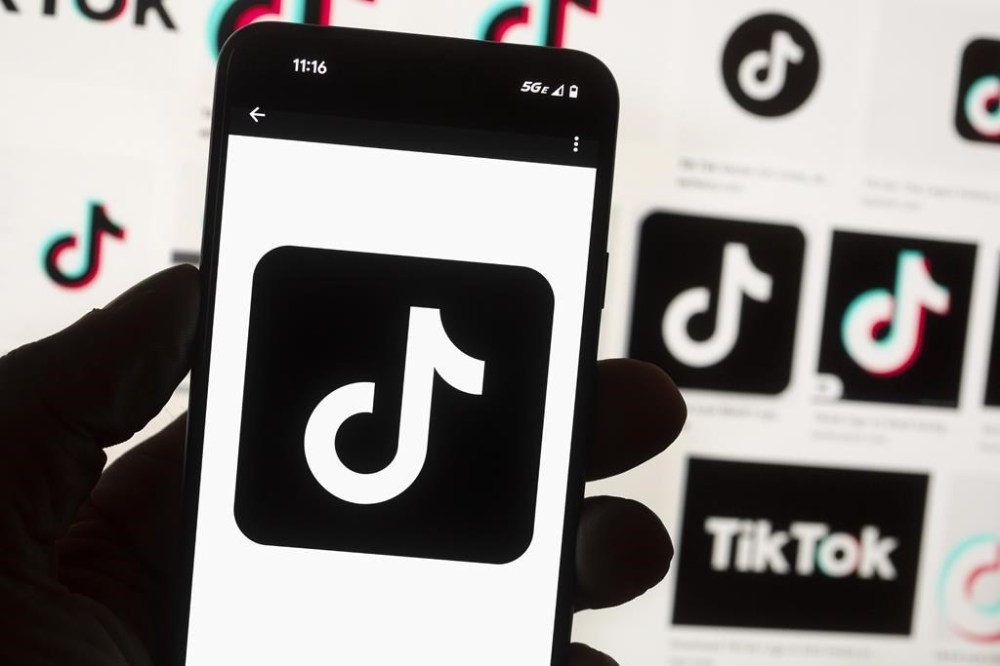
The United States is ratcheting up national security concerns about TikTok, mandating that all federal employees delete the Chinese-owned social media app from government-issued mobile phones. Other Western governments are pursuing similar bans, citing espionage fears.
So how serious is the threat? And should TikTok users who don’t work for the government be worried about the app, too?
The answers depend somewhat on whom you ask, and how concerned you are in general about technology companies gathering and sharing personal data.
Here’s what to know:
HOW ARE THE U.S. AND OTHER GOVERNMENTS BLOCKING TIKTOK?
The White House said Monday it is giving U.S. federal agencies 30 days to delete TikTok from all government-issued mobile devices.
Congress, the White House, U.S. armed forces and more than half of U.S. states had already banned TikTok amid concerns that its parent company, ByteDance, would give user data — such as browsing history and location — to the Chinese government, or push propaganda and misinformation on its behalf.
The European Union’s executive branch has temporarily banned TikTok from employee phones, and Denmark and Canada have announced efforts to block TikTok on government-issued phones.
China says the bans reveal the United States’ insecurities and are an abuse of state power. But they come at a time when Western technology companies, including Airbnb, Yahoo and LinkedIn, have been leaving China or downsizing operations there because of Beijing’s strict privacy law that specifies how companies can collect and store data.
WHAT ARE THE CONCERNS ABOUT TIKTOK?
Both the FBI and the Federal Communications Commission have warned that ByteDance could share TikTok user data with China’s authoritarian government.
A law China implemented in 2017 requires companies to give the government any personal data relevant to the country’s national security. There’s no evidence that TikTok has turned over such data, but fears abound due to the vast amount of user data it collects.
Concerns were heightened in December when ByteDance said it fired four employees who accessed data on two journalists from Buzzfeed News and The Financial Times while attempting to track down the source of a leaked report about the company. TikTok spokesperson Brooke Oberwetter said the breach was an “egregious misuse” of the employees’ authority.
There is also concern about TikTok’s content and whether it harms teenagers’ mental health. Researchers from the nonprofit Center for Countering Digital Hate said in a report released in December that eating disorder content on the platform had amassed 13.2 billion views. Roughly two-thirds of U.S. teens use TikTok, according to the Pew Research Center.
WHO HAS PUSHED FOR TIKTOK RESTRICTIONS?
In 2020, then-President Donald Trump and his administration sought to force ByteDance to sell off its U.S. assets and ban TikTok from app stores. Courts blocked Trump’s efforts, and President Joe Biden rescinded Trump’s orders after taking office but ordered an in-depth study of the issue. A planned sale of TikTok’s U.S. assets was shelved.
In Congress, concern about the app has been bipartisan. Congress passed the “No TikTok on Government Devices Act” in December as part of a sweeping government funding package. The legislation does allow for TikTok use in certain cases, including for national security, law enforcement and research purposes.
House Republicans are expected to move forward Tuesday with a bill that would give Biden the power to ban TikTok nationwide. The legislation, proposed by Rep. Mike McCaul, looks to circumvent the challenges the administration would face in court if it moved forward with sanctions against the company.
The bill has received pushback from civil liberties organizations. In a letter sent Monday to McCaul and Rep. Gregory Meeks, D-N.Y., ranking member of the Foreign Affairs Committee, the American Civil Liberties Union said a nationwide TikTok ban would be unconstitutional and would “likely result in banning many other businesses and applications as well.”
HOW RISKY IS TIKTOK?
It depends on who you ask.
U.S. Deputy Attorney General Lisa Monaco has expressed concerns that the Chinese government could gain access to user data.
“I don’t use TikTok, and I would not advise anyone to do so,” Monaco said earlier this month at the policy institute Chatham House in London.
TikTok said in a blog post in June that it will route all data from U.S. users to servers controlled by Oracle, the Silicon Valley company it chose as its U.S. tech partner in 2020 in an effort to avoid a nationwide ban. But it is storing backups of the data in its own servers in the U.S. and Singapore. The company said it expects to delete U.S. user data from its own servers, but it did not provide a timeline as to when that would occur.
But the amount of information TikTok collects might not be that different from other popular social media sites, experts say.
In an analysis published in 2021, the University of Toronto’s nonprofit Citizen Lab said TikTok and Facebook collect similar amounts of user data, including device identifiers that can be used to track a user and other information that can piece together a user’s behavior across different platforms. It’s valuable information for advertisers.
“If you are not comfortable with that level of data collection and sharing, you should avoid using the app,” the Citizen Lab report said.
WHAT ARE OTHER EXPERTS SAYING?
While the potential abuse of privacy by the Chinese government is concerning, “it’s equally concerning that the US government, and many other governments, already abuse and exploit the data collected by every other U.S.-based tech company with the same data-harvesting business practices,” said Evan Greer, director of the nonprofit advocacy group Fight for the Future.
“If policy makers want to protect Americans from surveillance, they should advocate for a basic privacy law that bans all companies from collecting so much sensitive data about us in the first place, rather than engaging in what amounts to xenophobic showboating that does exactly nothing to protect anyone,” Greer said.
Others say there is legitimate reason for concern.
People who use TikTok might think they’re not doing anything that would be of interest to a foreign government, but that’s not always the case, said Anton Dahbura, executive director of the Johns Hopkins University Information Security Institute. Important information about the United States is not strictly limited to nuclear power plants or military facilities; it extends to other sectors, such as food processing, the finance industry and universities, Dahbura said.
WHAT DOES TIKTOK SAY?
Its unclear how much the government-wide TikTok ban might impact the company. Oberwetter, the TikTok spokesperson, said it has “no way” of knowing whether its users are government employees.
The company, though, has questioned the bans, saying it has not been given an opportunity to answer questions and that governments were cutting themselves off from a platform beloved by millions.
“These bans are little more than political theater,” Oberwetter said.
TikTok CEO Shou Zi Chew is set to testify next month before Congress. The House Energy and Commerce Committee will ask about the company’s privacy and data-security practices, as well as its relationship with the Chinese government.
Related Articles
Quebec bans TikTok on government cellphones


Advertisement Advertise With Us
Advertisement Advertise With Us