Australia bans TikTok from federal government devices
Advertisement
Read this article for free:
or
Already have an account? Log in here »
To continue reading, please subscribe:

Digital Subscription
One year of digital access for only $205*
- Enjoy unlimited reading on winnipegfreepress.com
- Read the E-Edition, our digital replica newspaper
- Access News Break, our award-winning app
- Play interactive puzzles
*First annual payment billed as $205.00 + GST for one year. This annual subscription will automatically renew at $233.00 + GST every 52 weeks (10% off the regular annual price of $259.35). Offer available to new and qualified returning subscribers only. Cancel any time.
To continue reading, please subscribe:
Add Free Press access to your Brandon Sun subscription for only an additional
$1 for the first 4 weeks*
- Enjoy unlimited reading on winnipegfreepress.com
- Read the E-Edition, our digital replica newspaper
- Access News Break, our award-winning app
- Play interactive puzzles
*Your next Brandon Sun subscription payment will increase by $1.00 and you will be charged $17.95 plus GST for four weeks. After four weeks, your payment will increase to $24.95 plus GST every four weeks.
Read unlimited articles for free today:
or
Already have an account? Log in here »
Hey there, time traveller!
This article was published 03/04/2023 (1262 days ago), so information in it may no longer be current.
CANBERRA, Australia (AP) — Australia has become the last of the “Five Eyes” security partners to ban the Chinese-owned video-sharing app TikTok from its federal government’s devices.
Attorney-General Mark Dreyfus said in a statement Tuesday that based on intelligence and security agencies’ advice, that ban would come into effect “as soon as practicable.”
The so-called Five Eyes intelligence-sharing partners — the United States, Canada, Britain and New Zealand — have taken similar steps.
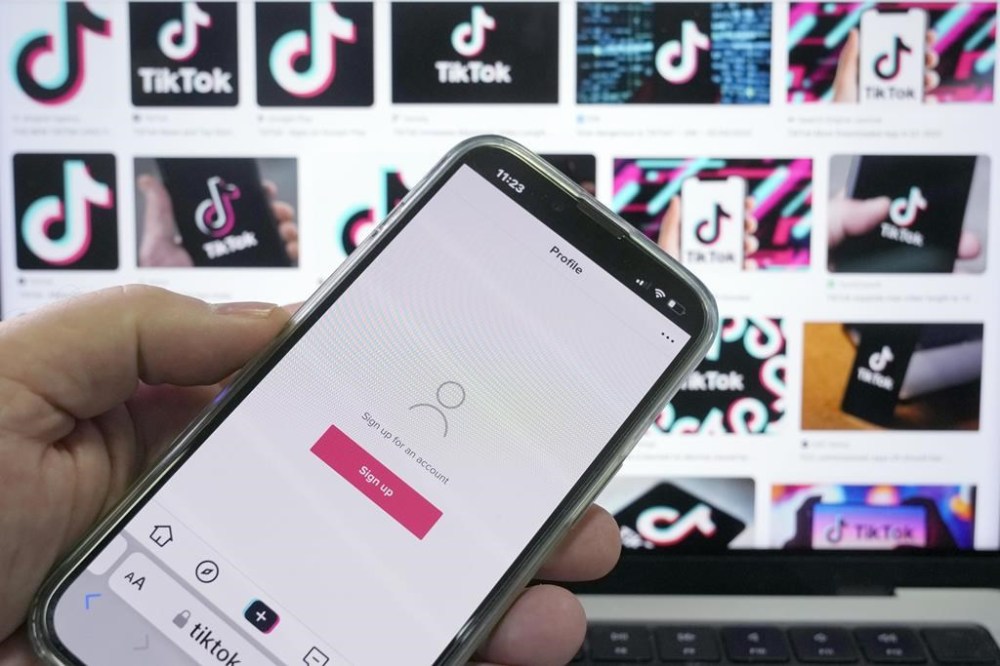
TikTok objected to the decision.
“We are extremely disappointed by this decision, which, in our view, is driven by politics, not by fact,” the company’s general manager for Australia, Lee Hunter, said in a statement. “Again, we stress that there is no evidence to suggest that TikTok is in any way a security risk to Australians and should not be treated differently to other social media platforms.”
He urged the Australian government to treat all businesses fairly, “regardless of country of origin.”
Western governments are worried that TikTok poses risks to cybersecurity and data privacy, and that the app could be used to promote pro-Beijing narratives and misinformation.
TikTok is owned by the Chinese technology company Bytedance and has long maintained that it does not share data with the Chinese government. It is carrying out a project to store U.S. user data on Oracle servers, which it says will put the information out of China’s reach.
The company has disputed accusations it collects more user data than other social media companies, and insists that it is run independently by its own management.

The European Parliament, European Commission and the EU Council, the 27-member bloc’s three main institutions, have also imposed bans on TikTok on staff devices. Under the European Parliament’s ban, which took effect last month, lawmakers and staff were also advised to remove the TikTok app from their personal devices.
India imposed a nationwide ban on TikTok and dozens of other Chinese apps, including the messaging app WeChat, in 2020 over privacy and security concerns. The ban came shortly after a clash between Indian and Chinese troops at a disputed Himalayan border killed 20 Indian soldiers and injured dozens.
In early March, the U.S. gave government agencies 30 days to delete TikTok from federal devices and systems. The ban applies only to government devices, though some U.S. lawmakers are advocating an outright ban.
China has lashed out at the U.S. for banning TikTok, saying it is an abuse of state power and is suppressing companies from other countries.
More than half of the 50 U.S. states also have banned the app from official devices, as have Congress and the U.S. armed forces.