Mars head Yung Wu announces plan to step down from role as tech incubator’s CEO
Advertisement
Read this article for free:
or
Already have an account? Log in here »
To continue reading, please subscribe:

Digital Subscription
One year of digital access for only $205*
- Enjoy unlimited reading on winnipegfreepress.com
- Read the E-Edition, our digital replica newspaper
- Access News Break, our award-winning app
- Play interactive puzzles
*First annual payment billed as $205.00 + GST for one year. This annual subscription will automatically renew at $233.00 + GST every 52 weeks (10% off the regular annual price of $259.35). Offer available to new and qualified returning subscribers only. Cancel any time.
To continue reading, please subscribe:
Add Free Press access to your Brandon Sun subscription for only an additional
$1 for the first 4 weeks*
- Enjoy unlimited reading on winnipegfreepress.com
- Read the E-Edition, our digital replica newspaper
- Access News Break, our award-winning app
- Play interactive puzzles
*Your next Brandon Sun subscription payment will increase by $1.00 and you will be charged $17.95 plus GST for four weeks. After four weeks, your payment will increase to $24.95 plus GST every four weeks.
Read unlimited articles for free today:
or
Already have an account? Log in here »
Hey there, time traveller!
This article was published 18/04/2023 (1276 days ago), so information in it may no longer be current.
TORONTO – Yung Wu has founded, built and invested in at least seven companies, but there’s one thing that’s not his strong suit: retiring.
The first time the serial entrepreneur retired was in 2007, after the sale of his first company, Castek Inc., to Oracle, but it didn’t last. He came out of retirement in 2010 to create NFQ Ventures, which invested in early-stage companies.
After building up and exiting several companies, he retired again in 2015, only to agree to head Mars, a non-profit innovation hub in Toronto dedicated to supporting high-growth start-ups.
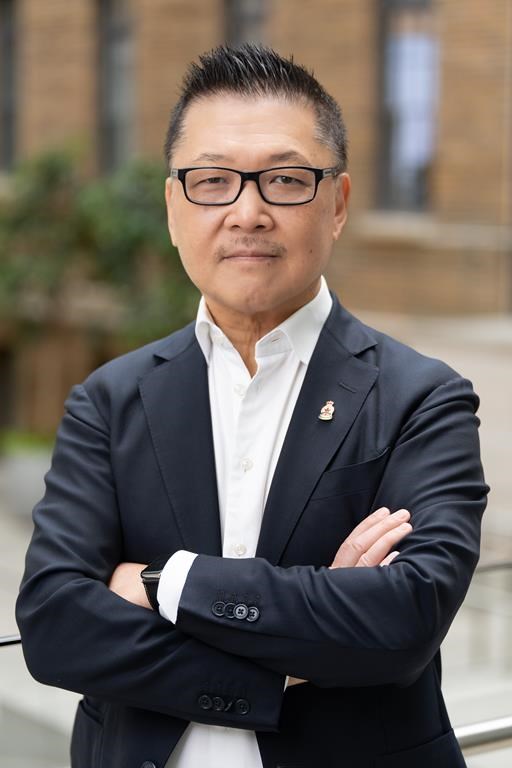
On Tuesday, he revealed he will leave his post as chief executive of Mars at the end of the year.
But even Wu isn’t confident this will be much of a retirement.
“There’s always another company to build, another company to invest into, so I guess what I’m saying is I fail miserably at retirement,” he told The Canadian Press.
After his Mars departure, he plans to be involved with NFQ Ventures, chairing the Toronto Region Board of Trade and advancing the Coalition of Innovation Leaders Against Racism organization he co-founded.
He said he’s not leaving Mars because something is wrong, but because it was always the plan when the incubator’s chair, Gord Nixon, asked him to take the helm.
“I said, ‘Gord, I’m not here to keep a job, I’m here to do a job.'” Wu recalled.
“You need fresh blood all the time, you need boards to be renewed, you need leadership to be renewed. This is a natural thing.”
The Mars Wu will leave behind has changed dramatically from November 2017, the start of what was to be a five-year job he took over from Ilse Treurnicht, who had run venture capital firm Primaxis Technology Ventures.
Treurnicht oversaw Mars as it struggled to build an office and laboratory tower dedicated to biotechnology companies and located south of Queen’s Park on University Avenue.
As startups balked at the high rents and U.S. developer Alexandria Real Estate looked for a way out of the deal, some $380 million in government loans helped finish the building, which opened ahead of Wu’s tenure with Facebook and CIBC as tenants.
By then, Canada’s tech scene was on the rise. Shopify Inc. had become a unicorn, Twitter had set up an office in the country and venture capital was flowing more plentifully across the border.
Wu bolstered those trends through the Momentum scale-up program, which was designed to support executives of high-growth companies with reaching $100 million in revenue in the next five years, and Mission from Mars, which aimed to speed up adoption of carbon-reducing initiatives.
He also launched Graphite Ventures, a $100-million private sector venture capital fund investing in early-stage companies and orchestrated Mars’ expansion to a waterfront space this spring.
The efforts cemented Mars as a place where startups could find support, talent and opportunity as they and the broader tech community grew at a rapid pace.
Mars was affiliated with roughly 1,200 startups employing about 6,000 people, when Wu started in the top job, but they have now hit 32,600 workers. Over the last 12 years, Mars-supported ventures contributed $29.6 billion to Canada’s GDP and $7.5 billion in tax contributions totaling, a recent economic impact report it commissioned found.
Wu sees the numbers as a sign that Canada has a burgeoning knowledge-based economy stepping up to complement its long-standing resource industries like mining, lumber, oil and gas.
“It’s not lab experiments anymore,” he said.
“There are companies that are growing rapidly and they’re growing at 10 times the rate of Canada.”
But headwinds prevail.
Tech valuations have been falling for about a year as investors rethink funding efforts amid concerns of a possible recession. It’s made drumming up new cash infusions tough for companies and forced some to cut workers.
Job cuts aggregator Layoffs.fyi has counted 170,611 workers who lost their jobs across 589 global tech companies so far this year as valuations settled down from what Wu calls “very, very frothy levels” amplified by “probably the longest bull market in history.”
Many are also feeling the fallout from the collapse of the Silicon Valley Bank, a long-time friend to burgeoning companies, which withdrew deposits to stay afloat, leaving the California institution short on capital and forced to sell its bonds at a major loss.
“That was a failure by Silicon Valley Bank management,” Wu said. “It’s basically asset management 101 and somebody was asleep at the switch on that.”
He insists the fall of the bank “was not a commentary on the state of the innovation economy globally,” but admits the bank turmoil and shift in valuations mean trouble.
“There will be more companies that don’t survive this,” he said.
But those that do will be mighty, if history has taught Wu anything.
“Recessionary times are the times when the most important and impactful companies in tech and in the world are built,” he said, prattling off Microsoft, Google, Meta, Electronic Arts, Airbnb and Salesforce as examples.

“They were all built during recessionary times.”
To keep up the pipeline, he urged policymakers to invest in startup launchpads and funders to open their wallets because the best companies need runway to last through difficult cycles.
He recommends his successor, who Mars has started a search process to name, focus on “10 x,” meaning find a way to multiple the funding, talent, opportunities and growth Mars and the country’s tech scene has experienced over his tenure.
“My advice to the next CEO is take it, grab it, activate it and make it happen for Canada.”
This report by The Canadian Press was first published April 18, 2023.