Mystery solved: Scientists ID Caribbean sea urchin killer

Advertisement

Advertise with us

NEW YORK (AP) — Last year, sea urchins in the Caribbean started getting sick — shedding their spines, dying off and throwing reef ecosystems into chaos. Now, scientists think they’ve caught the killer in this marine murder mystery.

Read this article for free:

or

Already have an account? Log in here »

To continue reading, please subscribe:

Subscribe and receive a limited-edition Free Press branded hat or tote.

Digital Subscription

One year of digital access for only $205*

  • Enjoy unlimited reading on winnipegfreepress.com
  • Read the E-Edition, our digital replica newspaper
  • Access News Break, our award-winning app
  • Play interactive puzzles

*First annual payment billed as $205.00 + GST for one year. This annual subscription will automatically renew at $233.00 + GST every 52 weeks (10% off the regular annual price of $259.35). Offer available to new and qualified returning subscribers only. Cancel any time.

To continue reading, please subscribe:

Add Free Press access to your Brandon Sun subscription for only an additional

$1 for the first 4 weeks*

  • Enjoy unlimited reading on winnipegfreepress.com
  • Read the E-Edition, our digital replica newspaper
  • Access News Break, our award-winning app
  • Play interactive puzzles
Start now

*Your next Brandon Sun subscription payment will increase by $1.00 and you will be charged $17.95 plus GST for four weeks. After four weeks, your payment will increase to $24.95 plus GST every four weeks.

Hey there, time traveller!
This article was published 19/04/2023 (1206 days ago), so information in it may no longer be current.

NEW YORK (AP) — Last year, sea urchins in the Caribbean started getting sick — shedding their spines, dying off and throwing reef ecosystems into chaos. Now, scientists think they’ve caught the killer in this marine murder mystery.

A tiny single-celled parasite is to blame for the massive die-off, researchers reported Wednesday in the journal Science Advances.

“The case is closed,” said study author Mya Breitbart, a marine microbiologist at the University of South Florida.
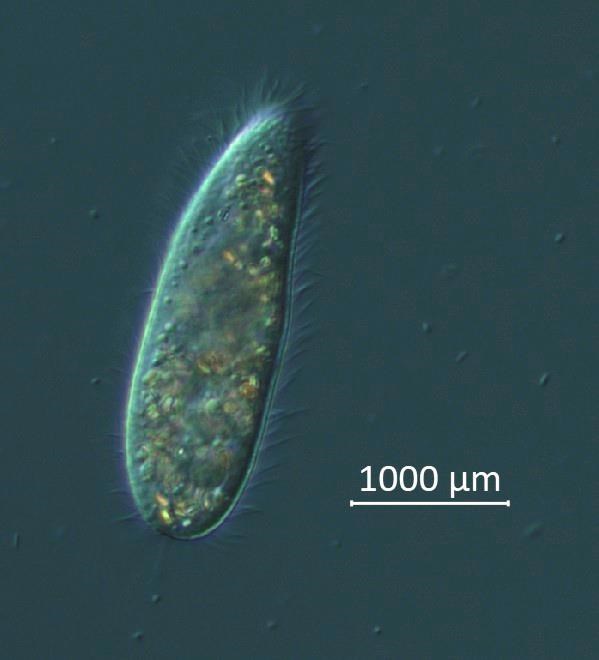
This photo provided by researchers shows a Philaster apodigitiformis ciliate microorganism viewed under the microscope at the University of South Florida College of Marine Science in St. Petersburg, Fla. The measurement scale of 1000 micrometers is equal to 1 millimeter. The tiny single-celled organism is to blame for a massive die-off of sea urchins in the Caribbean in 2022, researchers reported Wednesday, April 19, 2023, in the journalScience Advances. (Mya Breitbart/University of South Florida College of Marine Science via AP)

These long-spined sea urchins, or Diadema antillarum, are prickly black creatures that hide out in reefs across the Caribbean. They play a key role as “lawnmowers” of the reef, Breitbart said, eating up the algae that grows on corals.

But in January 2022, these animals started showing strange symptoms — their sharp spines drooping and falling off, their suction-cup feet losing their grip — before dying off in droves, from the Virgin Islands to Puerto Rico to Florida.

For marine scientists, it was deja vu: Another die-off swept through the region in the 1980s and slashed sea urchin populations by around 98%.

That case was never solved. But this time, an international team of researchers jumped into action, taking samples from sick urchins and healthy ones across the Caribbean to look for genetic clues.

They didn’t see signs of viruses or bacteria, said study author Ian Hewson, who researches marine diseases at Cornell University. But they did spot traces of tiny single-celled organisms called ciliates, which only showed up in the sick urchins.

Though most ciliates don’t cause disease, this kind has been linked with other aquatic outbreaks, making it a prime suspect, Hewson said.

To confirm they’d caught the killer, scientists placed the parasites in tanks with healthy urchins grown in captivity to see how they’d react. Out of 10 urchins who were pitted against the tiny creatures, 60% of them died — after showing the same symptoms researchers were seeing in the wild.

It’s possible that this same parasite also caused the die-off in the 1980s, but scientists can’t be sure, Breitbart said.

And they haven’t figured out a way to treat the diseased urchins. But they’re hopeful that knowing the source of the die-offs will help conserve the reefs, especially once they learn more about how the parasites spread, Breitbart said.

These urchin deaths and other stresses have already transformed the reefs, added Don Levitan, a marine scientist at Florida State University who was not involved with the study.

Back before the first sea urchin die-off, Levitan recalled seeing reefs in the U.S. Virgin Islands blanketed in the spiny creatures. Now, those reefs look much different — choked by algae, struck by coral disease and stressed out from rising temperatures.

“Coral reefs in the Caribbean are in trouble,” Levitan said. “We’re at a different place than we were 30, 40 years ago.”

___

The Associated Press Health and Science Department receives support from the Howard Hughes Medical Institute’s Science and Educational Media Group. The AP is solely responsible for all content.
Report Error Submit a Tip

More Stories

Asian supermarket T&T to open at Polo Park

Gabrielle Piché 5 minute read Preview

Asian supermarket T&T to open at Polo Park

Gabrielle Piché 5 minute read Updated: Yesterday at 4:30 PM CDT

Live seafood, more than 150 varieties of baked bread and rows of Asian produce are being promised for CF Polo Park — in two years time.

Read
Updated: Yesterday at 4:30 PM CDT

Chrysler refines Pacifica and Grand Caravan as buyers return to practical family hauler

Kelly Taylor 5 minute read Preview

Chrysler refines Pacifica and Grand Caravan as buyers return to practical family hauler

Kelly Taylor 5 minute read 3:00 AM CDT

BURLINGTON, Ont. — The mighty minivan — relegated to the scrap heap by the rush to crossovers and SUVs — is making a comeback, and Chrysler hopes to lead the way with its top-selling, Canadian-made Grand Caravan and Pacifica models.

While many manufacturers — Mazda, Ford, GM, Hyundai and Nissan — abandoned the once-popular family hauler, Chrysler has continued to play in the segment since it was launched by Lee Iacocca in 1983.

For 2027, the Pacifica gets a cosmetic refresh and the Grand Caravan is a holdover, but new this year are price savings of up to $7,200, Chrysler product planner Mike Szymkiewicz told journalists assembled here for the launch of the two vehicles.

“It’s primarily that we’re taking less margin, but we’re also adding content,” he said. “So less margin but we hope more volume.”

Read
3:00 AM CDT

New sci-fi/fantasy bookstore a welcome addition

Ben Sigurdson 5 minute read Preview

New sci-fi/fantasy bookstore a welcome addition

Ben Sigurdson 5 minute read Yesterday at 4:46 PM CDT

A new chapter has begun in Winnipeg’s literary landscape with the opening of science fiction and fantasy bookstore Other Places Books.

Located at 436 Graham Ave., the queer-owned and operated shop is the latest in a host of genre bookstores to have opened in the city over the last few years. In addition to longtime mainstay Whodunit? Mystery Bookstore (163 Lilac St.), the local scene now also features a horror bookstore (Raven’s End Books, which opened at 1859 Portage Ave. in 2024) and a shop focused on romance (Bound to Please, which opened at 995 McPhillips St. earlier this year).

The 900 titles currently in stock at Other Places, which opened Tuesday, span a range of sci-fi and fantasy sub-genres, with a particular focus on queer writers and storylines. The bookstore is the brainchild of Didi Chanoch, who moved to Winnipeg from Israel in 2025 after the Canadian federal government began offering work permits to those in Israel and Palestine looking to leave the area due to the conflict.

Winnipeg ended up on Chanoch’s radar in large part due to a more reasonable cost of living than other Canadian cities.

Read
Yesterday at 4:46 PM CDT

Time-travel mystery a hallucinogenic trip

Alison Gillmor 4 minute read Preview

Time-travel mystery a hallucinogenic trip

Alison Gillmor 4 minute read 3:00 AM CDT

Here’s a spooky premise: A fishing boat, the Rose of Nevada, that disappeared along with its crew 30 years ago, makes a mysterious return — empty but unchanged — to a small village in Cornwall, on England’s southwest coast.

“She’s back,” the boat’s owner says ominously. Even more ominously, he doesn’t sound particularly surprised. It feels as if this has happened before.

There’s something unsettling going on in this strange and singular film. Cornish writer-director Mark Jenkin (Bait, Enys Men) has crafted a ghostly time-travel tale that collapses past and present, leaving his characters — and the audience — in haunting emotional and moral quandaries.

If the film’s sense of time can be deliberately hazy, its sense of place is very clear. All three of Jenkin’s features have been set in Cornwall, and there’s an intimate, immediate sense of connection to this coastal town, which is depressed and dwindling, its inhabitants beset by economic precarity. The harbour is deserted, the pub is empty, shop windows are boarded up and the young people are leaving. It seems as if the disappearance of that boat and crew broke not just the men’s grieving families but the whole community.

Read
3:00 AM CDT

Letters, Aug. 7

7 minute read 2:01 AM CDT

Clarification: A letter to the editor in the Aug. 6 edition of the Free Press, headlined Defining context, indicated that the federal auditor-general criticized the Canadian Museum for Human Rights for having had deficiencies in managing its exhibitions, saying, “without rigorous systems and practices to ensure accuracy and balance … errors and bias could be introduced to exhibits which could adversely affect the corporation’s reputation and be costly to correct after the fact.”

The report in question was done in 2017 and released publicly in 2018. At the time, the museum agreed with the findings and listed a series of steps it would take to address the issue.

ERs should be used as intendedRe: Steinbach ER under siege by frustrated Winnipeggers (Aug. 5)

The overflow of Winnipeg emergency ward patients to the Regional Health Centre in Steinbach is not surprising.

Puzzles Palace

1 minute read Monday, Jul. 27, 2026

To solve our puzzles, please subscribe with this special offer: |