Oilsands emissions could be underestimated by current measuring methods, study says
Advertisement
Read this article for free:
or
Already have an account? Log in here »
To continue reading, please subscribe:

Digital Subscription
One year of digital access for only $205*
- Enjoy unlimited reading on winnipegfreepress.com
- Read the E-Edition, our digital replica newspaper
- Access News Break, our award-winning app
- Play interactive puzzles
*First annual payment billed as $205.00 + GST for one year. This annual subscription will automatically renew at $233.00 + GST every 52 weeks (10% off the regular annual price of $259.35). Offer available to new and qualified returning subscribers only. Cancel any time.
To continue reading, please subscribe:
Add Free Press access to your Brandon Sun subscription for only an additional
$1 for the first 4 weeks*
- Enjoy unlimited reading on winnipegfreepress.com
- Read the E-Edition, our digital replica newspaper
- Access News Break, our award-winning app
- Play interactive puzzles
*Your next Brandon Sun subscription payment will increase by $1.00 and you will be charged $17.95 plus GST for four weeks. After four weeks, your payment will increase to $24.95 plus GST every four weeks.
Read unlimited articles for free today:
or
Already have an account? Log in here »
Hey there, time traveller!
This article was published 24/04/2023 (1242 days ago), so information in it may no longer be current.
New federal research suggests greenhouse gas emissions from the Alberta oilsands may be significantly underestimated, adding to a growing pile of studies that say our understanding of what is going into the atmosphere is incomplete.
In a paper published last week in a prominent U.S. science journal, Environment and Climate Change Canada researchers used new ways of measuring oilsands emissions that resulted in figures at least 65 per cent higher than those reported by industry.
“We found that (emissions) are higher than the CO2 estimates that are reported in the greenhouse gas reporting program,” said lead author Sumi Wren of Environment Canada.
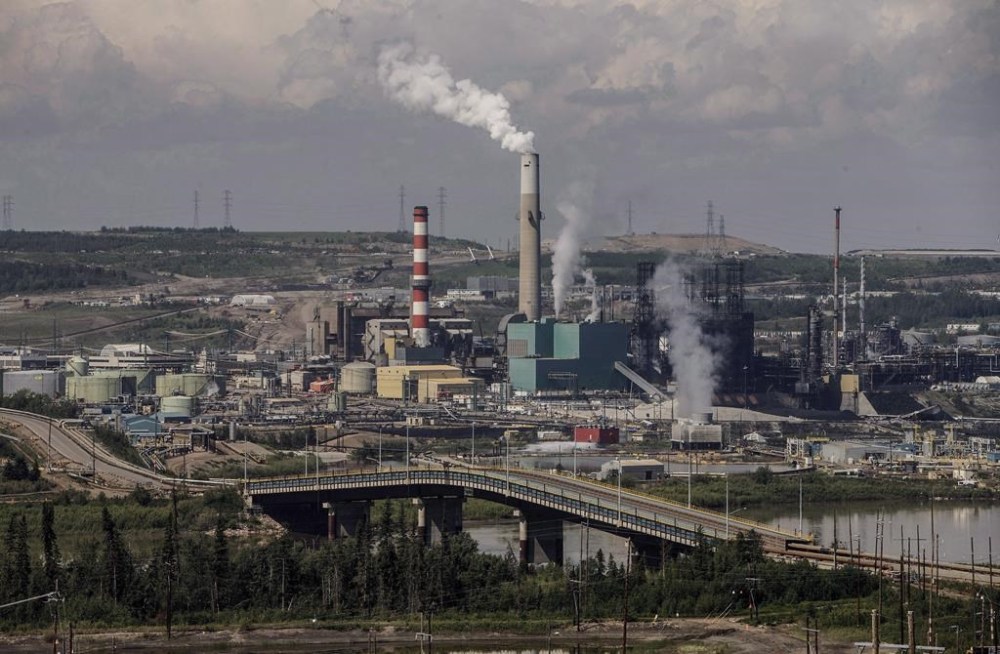
The paper, published in the Proceedings of the National Academy of Sciences, describes how the researchers combined measurements from overflights, satellites and historical data to reach their conclusions.
In 2018, the team made 30 flights over the oilsands region to establish the ratio of nitrogen oxides to carbon dioxide in the industry’s emissions. That ratio matched one derived from similar flights in 2013. They then developed estimates for nitrogen dioxide emissions from 2005 to 2020 by combining satellite data with industry-reported values.
Using that historical record and the constant ratio of those gases to carbon dioxide, the team could then calculate how much carbon dioxide had been released over the years.
Their figures suggest the oilsands could be releasing about 31 million tonnes of unreported carbon dioxide into the atmosphere a year. As well, that potential under-reporting goes back to at least 2018.
Their margin of error is eight million tonnes either way.
But the difference between their numbers and the industry-reported figures is big enough to suggest something is going on.
“The discrepancy is quite large,” said Wren. “It’s large enough to point to the need to understand why we’re seeing this.”
Industry typically estimates its emissions by comparing known inputs against outputs, with allowances for leakage and other fugitive releases — a so-called “bottom-up” approach. The method is considered reliable and accurate, said co-author John Liggio, also of Environment Canada.
“Bottom-up is quite good,” he said.
But when researchers use atmospheric measurement — the “top-down” approach — they consistently get higher readings of whatever it is they’re looking for. That pattern has emerged in papers on emissions of methane, soot, volatile organic compounds and sulphur dioxide.
Mark Cameron of the oilsands group Pathways Alliance criticized the study.
“We strongly caution against interpreting from this study that aerial air sampling … is a better emissions-estimating approach,” he said, adding industry uses standard practices in use around the world.
“Inherent weaknesses in the research methods diminish our confidence in its findings.”
Cameron called the use of a single ratio simplistic. He said the number of flights was inadequate and the study didn’t take into account days when oilsands sites were shuttered for reasons such as maintenance.
But Liggio said the difference between the two measuring systems is big enough to need explanation.
“Bottom-up and top-down both have their inherent uncertainties,” he said. “Top-down is a complementary way to identify if there are gaps.
“We need to start thinking about using atmospheric measurements with the bottom-up approach. It’s coming, but we’re not quite there yet.”

Without reconciling those differences, it’s hard to set targets for emissions reductions or know if they’re being met — a key issue for government and industry climate plans. For example, the 31 million tonnes of unreported carbon is about three times the total amount stored since 2015 through carbon capture and storage, the fix industry hopes will eventually make it carbon-neutral.
More work is needed, said Wren.
“What this work does is point to the importance of having atmospheric measurement to ensure that what is being reported is accurate.”
This report by The Canadian Press was first published April 24, 2023.
— Follow Bob Weber on Twitter at @row1960