As rising oceans threaten NYC, study documents another risk: The city is sinking
Advertisement
Read this article for free:
or
Already have an account? Log in here »
To continue reading, please subscribe:

Digital Subscription
One year of digital access for only $205*
- Enjoy unlimited reading on winnipegfreepress.com
- Read the E-Edition, our digital replica newspaper
- Access News Break, our award-winning app
- Play interactive puzzles
*First annual payment billed as $205.00 + GST for one year. This annual subscription will automatically renew at $233.00 + GST every 52 weeks (10% off the regular annual price of $259.35). Offer available to new and qualified returning subscribers only. Cancel any time.
To continue reading, please subscribe:
Add Free Press access to your Brandon Sun subscription for only an additional
$1 for the first 4 weeks*
- Enjoy unlimited reading on winnipegfreepress.com
- Read the E-Edition, our digital replica newspaper
- Access News Break, our award-winning app
- Play interactive puzzles
*Your next Brandon Sun subscription payment will increase by $1.00 and you will be charged $17.95 plus GST for four weeks. After four weeks, your payment will increase to $24.95 plus GST every four weeks.
Read unlimited articles for free today:
or
Already have an account? Log in here »
Hey there, time traveller!
This article was published 29/05/2023 (1178 days ago), so information in it may no longer be current.
NEW YORK (AP) — If rising oceans aren’t worry enough, add this to the risks New York City faces: The metropolis is slowly sinking under the weight of its skyscrapers, homes, asphalt and humanity itself.
New research estimates the city’s landmass is sinking at an average rate of 1 to 2 millimeters per year, something referred to as “subsidence.”
That natural process happens everywhere as ground is compressed, but the study published this month in the journal Earth’s Future sought to estimate how the massive weight of the city itself is hurrying things along.
More than 1 million buildings are spread across the city’s five boroughs. The research team calculated that all those structures add up to about 1.7 trillion tons (1.5 trillion metric tons) of concrete, metal and glass — about the mass of 4,700 Empire State buildings — pressing down on the Earth.
The rate of compression varies throughout the city. Midtown Manhattan’s skyscrapers are largely built on rock, which compresses very little, while some parts of Brooklyn, Queens and downtown Manhattan are on looser soil and sinking faster, the study revealed.
While the process is slow, lead researcher Tom Parsons of the U.S. Geological Survey said parts of the city will eventually be under water.
“It’s inevitable. The ground is going down, and the water’s coming up. At some point, those two levels will meet,” said Parsons, whose job is to forecast hazardous events from earthquakes and tsunamis to incremental shifts of the ground below us.
But no need to invest in life preservers just yet, Parsons assured.
The study merely notes buildings themselves are contributing, albeit incrementally, to the shifting landscape, he said. Parsons and his team of researchers reached their conclusions using satellite imaging, data modeling and a lot of mathematical assumptions.
It will take hundreds of years — precisely when is unclear — before New York becomes America’s version of Venice, which is famously sinking into the Adriatic Sea.
But parts of the city are more at risk.
“There’s a lot of weight there, a lot of people there,” Parsons said, referring specifically to Manhattan. “The average elevation in the southern part of the island is only 1 or 2 meters (3.2 or 6.5 feet) above sea level — it is very close to the waterline, and so it is a deep concern.”
Because the ocean is rising at a similar rate as the land is sinking, the Earth’s changing climate could accelerate the timeline for parts of the city to disappear under water.
“It doesn’t mean that we should stop building buildings. It doesn’t mean that the buildings are themselves the sole cause of this. There are a lot of factors,” Parsons said. “The purpose was to point this out in advance before it becomes a bigger problem.”
Already, New York City is at risk of flooding because of massive storms that can cause the ocean to swell inland or inundate neighborhoods with torrential rain.
The resulting flooding could have destructive and deadly consequences, as demonstrated by Superstorm Sandy a decade ago and the still-potent remnants of Hurricane Ida two years ago.
“From a scientific perspective, this is an important study,” said Andrew Kruczkiewicz, a senior researcher at Columbia University’s Climate School, who was not involved in the research.

Its findings could help inform policy makers as they draft ongoing plans to combat, or at least forestall, the rising tides.
“We can’t sit around and wait for a critical threshold of sea level rise to occur,” he said, “because waiting could mean we would be missing out on taking anticipatory action and preparedness measures.”
New Yorkers such as Tracy Miles can be incredulous at first.
“I think it’s a made-up story,” Miles said. He thought again while looking at sailboats bobbing in the water edging downtown Manhattan. “We do have an excessive amount of skyscrapers, apartment buildings, corporate offices and retail spaces.”
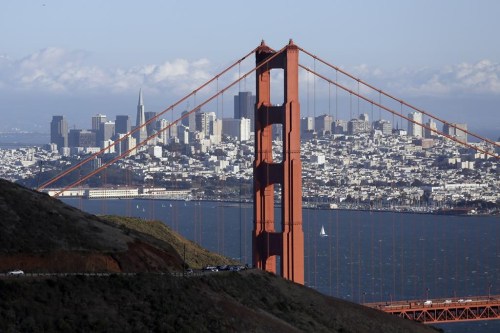
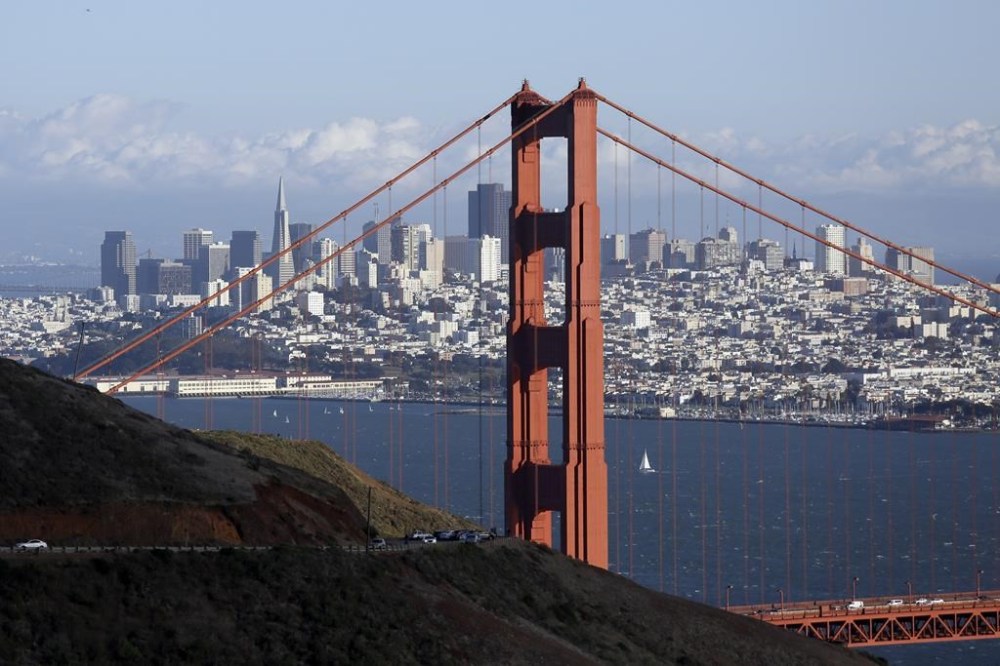
New York City isn’t the only place sinking. San Francisco also is putting considerable pressure on the ground and the region’s active earthquake faults. In Indonesia, the government is preparing for a possible retreat from Jakarta, which is sinking into the Java Sea, for a new capital being constructed on the higher ground of an entirely different island.