Earth is ‘really quite sick now’ and in danger zone in nearly all ecological ways, study says
Advertisement
Read this article for free:
or
Already have an account? Log in here »
To continue reading, please subscribe:

Digital Subscription
One year of digital access for only $205*
- Enjoy unlimited reading on winnipegfreepress.com
- Read the E-Edition, our digital replica newspaper
- Access News Break, our award-winning app
- Play interactive puzzles
*First annual payment billed as $205.00 + GST for one year. This annual subscription will automatically renew at $233.00 + GST every 52 weeks (10% off the regular annual price of $259.35). Offer available to new and qualified returning subscribers only. Cancel any time.
To continue reading, please subscribe:
Add Free Press access to your Brandon Sun subscription for only an additional
$1 for the first 4 weeks*
- Enjoy unlimited reading on winnipegfreepress.com
- Read the E-Edition, our digital replica newspaper
- Access News Break, our award-winning app
- Play interactive puzzles
*Your next Brandon Sun subscription payment will increase by $1.00 and you will be charged $17.95 plus GST for four weeks. After four weeks, your payment will increase to $24.95 plus GST every four weeks.
Read unlimited articles for free today:
or
Already have an account? Log in here »
Hey there, time traveller!
This article was published 31/05/2023 (1214 days ago), so information in it may no longer be current.
Earth has pushed past seven out of eight scientifically established safety limits and into “the danger zone,” not just for an overheating planet that’s losing its natural areas, but for well-being of people living on it, according to a new study.
The study looks not just at guardrails for the planetary ecosystem but for the first time it includes measures of “justice,” which is mostly about preventing harm for countries, ethnicities and genders.
The study by the international scientist group Earth Commission published in Wednesday’s journal Nature looks at climate, air pollution, phosphorus and nitrogen contamination of water from fertilizer overuse, groundwater supplies, fresh surface water, the unbuilt natural environment and the overall natural and human-built environment. Only air pollution wasn’t quite at the danger point globally.
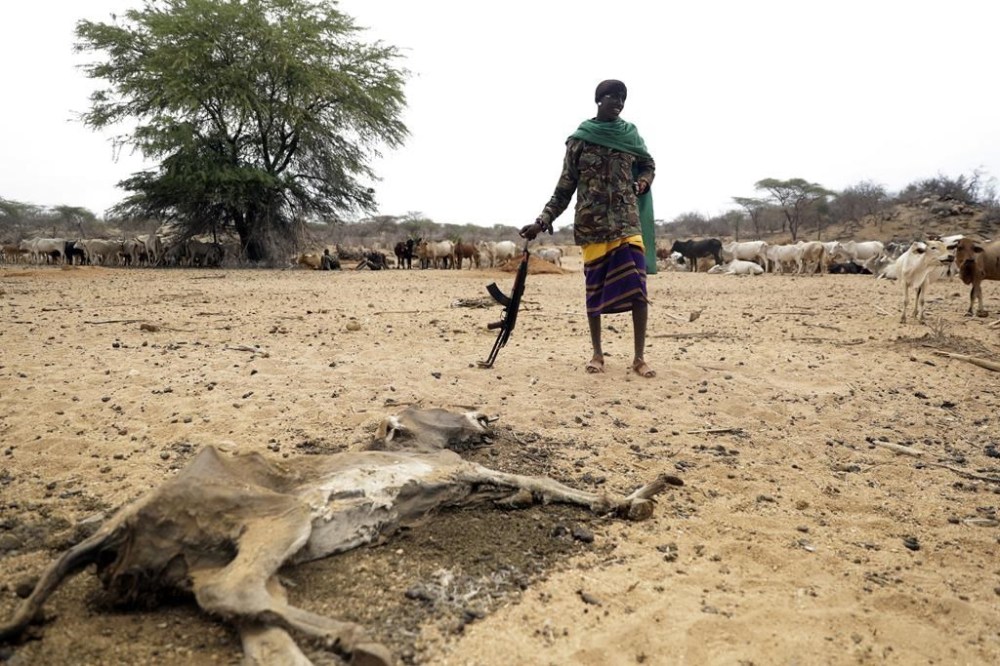
Air pollution is dangerous at local and regional levels, while climate was beyond the harmful levels for humans in groups but not quite past the safety guideline for the planet as a system, the study from the Swedish group said.
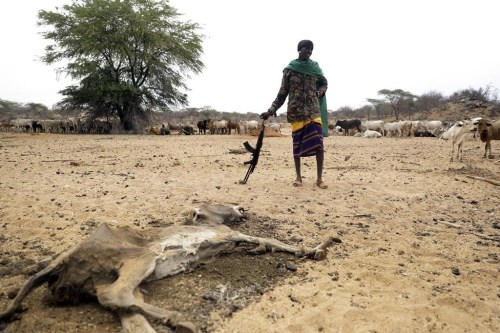
The study found “hotspots” of problem areas throughout Eastern Europe, South Asia, the Middle East, Southeast Asia, parts of Africa and much of Brazil, Mexico, China and some of the U.S. West — much of it from climate change. About two-thirds of Earth don’t meet the criteria for freshwater safety, scientists said as an example.
“We are in a danger zone for most of the Earth system boundaries,” said study co-author Kristie Ebi, a professor of climate and public health at the University of Washington.
If planet Earth just got an annual check-up, similar to a person’s physical, “our doctor would say that the Earth is really quite sick right now and it is sick in terms of many different areas or systems and this sickness is also affecting the people living on Earth,” Earth Commission co-chair Joyeeta Gupta, a professor of environment at the University of Amsterdam, said at a press conference.
It’s not a terminal diagnosis. The planet can recover if it changes, including its use of coal, oil and natural gas and the way it treats the land and water, the scientists said.
But “we are moving in the wrong direction on basically all of these,” said study lead author Johan Rockstrom, director of the Potsdam Institute for Climate Impact Research in Germany.
“This is a compelling and provocative paper – scientifically sound in methodology and important for identifying the dimensions in which the planet is nearing the edge of boundaries that would launch us into irreversible states,” Indy Burke, dean of the Yale School of the Environment said in an email. She wasn’t part of the study.
The team of about 40 scientists created quantifiable boundaries for each environmental category, both for what’s safe for the planet and for the point at which it becomes harmful for groups of people, which the researchers termed a justice issue.
Rockstrom said he thinks of those points as setting up “a safety fence’’ outside of which the risks become higher, but not necessarily fatal.
Rockstrom and other scientists have attempted in the past this type of holistic measuring of Earth’s various interlocking ecosystems. The big difference in this attempt is that scientists also looked at local and regional levels and they added the element of justice.
The justice part includes fairness between young and old generations, different nations and even different species. Frequently, it applies to conditions that harm people more than the planet.
An example of that is climate change.
The report uses the same boundary of 1.5 degree Celsius (2.7 degrees Fahrenheit) of warming since pre-industrial times that international leaders agreed upon in the 2015 Paris climate agreement. The world has so far warmed about 1.1 degrees Celsius (2 degrees Fahrenheit), so it hasn’t crossed that safety fence, Rockstrom and Gupta said, but that doesn’t mean people aren’t being hurt.
“What we are trying to show through our paper is that event at 1 degree Centigrade (1.8 degrees Fahrenheit) there is a huge amount of damage taking place,” Gupta said, pointing to tens of millions of people exposed to extreme hot temperatures.
The planetary safety guardrail of 1.5 degrees hasn’t been breached, but the “just” boundary where people are hurt of 1 degree has been.
“Sustainability and justice are inseparable,” said Stanford environmental studies chief Chris Field, who wasn’t part of the research. He said he would want even more stringent boundaries. “Unsafe conditions do not need to cover a large fraction of Earth’s area to be unacceptable, especially if the unsafe conditions are concentrated in and near poor and vulnerable communities.”
Another outside expert, Dr. Lynn Goldman, an environment health professor and dean of George Washington University’s public health school, said the study was “kind of bold,” but she wasn’t optimistic that it would result in much action.
___

Follow AP’s climate and environment coverage at https://apnews.com/hub/climate-and-environment
___
Follow Seth Borenstein on Twitter at @borenbears
___
Associated Press climate and environmental coverage receives support from several private foundations. See more about AP’s climate initiative here. The AP is solely responsible for all content.