Soccer players demand change for rampant online racist abuse, turn to AI for protection
Advertisement
Read this article for free:
or
Already have an account? Log in here »
To continue reading, please subscribe:

Digital Subscription
One year of digital access for only $205*
- Enjoy unlimited reading on winnipegfreepress.com
- Read the E-Edition, our digital replica newspaper
- Access News Break, our award-winning app
- Play interactive puzzles
*First annual payment billed as $205.00 + GST for one year. This annual subscription will automatically renew at $233.00 + GST every 52 weeks (10% off the regular annual price of $259.35). Offer available to new and qualified returning subscribers only. Cancel any time.
To continue reading, please subscribe:
Add Free Press access to your Brandon Sun subscription for only an additional
$1 for the first 4 weeks*
- Enjoy unlimited reading on winnipegfreepress.com
- Read the E-Edition, our digital replica newspaper
- Access News Break, our award-winning app
- Play interactive puzzles
*Your next Brandon Sun subscription payment will increase by $1.00 and you will be charged $17.95 plus GST for four weeks. After four weeks, your payment will increase to $24.95 plus GST every four weeks.
Read unlimited articles for free today:
or
Already have an account? Log in here »
Hey there, time traveller!
This article was published 05/06/2023 (1217 days ago), so information in it may no longer be current.
LONDON (AP) — Missing penalties in a major international soccer final was bad enough for three Black players on England’s national team. Being subjected to a torrent of racial abuse on social media in the aftermath made it worse.
Monkey emojis. Being told to go home. The N-word.
The even sadder part? Everyone saw it coming.
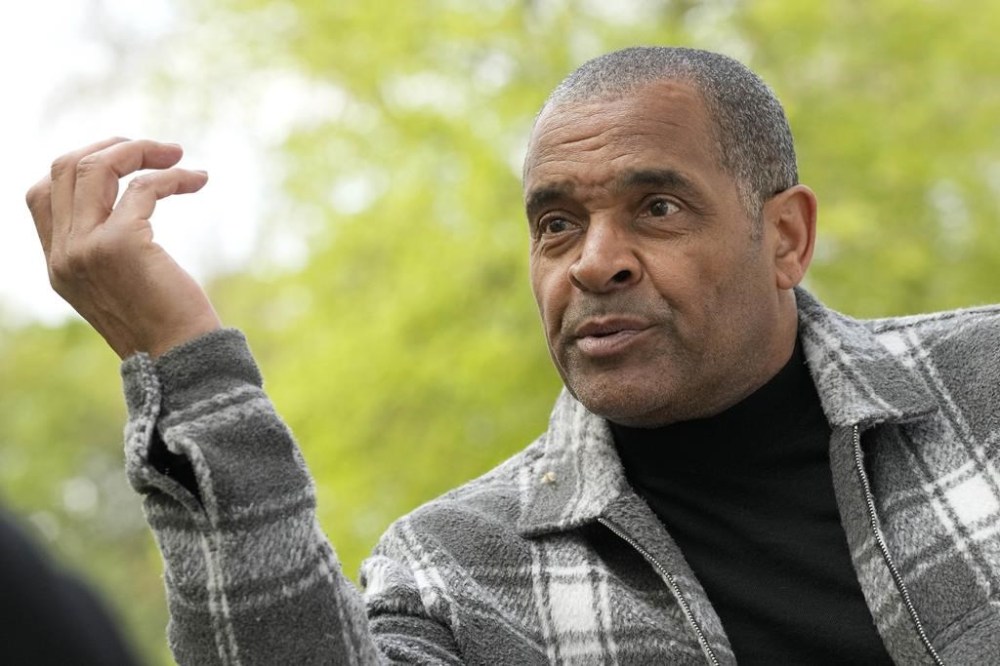
“It’s stupid,” said Nedum Onuoha, a retired Black player who was in the top divisions of English and U.S. soccer for 16 years. “But are we surprised?”
It’s the latest form of racism: technology-fueled, visual, permanently intrusive and 24/7 — a haunting reminder of the 1980s-style monkey chants and banana-throwing in a social media era.
And it is spiraling out of control on platforms where anonymity is the golden ticket for racists.
“Every time it happens, it knocks you back and floors you,” Onuoha told The Associated Press. “Just when you think everything is OK, it’s a reminder that it’s not. It’s a reminder of how some people actually see you.”
Racism is the predominant form of abuse on social media reported to Kick It Out, an anti-discrimination campaigner in soccer, according to statistics compiled over the past three seasons in English soccer.
A report last year from FIFA, the governing body of world soccer, showed that more than 50% of players competing in two international tournaments in 2021 — the African Cup of Nations and the European Championship — received some form of discriminatory abuse in more than 400,000 posts on social media. More than a third were racist.
The problem is, there’s barely any accountability and it’s so easy. Pull out your phone, find the handle of the player you want to abuse, and fire off a racist message.
Former Premier League striker Mark Bright, who is Black and regularly suffered racial abuse inside stadiums in the 1980s, was exchanging messages with friends when those three Black players for England — Bukayo Saka, Marcus Rashford and Jadon Sancho — missed penalties in a shootout loss to Italy in the 2020 European Championship final.
“We all messaged each other and said, ‘Oh God, here we go,’” Bright said. “This is where, once again, you say, ‘What can be done about it?’”
Largely speaking, the abuse hasn’t stopped Black players from using social media. It’s an essential marketing tool, leading to the paradox of soccer players using the same platforms on which they are abused.
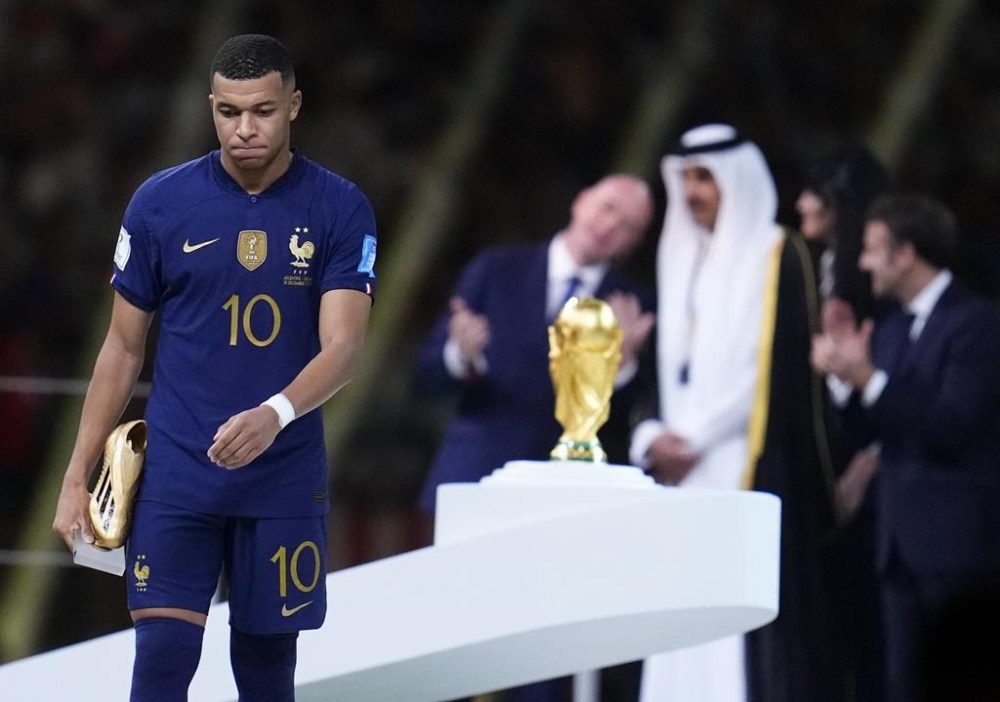
Kylian Mbappe, who has 104 million followers on Instagram and more than 12 million on Twitter, was subjected to racial abuse along with fellow Black teammate Kingsley Coman after their French national team lost in the 2022 World Cup final to Argentina.
Real Madrid winger Vinícius Júnior, who has repeatedly been the target of racial insults, is followed by 38 million people on Instagram and nearly 7 million on Twitter.
Saka, who has more than 1 million Twitter followers, remains on social media despite the abuse after England’s Euro 2020 loss and more just weeks ago, when a message posted on Twitter showed the Arsenal winger with his face made to look like a monkey, alongside the words: “This clown has cost us the league.” Minutes before the message, Saka had missed a penalty in an important Premier League game.
With social media continuing to fuel abuse, players and teams are coming up with ways to raise awareness and reduce exposure to offensive users.
GoBubble configures AI software to act as a filter to stop discriminatory comments from being seen by a social media user. Customers include the Premier League down to the fourth division in English soccer, and teams around Europe and Australia.
“Yes, tech has caused the issue,” GoBubble founder Henry Platten told the AP, “but tech can actually solve the issue.”
During last year’s World Cup, FIFA and players’ union FIFPRO had a dedicated in-tournament service that prevented hate speech from being seen online by players and their followers. It will be offered for the upcoming Women’s World Cup.
Soccer authorities in England led a four-day social media boycott in 2021 across Twitter, Facebook and Instagram to protest racist abuse. It was adopted by other sports in England, and by FIFA and UEFA, the governing body of European soccer.
Still, the abuse continues. Platforms have been accused of being too slow to block racist posts, remove offenders’ accounts, and improve their verification process to ensure users are barred from registering with a new account if banned.
“No one should have to experience racist abuse, and we don’t want it on our apps,” Meta, which owns Instagram and Facebook, said in a statement to the AP. “We take action whenever we find it and we’ve launched several ways to help protect people from having to see it in the first place.”
That includes “Hidden Words,” which filters offensive comments and direct messages and is on by default for creator accounts, and “Limits,” which hides comments and DMs from people who don’t follow you or only followed you recently, the statement said.
Twitter responded with an automated reply of a poop emoji when the AP reached out for comment.
Some teams and athletes are choosing alternative platforms to promote not just themselves but more ethical behavior online.
These include Striver, backed by Roberto Carlos and Gilberto Silva — both World Cup winners with Brazil in 2002. And PixStory, with nearly 1 million users, which ranks them according to the integrity of their posts and aims to create “clean social.”
England’s Arsenal club, Italy’s Juventus and Paris Saint-Germain’s women’s team are collaborating with PixStory, whose founder, Appu Esthose Suresh, says teams and athletes are in a “Catch-22 situation.”
“They want to live in this space because it’s a way to reach out and interact with their fans, but there’s not enough safety,” Suresh told the AP.
Last month, the European Union clinched an agreement in principle on the Digital Services Act, to force big tech companies to better protect European users from harmful online content or face billions of dollars in fines. In Britain, the government has proposed the Online Safety Bill, with potential fines of 10% of the platforms’ annual global turnover.
Onuoha welcomed these developments but he’s still keeping his social media accounts on a private setting.

“There will be lots of good people who won’t be able to connect with me but it’s a consequence of not having enough trust and faith in enough good people being allowed to enter the account,” he said.
___
Douglas reported from Sundsvall, Sweden.
___
More AP soccer: https://apnews.com/hub/soccer and https://twitter.com/AP_Sports
Related Articles
Ferreira scores 10th goal, FC Dallas beats St. Louis in rescheduled game Canada's Lawrence confirms departure from PSG









Advertisement Advertise With Us
Advertisement Advertise With Us