How search teams could use sound to find the Titan sub — and why it’s a challenge
Advertisement
Read this article for free:
or
Already have an account? Log in here »
To continue reading, please subscribe:

Digital Subscription
One year of digital access for only $205*
- Enjoy unlimited reading on winnipegfreepress.com
- Read the E-Edition, our digital replica newspaper
- Access News Break, our award-winning app
- Play interactive puzzles
*First annual payment billed as $205.00 + GST for one year. This annual subscription will automatically renew at $233.00 + GST every 52 weeks (10% off the regular annual price of $259.35). Offer available to new and qualified returning subscribers only. Cancel any time.
To continue reading, please subscribe:
Add Free Press access to your Brandon Sun subscription for only an additional
$1 for the first 4 weeks*
- Enjoy unlimited reading on winnipegfreepress.com
- Read the E-Edition, our digital replica newspaper
- Access News Break, our award-winning app
- Play interactive puzzles
*Your next Brandon Sun subscription payment will increase by $1.00 and you will be charged $17.95 plus GST for four weeks. After four weeks, your payment will increase to $24.95 plus GST every four weeks.
Read unlimited articles for free today:
or
Already have an account? Log in here »
Hey there, time traveller!
This article was published 21/06/2023 (1176 days ago), so information in it may no longer be current.
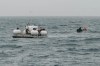
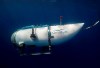
Search teams racing to find the missing Titanic submersible have detected underwater noises in the area. But it won’t be easy to find the source of that sound in the ocean.
“It’s not a simple problem,” said Matt Dzieciuch, an ocean acoustics expert at the Scripps Institution of Oceanography.
The ocean is a “noisy place,” Dzieciuch said. There are many other potential sources of sound under water, including from fish, other animals and of course human-made instruments, he explained.
The Coast Guard said search teams heard banging noises at 30-minute intervals.
But it’s still “speculative” whether the banging noises were a true signal of life, said Art Trembanis, a marine scientist at the University of Delaware. Even this kind of pattern could come from an underwater instrument making repeated noise.
Usually, an underwater vehicle will have a device called a pinger that can correspond with the surface and make it easier to locate, Dzieciuch said. But it’s unclear whether the Titan submersible was using one.
A big challenge is that the search team doesn’t know exactly what kind of signal they’re looking for, said Lora Van Uffelen, an ocean engineering researcher at the University of Rhode Island.
“They’re just kind of listening for anything,” she said.
Another challenge for the search team: Sound gets bent as it travels underwater, because of how pressure and temperature change at different depths, Dzieciuch said. This can create echo-like effects and make it hard to locate the source of a particular sound.
“Someone tapping, say, an S.O.S. at the bottom of the ocean might sound like just some random banging at the surface of the ocean,” he said. “It’s like shouting in a canyon. You can’t really understand what the person at the other end of the canyon is saying.”
The sounds in the Titan search were picked up using devices called sonobuoys, which can be tossed out of airplanes to detect noises to avoid interference with ship sounds, Dzieciuch said. These devices could help triangulate the location of the sub, but searchers would need to deploy many buoys to make it work, experts said.
But Van Uffelen said that despite the challenges, “sound is one of the best hopes they have of finding it.” Sound waves move farther underwater compared to on land, she said.
And in the underwater environment, sound also travels farther than light, she pointed out — so “it’s going to be easier to find it by listening than it would be by looking.”
___
The Associated Press Health and Science Department receives support from the Howard Hughes Medical Institute’s Science and Educational Media Group. The AP is solely responsible for all content.