Recovering the Titan 12,500 feet underwater was dangerous, complex, emotional

Advertisement

Advertise with us

EAST AURORA, N.Y. (AP) — When Edward Cassano and his colleagues arrived in the remote stretch of ocean where the Titan submersible had gone missing, they quickly learned that they would have to do what other deep-sea experts had already tried unsuccessfully: to find the lost sub in some of the most forbidding depths of the North Atlantic.

Read this article for free:


or

Already have an account? Log in here »

To continue reading, please subscribe:

Subscribe and receive a limited-edition Free Press branded hat or tote.

Digital Subscription

One year of digital access for only $205*

  • Enjoy unlimited reading on winnipegfreepress.com
  • Read the E-Edition, our digital replica newspaper
  • Access News Break, our award-winning app
  • Play interactive puzzles

*First annual payment billed as $205.00 + GST for one year. This annual subscription will automatically renew at $233.00 + GST every 52 weeks (10% off the regular annual price of $259.35). Offer available to new and qualified returning subscribers only. Cancel any time.

To continue reading, please subscribe:

Add Free Press access to your Brandon Sun subscription for only an additional

$1 for the first 4 weeks*

  • Enjoy unlimited reading on winnipegfreepress.com
  • Read the E-Edition, our digital replica newspaper
  • Access News Break, our award-winning app
  • Play interactive puzzles
Start now

*Your next Brandon Sun subscription payment will increase by $1.00 and you will be charged $17.95 plus GST for four weeks. After four weeks, your payment will increase to $24.95 plus GST every four weeks.

Hey there, time traveller!
This article was published 30/06/2023 (1187 days ago), so information in it may no longer be current.

EAST AURORA, N.Y. (AP) — When Edward Cassano and his colleagues arrived in the remote stretch of ocean where the Titan submersible had gone missing, they quickly learned that they would have to do what other deep-sea experts had already tried unsuccessfully: to find the lost sub in some of the most forbidding depths of the North Atlantic.

They set to work deploying their own remotely operated vehicle, the Odysseus, from a ship with a giant “umbilical cord,” then lowered the behemoth to the ocean floor, a process that took about an hour and a half, Cassano said Friday at a news conference held at the suburban Buffalo headquarters of his company, Pelagic Research Services.

Just moments after Odysseus arrived on the seafloor, its high-definition cameras sent back images of debris that were undoubtedly what remained of the Titan. Their hopes for a rescue of the submersible’s crew of five had faded.
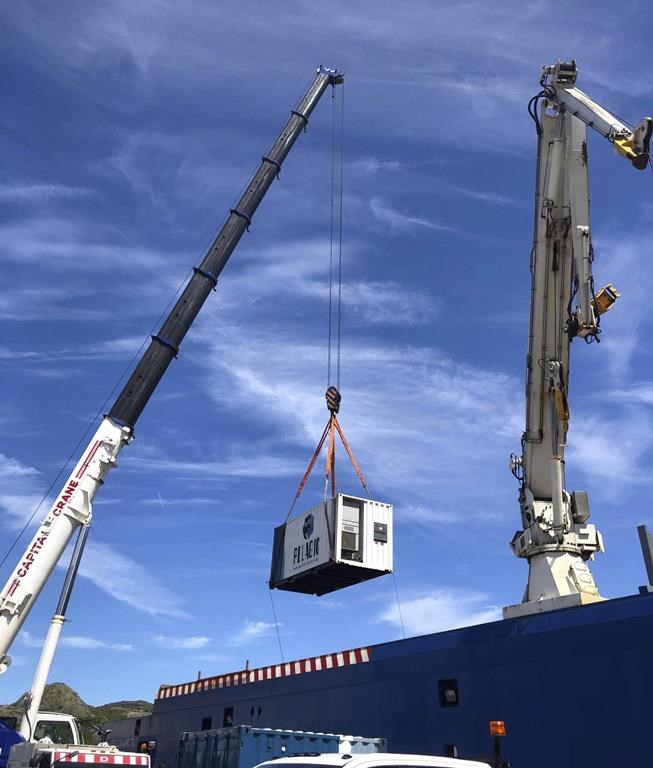
This photo provided by Pelagic Resources Services shows Pelagic Resources Services demobilizing from the Horizon Arctic in St. John’s, Newfoundland, Wednesday, June 28, 2023, following the Titan recovery mission. The company used a remote operated vehicle to retrieve wreckage from the Titan, which imploded on its way to attempt to view the Titanic site. (Ed Cassano/Pelagic Research Services via AP)

“I have to apologize,” Cassano said, his voice cracking as he described the moment the debris was found. He said he and his crew were still experiencing “a lot of emotion.”

The Canadian ship Horizon Arctic brought Odysseus to the search area that had been established for the Titan, and the underwater robot was offloaded into the ocean on June 22. The ship returned to port Wednesday with mangled chunks of the submersible.

Investigating the debris is a crucial part of a multiagency investigation into why the Titan imploded on its way to view wreckage of the Titanic, killing five. The Coast Guard, which is leading the investigation, said it had retrieved what are likely human remains from the debris.

“It’s a very complex operation and fraught with danger,” Cassano said of the process to locate, then retrieve the debris. “… Sadly, our rescue turned into a recovery.”

He said when his team arrived at the site in the North Atlantic where the Titan had descended, there was already a fleet of 10 ships and aircraft. One of the ships was Deep Energy, which normally lays pipes and cables in deep water.
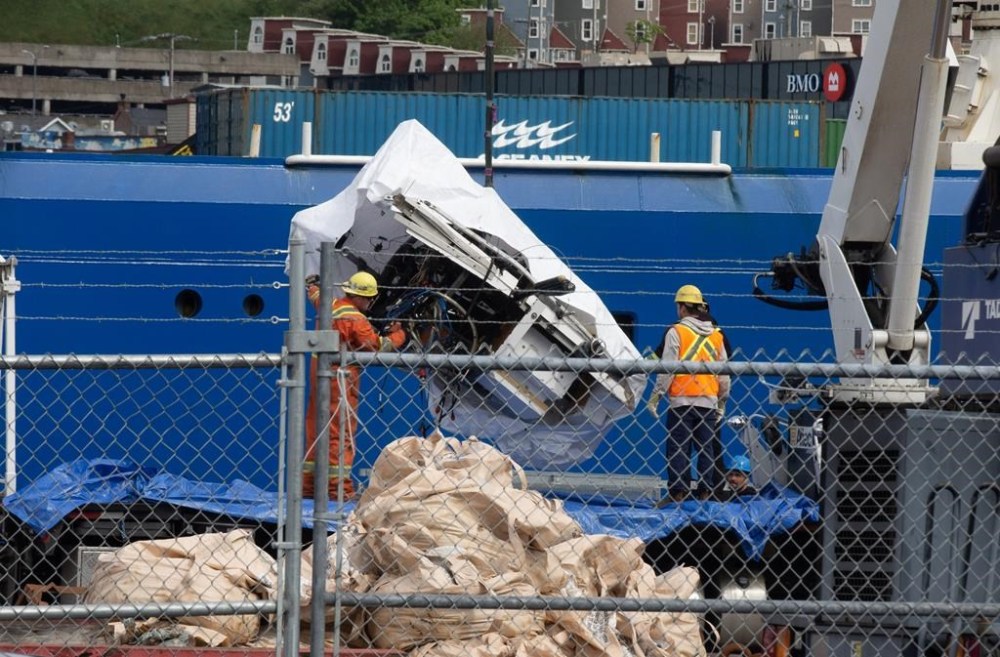
Debris from the Titan submersible, recovered from the ocean floor near the wreck of the Titanic, is unloaded from the ship Horizon Arctic at the Canadian Coast Guard pier in St. John’s on Wednesday, June 28, 2023. The owner of the remotely operated vehicle that recovered pieces of the Titan submersible says it found the wreck soon after arriving at the search site south of Newfoundland early on June 22. THE CANADIAN PRESS/Paul Daly

Cassano said Deep Energy deployed a submersible but it was only able to reach a depth of 2,700 meters (8,858 feet). The Titan’s debris was located on the seafloor about 12,500 feet (3,810 meters) underwater.

Pelagic’s team conducted 24-hour operations with Odysseus even after finding the wreckage, Cassano said. While tethered to its mother ship, the robot used heavy lifting capabilities to retrieve the heavy debris from the ocean floor, he said.

Asked what he thought of the Titan’s voyage, Cassano said that, based on his own experience with a company that focuses on deep-sea research, he believes the crew was motivated by “a passion and a joy for exploration.”

Pelagic has locations outside Buffalo and in Massachusetts. Odysseus was built by MPH Engineering of Largo, Florida, and became operational in 2016. Its primary use is deep-sea science, but Pelagic Research “always knew that we’d be called at some point, and so we prepared the system for” rescue and recovery, Cassano said.

There are hundreds of remote-operated vehicles, or ROVs, operating around the world, using robotic arms, lights and cameras to work in parts of the deep ocean that would be dangerous or impossible for humans to access.
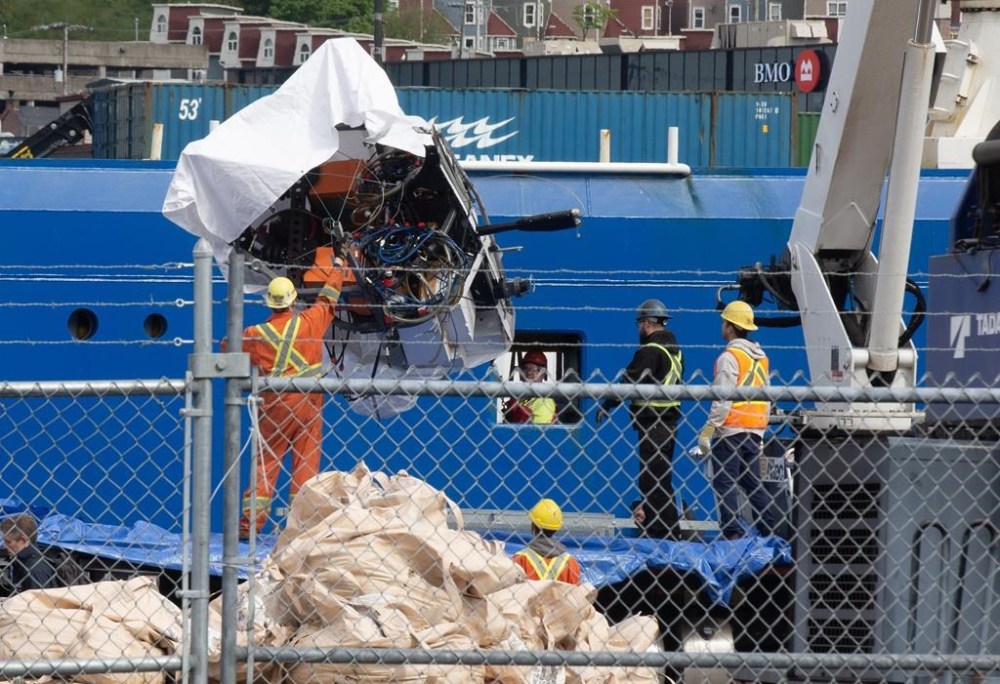
Debris from the Titan submersible, recovered from the ocean floor near the wreck of the Titanic, is unloaded from the ship Horizon Arctic at the Canadian Coast Guard pier in St. John’s on Wednesday, June 28, 2023. THE CANADIAN PRESS/Paul Daly

ROVs were first developed in the 1960s and have been used for military, scientific and industrial uses, such as underwater safety inspections of platforms and pipelines, according to the National Oceanic and Atmospheric Administration. An ROV named Jason Jr. developed by the Woods Hole Oceanographic Institution was used to explore the Titanic in 1986, the year after explorers discovered the iconic ocean liner’s wreckage.

Even after years of ROV use in science and industry, removing items from the ocean floor remains painstaking and difficult, said Andy Bowen, a principal engineer at Woods Hole who specializes in remotely operated submersibles.

“Once that’s been accomplished, of course, then it has to be brought on board and done so carefully so that there’s no damage done or evidence lost,” Bowen said.

After the Titan was reported missing on June 18, the Navy analyzed acoustic data and found an “anomaly” consistent with an implosion or explosion in area where the vessel was when communications were lost, according to a senior U.S. Navy official.

Debris from the Titan, which is believed to have imploded that day as it made its descent, was located roughly 1,600 feet (488 meters) from the Titanic on the ocean floor.
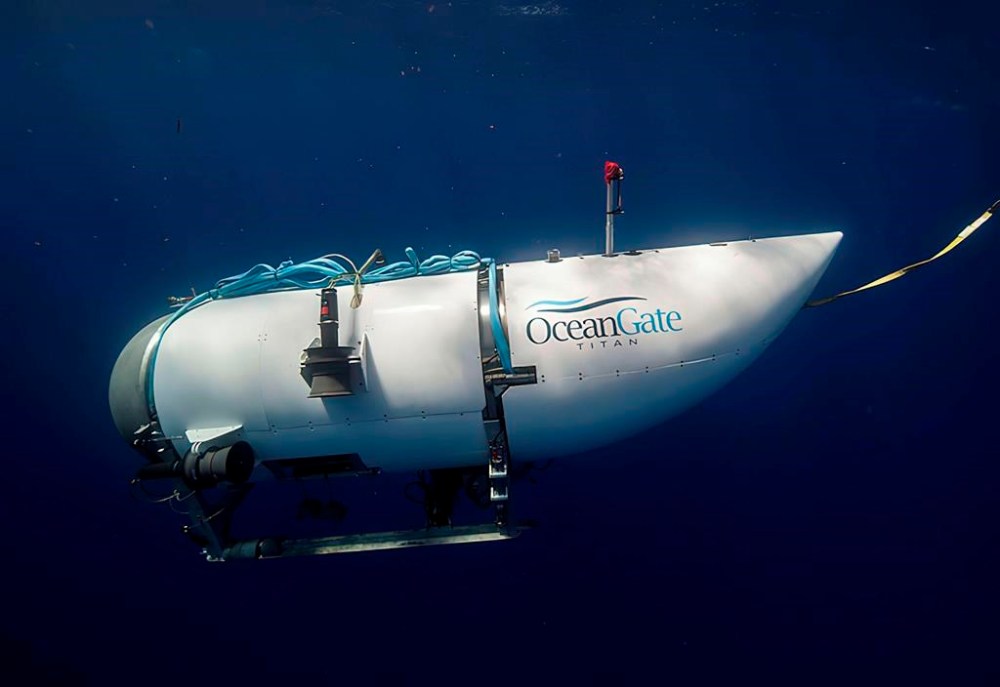
This photo provided by OceanGate Expeditions shows the submersible vessel named Titan used to visit the wreckage site of the Titanic. A vessel that had been searching for debris from the ill-fated Titan submersible has returned to port in St. John’s, N.L. The Canadian-flagged Horizon Arctic is carrying a remotely operated vehicle (ROV) that carried out a search of the ocean floor not far from the wreck of the Titanic, about 700 kilometres south of Newfoundland. THE CANADIAN PRESS/AP-OceanGate Expeditions via AP

Stockton Rush, the Titan’s pilot and CEO of OceanGate, the company that owned and operated the submersible, was killed in the implosion along with two members of a prominent Pakistani family, Shahzada Dawood and his son Suleman Dawood; British adventurer Hamish Harding; and Titanic expert Paul-Henri Nargeolet.

The company charged passengers $250,000 each to participate in the voyage. The Coast Guard hopes its investigation will result in measures to improve the safety of submersibles. Other government agencies in the U.S. and Canada are participating in the investigation.

___

Whittle reported from Portland, Maine. Associated Press writer Michael Casey in Boston contributed to this report.
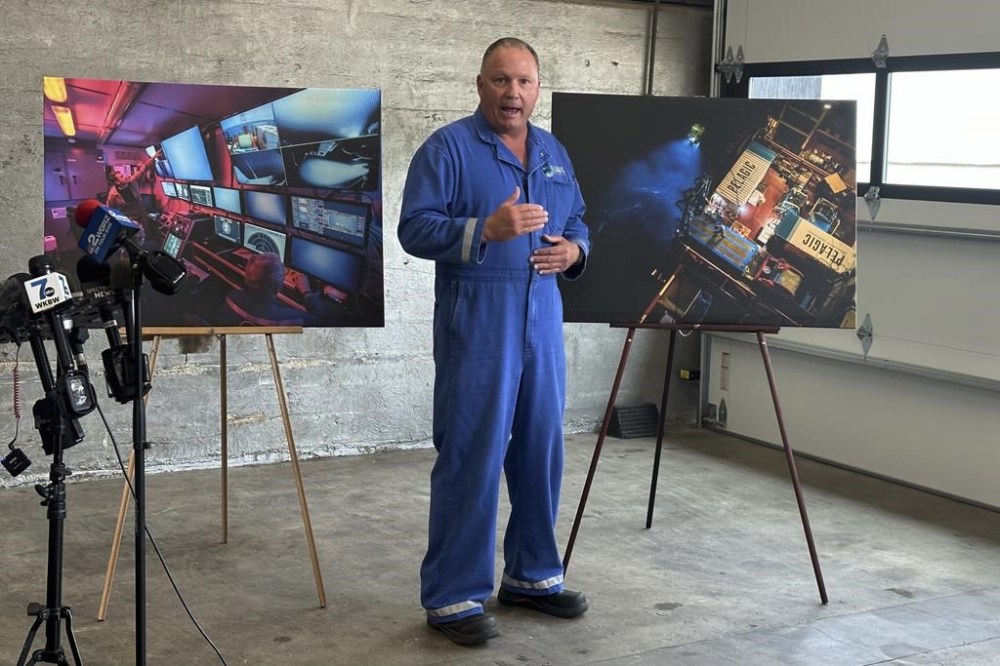
Edward Cassano speaks during a news conference on the Titan submersible are displayed on Friday, June 30, 2023 in Aurora N.Y. The submersible imploded last week, killing all five people on board. (AP Photo/Carolyn Thompson)
Report Error Submit a Tip

More Stories

Manitoba PC leader Khan survives confidence vote

Carol Sanders 3 minute read Preview

Manitoba PC leader Khan survives confidence vote

Carol Sanders 3 minute read Updated: 8:33 PM CDT

Manitoba Progressive Conservative Leader Obby Khan survived a confidence vote last week.

Caucus communications director Alison Sutherland confirmed the vote was held Friday and that Khan still has “the full confidence” of the PC caucus.

She did not provide further details.

The party under Khan’s leadership is floundering, a recent poll suggests.

Read
Updated: 8:33 PM CDT

Jets place two on waivers

1 minute read Updated: 9:58 AM CDT

The Winnipeg Jets are one step closer to being down to numbers.

On Sunday afternoon, centre Danny Zhilkin and defenceman Henry Thrun were placed on waivers.

That decision would suggest  defenceman Tyrel Bauer is in line to break camp with the NHL club for the first time in his career.

The final roster, with a maximum of 23 players, must be submitted on Monday afternoon.

Bombers let another one slip away and face pivotal issue

Taylor Allen 7 minute read Preview

Bombers let another one slip away and face pivotal issue

Taylor Allen 7 minute read Saturday, Sep. 26, 2026

Mike O’Shea summed it up best.

“That one doesn’t feel very good.”

Nor should it.

The Winnipeg Blue Bombers started out hot Friday night, only to run out of gas down the stretch and allow the visiting Toronto Argonauts to steal a 30-28 victory.

Read
Saturday, Sep. 26, 2026

Jets pick up netminder as relatively new 23-man roster announced

Mike McIntyre 7 minute read Preview

Jets pick up netminder as relatively new 23-man roster announced

Mike McIntyre 7 minute read Updated: 9:25 PM CDT

Let’s get the caveats out of the way: Nothing is set in stone, nor written in permanent ink, and what you see right now could change in the blink of an eye.

With that being said, allow us to introduce you to the 2026-27 Winnipeg Jets — where change is very much in the air.

The 23-man roster submitted to the NHL offices by Monday’s 4 p.m. deadline includes seven players who were not on the team at this time last year. In fact, there could be as many as 10 new faces in the opening-night lineup on Friday against Boston when you factor in three regulars didn’t start the 2025-26 campaign due to injury.

That’s a lot of turnover, which isn’t surprising for a team that finished 26th overall in the standings and was — to most fans and pundits — too old and too slow.

Read
Updated: 9:25 PM CDT

New tour firm seeks to display ‘hidden gem’

Aaron Epp 5 minute read Preview

New tour firm seeks to display ‘hidden gem’

Aaron Epp 5 minute read 7:36 PM CDT

Desiree Rantala has serious Manitoba bona fides.

The 34-year-old grew up in two northern First Nations communities and has lived in Gimli and Dauphin. She’s worked in marketing roles at the Manitoba Museum, Downtown Winnipeg Business Improvement Zone and Travel Manitoba, and she’s travelled to New York and Vancouver to promote the province.

Now, Rantala has launched a tour company called Toba Tripper.

“We’re a hidden gem that has so much to offer,” the Winnipeg resident said. “We have so much to see and I really hope that people leave my tours appreciating the beauty of Manitoba a little bit more.”

Read
7:36 PM CDT

Canada resorting to its tried and true playbook

Niigaan Sinclair 5 minute read Preview

Canada resorting to its tried and true playbook

Niigaan Sinclair 5 minute read 6:00 AM CDT

In 1846, Britain faced an emergency influenced by the Irish famine, so leaders repealed the country’s “Corn Laws” and restrictions on imported food and grain, transitioning to a system of free trade.

This created a crisis in the then Province of Canada, which had relied on British “preferential” status to prop up its agricultural and resource industries.

As a result, Canada looked south for new markets and eventually negotiated a free trade agreement with the United States.

This required land to be acquired and converted for industrial use quickly, so Canada quickly dispatched Commissioner William Robinson to negotiate with Indigenous communities along Lake Huron and Lake Superior for land.

Read
6:00 AM CDT