U.S. destroys last of its declared chemical weapons, closing a deadly chapter dating to World War I
Advertisement
Read this article for free:
or
Already have an account? Log in here »
To continue reading, please subscribe:

Digital Subscription
One year of digital access for only $205*
- Enjoy unlimited reading on winnipegfreepress.com
- Read the E-Edition, our digital replica newspaper
- Access News Break, our award-winning app
- Play interactive puzzles
*First annual payment billed as $205.00 + GST for one year. This annual subscription will automatically renew at $233.00 + GST every 52 weeks (10% off the regular annual price of $259.35). Offer available to new and qualified returning subscribers only. Cancel any time.
To continue reading, please subscribe:
Add Free Press access to your Brandon Sun subscription for only an additional
$1 for the first 4 weeks*
- Enjoy unlimited reading on winnipegfreepress.com
- Read the E-Edition, our digital replica newspaper
- Access News Break, our award-winning app
- Play interactive puzzles
*Your next Brandon Sun subscription payment will increase by $1.00 and you will be charged $17.95 plus GST for four weeks. After four weeks, your payment will increase to $24.95 plus GST every four weeks.
Read unlimited articles for free today:
or
Already have an account? Log in here »
Hey there, time traveller!
This article was published 06/07/2023 (1181 days ago), so information in it may no longer be current.
RICHMOND, Ky. (AP) — The last of the United States’ declared chemical weapons stockpile was destroyed at a sprawling military installation in eastern Kentucky, the White House announced Friday, a milestone that closes a chapter of warfare dating back to World War I.
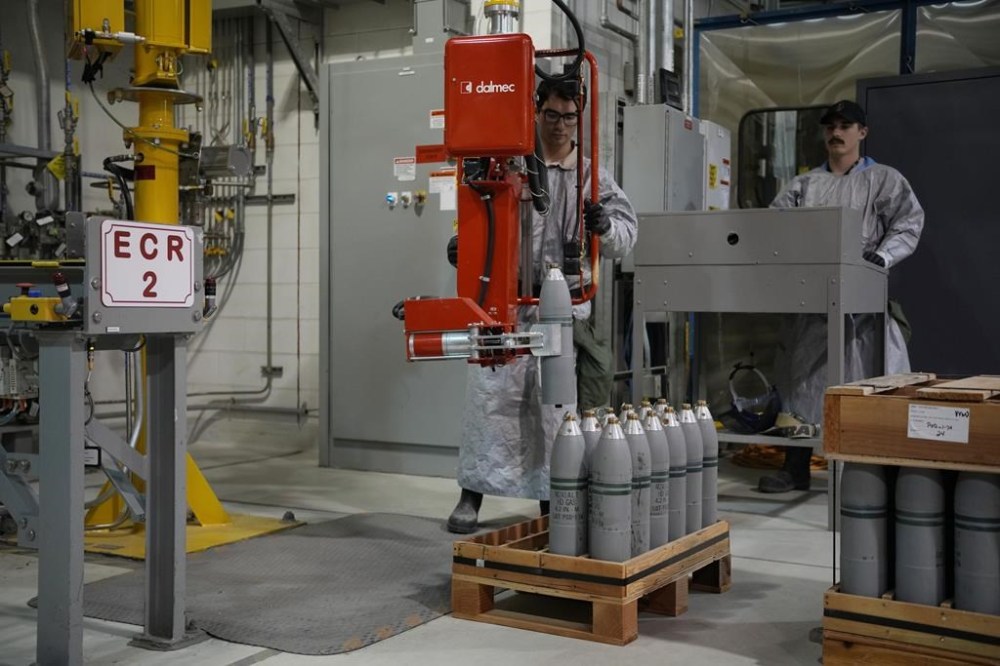
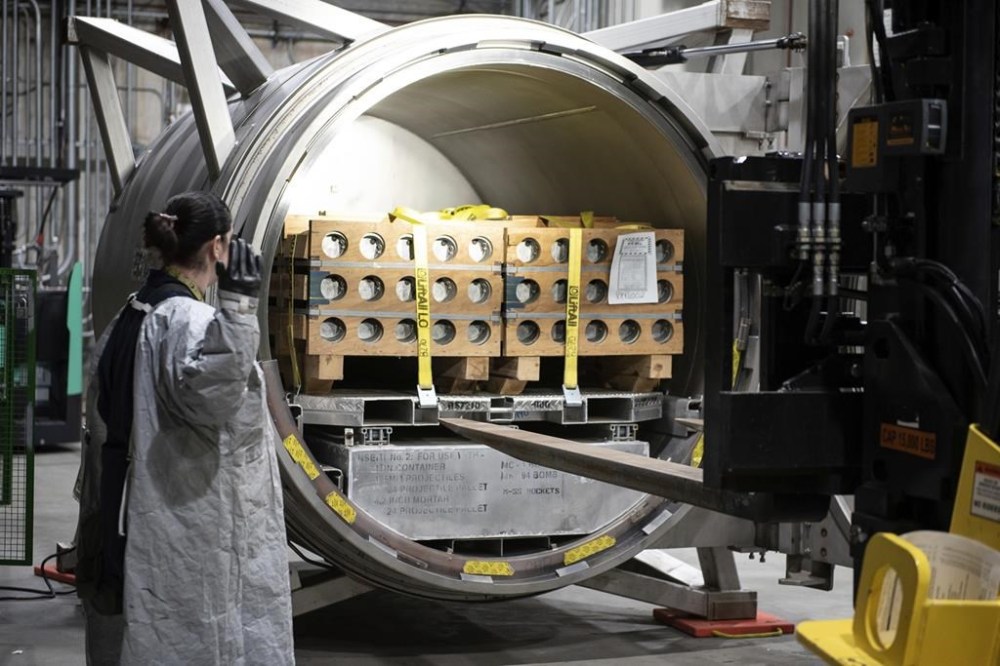
Workers at the Blue Grass Army Depot in Kentucky destroyed rockets filled with GB nerve agent, completing a decadeslong campaign to eliminate a stockpile that by the end of the Cold War totaled more than 30,000 tons.
“For more than 30 years, the United States has worked tirelessly to eliminate our chemical weapons stockpile,” President Joe Biden said in a statement released by the White House. “Today, I am proud to announce that the United States has safely destroyed the final munition in that stockpile — bringing us one step closer to a world free from the horrors of chemical weapons.”
The weapons’ destruction is a major watershed for Richmond, Kentucky and Pueblo, Colorado, where an Army depot destroyed the last of its chemical agents last month. It’s also a defining moment for arms control efforts worldwide.
The U.S. faced a Sept. 30 deadline to eliminate its remaining chemical weapons under the international Chemical Weapons Convention, which took effect in 1997 and was joined by 193 countries. The munitions being destroyed in Kentucky are the last of 51,000 M55 rockets with GB nerve agent — a deadly toxin also known as sarin — that have been stored at the depot since the 1940s.
By destroying the munitions, the U.S. is officially underscoring that these types of weapons are no longer acceptable in the battlefield and sending a message to the handful of countries that haven’t joined the agreement, military experts say.
“Chemical weapons are responsible for some of the most horrific episodes of human loss,” Senate Republican Leader Mitch McConnell of Kentucky said in a statement. “Though the use of these deadly agents will always be a stain on history, today our nation has finally fulfilled our promise to rid our arsenal of this evil.
Friday’s announcement came as the Biden administration has also decided to provide cluster munitions to Ukraine, a weapon that two-thirds of NATO countries have banned because it can cause many civilian casualties. National security adviser Jake Sullivan said Ukraine has promised to use the munitions — bombs that open in the air and release scores of smaller bomblets — carefully.
Chemical weapons were first used in modern warfare in World War I, where they were estimated have killed at least 100,000. Despite their use being subsequently banned by the Geneva Convention, countries continued to stockpile the weapons until the treaty calling for their destruction.
In southern Colorado, workers at the Army Pueblo Chemical Depot started destroying the weapons in 2016, and on June 22 completed their mission of neutralizing an entire cache of about 2,600 tons of mustard blister agent. The projectiles and mortars comprised about 8.5% of the country’s original chemical weapons stockpile of 30,610 tons of agent.
Nearly 800,000 chemical munitions containing mustard agent were stored since the 1950s inside row after row of heavily guarded concrete and earthen bunkers that pock the landscape near a large swath of farmland east of Pueblo.
The weapons’ destruction alleviates a concern that civic leaders in Colorado and Kentucky admit was always in the back of their minds.
“Those (weapons) sitting out there were not a threat,” Pueblo Mayor Nick Gradisar said. But, he added, “you always wondered what might happen with them.”
In the 1980s, the community around Kentucky’s Blue Grass Army Depot rose up in opposition to the Army’s initial plan to incinerate the plant’s 520 tons of chemical weapons, leading to a decadeslong battle over how they would be disposed of. They were able to halt the planned incineration plant, and then, with help from lawmakers, prompted the Army to submit alternative methods to burning the weapons.
Craig Williams, who became the leading voice of the community opposition and later a partner with political leadership and the military, said residents were concerned about potential toxic pollution from burning the deadly chemical agents.
Williams noted that the military eliminated most of its existing stockpile by burning weapons at other, more remote sites such as Johnston Atoll in the Pacific Ocean or at a chemical depot in the middle of the Utah desert. But the Kentucky site was adjacent to Richmond and only a few dozen miles away from Lexington, the state’s second-largest city.
“We had a middle school of over 600 kids a mile away from the (planned) smokestack,” Williams said.
The Kentucky storage facility has housed mustard agent and the VX and sarin nerve agents, much of it inside rockets and other projectiles, since the 1940s. The state’s disposal plant was completed in 2015 and began destroying weapons in 2019. It uses a process called neutralization to dilute the deadly agents so they can be safely disposed of.
The project, however, has been a boon for both communities, and facing the eventual loss of thousands of workers, both are pitching the pool of high-skilled laborers as a plus for companies looking to locate in their regions.
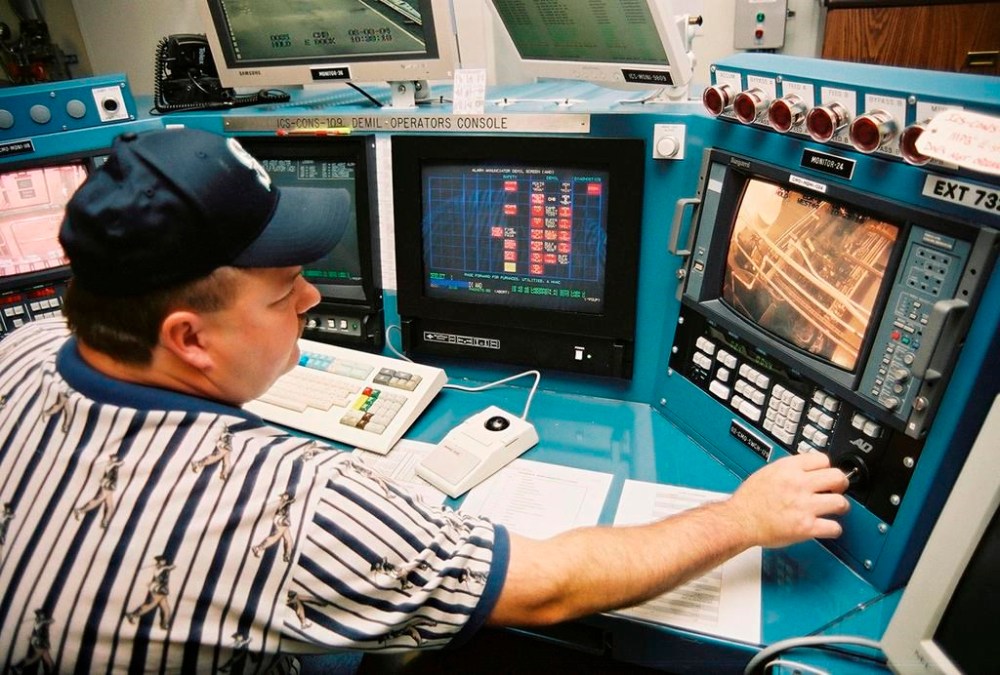
Workers at the Pueblo site used heavy machinery to meticulously — and slowly — load aging weapons onto conveyor systems that fed into secure rooms where remote-controlled robots did the dirty and dangerous work of eliminating the toxic mustard agent, which was designed to blister the skin and cause inflammation of the eyes, nose, throat and lungs.
Robotic equipment removed the weapons’ fuses and bursters before the mustard agent was neutralized with hot water and mixed with a caustic solution to prevent the reaction from reversing. The byproduct was further broken down in large tanks swimming with microbes, and the mortars and projectiles were decontaminated at 1,000 degrees Fahrenheit (538 degrees Celsius) and recycled as scrap metal.
Problematic munitions that were leaky or overpacked were sent to an armored, stainless steel detonation chamber to be destroyed at about 1,100 degrees Fahrenheit (593 degrees Celsius).
The Colorado and Kentucky sites were the last among several, including Utah and the Johnston Atoll, where the nation’s chemical weapons had been stockpiled and destroyed. Other locations included facilities in Alabama, Arkansas and Oregon.
Officials say the elimination of the U.S. stockpile is a major step forward for the Chemical Weapons Convention. Only three countries — Egypt, North Korea and South Sudan — have not signed the treaty. A fourth, Israel, has signed but not ratified the treaty.
Concerns remain that some parties to the convention, particularly Russia and Syria, possess undeclared chemical weapons stockpiles. Biden on Friday urged Russia and Syria to fully comply with the treaty, and called on the remaining countries to join it.
The international chemical weapons watchdog hailed the U.S. move as a “historic success of multilateralism” but said challenges remain such as urging the holdouts to join the treaty and destroying and recovering old chemical weapons.

“Recent uses and threats of use of toxic chemicals as weapons illustrate that preventing re-emergence will remain a priority for the organization,” said Fernando Arias, director-general of the Organization for the Prohibition of Chemical Weapons.
Arms control advocates hope this final step by the U.S. could be used as a model for eliminating other types of weapons.
“It shows that countries can really ban a weapon of mass destruction,” said Paul F. Walker, vice chairman of the Arms Control Association and coordinator of the Chemical Weapons Convention Coalition. “If they want to do it, it just takes the political will and it takes a good verification system.”
__
DeMillo reported from Little Rock, Arkansas, and Peipert reported from Pueblo, Colorado.