Oregon’s Cannon Beach reopens after cougar sighting on iconic coastal rock led to closure
Advertisement
Read this article for free:
or
Already have an account? Log in here »
To continue reading, please subscribe:

Digital Subscription
One year of digital access for only $205*
- Enjoy unlimited reading on winnipegfreepress.com
- Read the E-Edition, our digital replica newspaper
- Access News Break, our award-winning app
- Play interactive puzzles
*First annual payment billed as $205.00 + GST for one year. This annual subscription will automatically renew at $233.00 + GST every 52 weeks (10% off the regular annual price of $259.35). Offer available to new and qualified returning subscribers only. Cancel any time.
To continue reading, please subscribe:
Add Free Press access to your Brandon Sun subscription for only an additional
$1 for the first 4 weeks*
- Enjoy unlimited reading on winnipegfreepress.com
- Read the E-Edition, our digital replica newspaper
- Access News Break, our award-winning app
- Play interactive puzzles
*Your next Brandon Sun subscription payment will increase by $1.00 and you will be charged $17.95 plus GST for four weeks. After four weeks, your payment will increase to $24.95 plus GST every four weeks.
Read unlimited articles for free today:
or
Already have an account? Log in here »
Hey there, time traveller!
This article was published 17/07/2023 (1162 days ago), so information in it may no longer be current.
CANNON BEACH, Ore. (AP) — A cougar that climbed onto a towering rock off the coast of northwest Oregon over the weekend — probably in search of feathered prey — has abandoned the craggy formation, allowing for the popular Cannon Beach to reopen to visitors Monday.
Multiple agencies and organizations, from local and state police to the state Department of Fish and Wildlife and the Parks and Recreation Department, responded to Sunday morning’s sighting of the big cat on the iconic Haystack Rock. The beach was closed to protect people and let it return to its usual habitat.
The U.S. Fish and Wildlife Service said officials later confirmed that the animal had moved on. A game camera captured an image of it leaving the rock Sunday night, and tracks were also found heading away, federal officials said.
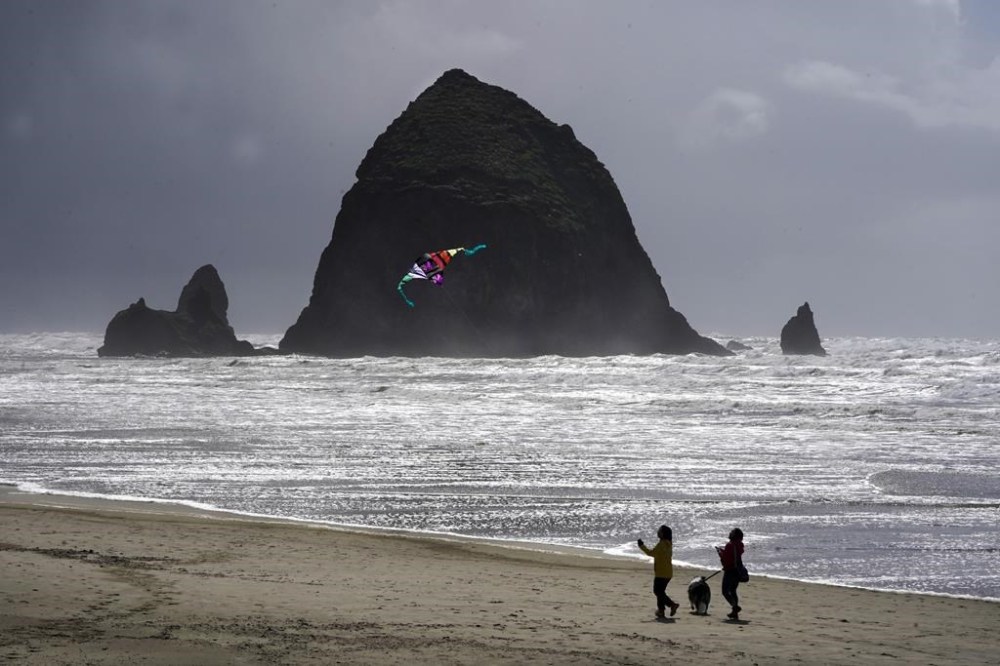
State biologists believe the cougar ventured to Haystack Rock at low tide Saturday night to hunt birds, a behavior they have not previously witnessed at that site.
“While the forested areas along the coast are prime habitat for cougars, it is unusual that a cougar made its way on to Haystack Rock,” Paul Atwood, a biologist with the Oregon Department of Fish and Wildlife, said in a statement. “Their primary food source is deer, but they will also consume elk, other mammals and birds.”
However, cougars have been documented traveling to other similar small offshore islands in Washington state’s Olympic Peninsula, U.S. Fish and Wildlife Service spokesperson Megan Nagel said via email.
Haystack Rock, protected as part of the Oregon Islands National Wildlife Refuge and managed by the U.S. Fish and Wildlife Service, is abundant with seabirds and sea life in the summer.
From March through September, tufted puffins, common murres, pigeon guillemot and black oystercatcher raise their young on the formation.
Part of the rock is closed year-round to all public use to protect nesting and roosting birds.