China proposes to limit children’s smartphone time to a maximum of 2 hours a day
Advertisement
Read this article for free:
or
Already have an account? Log in here »
To continue reading, please subscribe:

Digital Subscription
One year of digital access for only $205*
- Enjoy unlimited reading on winnipegfreepress.com
- Read the E-Edition, our digital replica newspaper
- Access News Break, our award-winning app
- Play interactive puzzles
*First annual payment billed as $205.00 + GST for one year. This annual subscription will automatically renew at $233.00 + GST every 52 weeks (10% off the regular annual price of $259.35). Offer available to new and qualified returning subscribers only. Cancel any time.
To continue reading, please subscribe:
Add Free Press access to your Brandon Sun subscription for only an additional
$1 for the first 4 weeks*
- Enjoy unlimited reading on winnipegfreepress.com
- Read the E-Edition, our digital replica newspaper
- Access News Break, our award-winning app
- Play interactive puzzles
*Your next Brandon Sun subscription payment will increase by $1.00 and you will be charged $17.95 plus GST for four weeks. After four weeks, your payment will increase to $24.95 plus GST every four weeks.
Read unlimited articles for free today:
or
Already have an account? Log in here »
Hey there, time traveller!
This article was published 02/08/2023 (1160 days ago), so information in it may no longer be current.
BEIJING (AP) — China’s internet watchdog has laid out regulations to curb the amount of time children spend on their smartphones, in the latest blow to firms such as Tencent and ByteDance, which run social media platforms and online games.
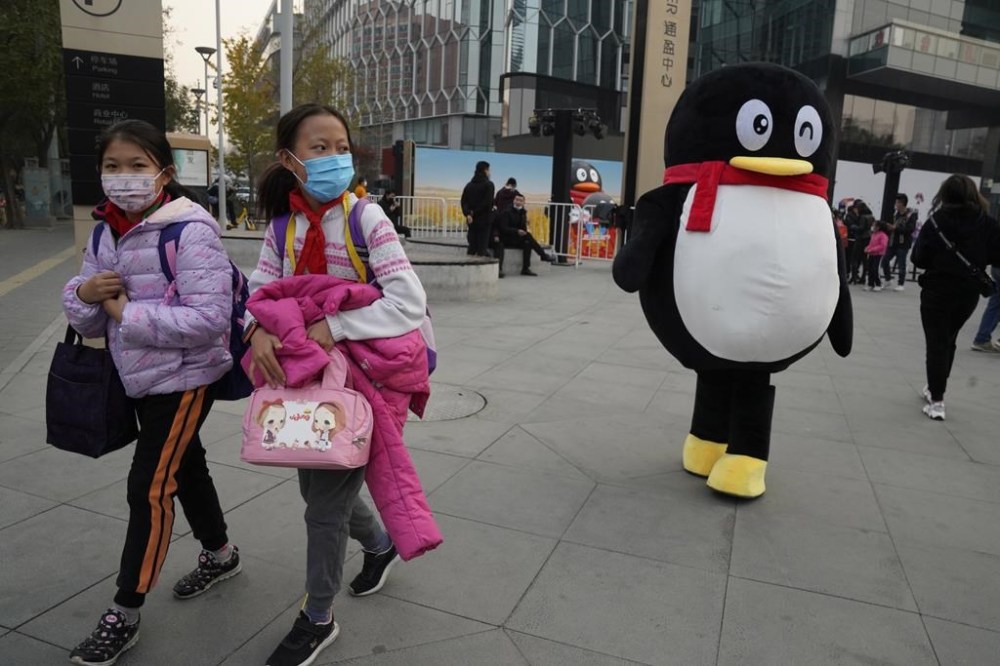
The Cyberspace Administration of China on Wednesday published the draft guidelines on its site, stating that minors would not be allowed to use most internet services on mobile devices from 10 p.m. to 6 a.m., and that children between the ages of 16 and 18 would only be able to use the internet for two hours a day.
Children between the ages of 8 and 15 would be allowed only an hour a day, while those under 8 would only be allowed 40 minutes.
Only certain services, such as apps or platforms that are deemed suitable to the physical and mental development of minors, will be exempted. The CAC did not specify which internet services would be allowed exemptions.
The restrictions are Beijing’s latest efforts to attempt to limit internet addiction, a problem it views as widespread among its youth. In 2019, Beijing limited children’s daily online game time to 90 minutes a day and tightened those restrictions in 2021, allowing children only an hour a day of online game play on Fridays, weekends and public holidays.
Short-video and online video platforms like Douyin, Bilibili and Kuaishou have offered youth modes that restrict the type of content shown to minors and the length of time they can use the service. Children are also pushed educational content, such as science experiments.
The latest restrictions would impact firms like Tencent, China’s largest online game company, and ByteDance, which runs popular short-video platform Douyin. Firms in China are often responsible for enforcing regulations.
“To effectively strengthen the online protection of minors, the CAC has in recent years pushed for the establishment of a youth mode on internet platforms, expanding its coverage, optimizing its functions and enriching it with age-appropriate content,” the CAC said.

“Since the mode was launched, there has been a positive impact in reducing youth internet addiction and the impact of undesirable information,” it added.
The CAC said draft guidelines were open to public feedback until Sep. 2. It did not say when the new rules would be into effect.