The Perseid meteor shower peaks this weekend and it’s even better this year
Advertisement
Read this article for free:
or
Already have an account? Log in here »
To continue reading, please subscribe:

Digital Subscription
One year of digital access for only $205*
- Enjoy unlimited reading on winnipegfreepress.com
- Read the E-Edition, our digital replica newspaper
- Access News Break, our award-winning app
- Play interactive puzzles
*First annual payment billed as $205.00 + GST for one year. This annual subscription will automatically renew at $233.00 + GST every 52 weeks (10% off the regular annual price of $259.35). Offer available to new and qualified returning subscribers only. Cancel any time.
To continue reading, please subscribe:
Add Free Press access to your Brandon Sun subscription for only an additional
$1 for the first 4 weeks*
- Enjoy unlimited reading on winnipegfreepress.com
- Read the E-Edition, our digital replica newspaper
- Access News Break, our award-winning app
- Play interactive puzzles
*Your next Brandon Sun subscription payment will increase by $1.00 and you will be charged $17.95 plus GST for four weeks. After four weeks, your payment will increase to $24.95 plus GST every four weeks.
Read unlimited articles for free today:
or
Already have an account? Log in here »
Hey there, time traveller!
This article was published 09/08/2023 (1109 days ago), so information in it may no longer be current.
NEW YORK (AP) — The annual Perseid meteor shower reaches its peak this weekend, sending bright trails of light streaking across the night sky.
With only a sliver of moon in the sky, conditions this year will be ideal for seeing lots of meteors.
“If you’ve got nice clear weather and a good dark sky, you go out just before dawn and you’ll see a Perseid per minute or so,” said NASA meteor scientist Bill Cooke. “That’s a pretty good show.”
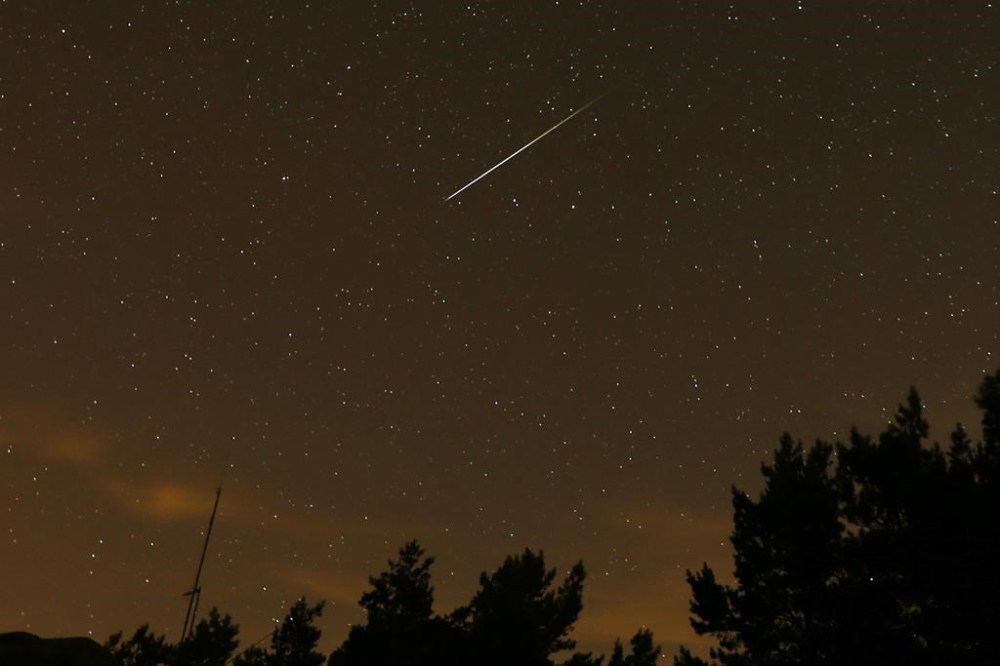
Here’s how to watch the meteor shower:
WHAT ARE THE PERSEIDS?
The Perseids — one of the biggest meteor showers we can see — occur every year in the late summer. Meteor showers happen when the Earth moves through fields of debris floating around in space. The Perseids come from comet Swift-Tuttle, a big ball of ice and rock that sheds pieces of dusty debris as it orbits around the sun. When the Earth passes by, those bits get caught in our atmosphere and burn up, creating the streaking lights. The Perseids get their name from the constellation Perseus, because the meteors’ paths appear to start out from this point in the sky.
WHEN IS THE SHOWER?
This year’s shower is already active, but the main event will be this weekend, when the shower reaches its peak from Saturday night into Sunday morning. Starting around 11 p.m. local time Saturday, a few meteors will start to show up — maybe one every 15 minutes, Cooke estimated. They’ll keep picking up the pace until before dawn on Sunday, when “you’ll see meteors appear all over the place,” he said.

HOW CAN I SEE THEM?
During this weekend’s peak, the moon will be a waning crescent — just a small slice in the sky. That’s good news because a bright moon can make it harder to spot the meteors. Last year, the moon was full during the peak. Anyone in the Northern Hemisphere will have a good view this year, as long as the sky is clear of light pollution and clouds. You don’t need any equipment to see them, but you will need to give your eyes around half an hour to adjust to the dark. Avoid looking at your cellphone since that can ruin your night vision.
The Perseids can appear anywhere in the sky. So just “lie on your back, look away from the moon and take in as much sky as you can,” Cooke said.
___
The Associated Press Health and Science Department receives support from the Howard Hughes Medical Institute’s Science and Educational Media Group. The AP is solely responsible for all content.