GM’s Cruise autonomous vehicle unit agrees to cut fleet in half after 2 crashes in San Francisco
Advertisement
Read this article for free:
or
Already have an account? Log in here »
To continue reading, please subscribe:

Digital Subscription
One year of digital access for only $205*
- Enjoy unlimited reading on winnipegfreepress.com
- Read the E-Edition, our digital replica newspaper
- Access News Break, our award-winning app
- Play interactive puzzles
*First annual payment billed as $205.00 + GST for one year. This annual subscription will automatically renew at $233.00 + GST every 52 weeks (10% off the regular annual price of $259.35). Offer available to new and qualified returning subscribers only. Cancel any time.
To continue reading, please subscribe:
Add Free Press access to your Brandon Sun subscription for only an additional
$1 for the first 4 weeks*
- Enjoy unlimited reading on winnipegfreepress.com
- Read the E-Edition, our digital replica newspaper
- Access News Break, our award-winning app
- Play interactive puzzles
*Your next Brandon Sun subscription payment will increase by $1.00 and you will be charged $17.95 plus GST for four weeks. After four weeks, your payment will increase to $24.95 plus GST every four weeks.
Read unlimited articles for free today:
or
Already have an account? Log in here »
Hey there, time traveller!
This article was published 19/08/2023 (1134 days ago), so information in it may no longer be current.
General Motors’ Cruise autonomous vehicle unit has agreed to cut its fleet of San Francisco robotaxis in half as authorities investigate two recent crashes in the city.
The state Department of Motor Vehicles asked for the reduction after a Cruise vehicle without a human driver collided with an unspecified emergency vehicle on Thursday.
“The DMV is investigating recent concerning incidents involving Cruise vehicles in San Francisco,” the DMV said Saturday in a statement to The Associated Press. “Cruise has agreed to a 50% reduction and will have no more than 50 driverless vehicles in operation during the day and 150 driverless vehicles in operation at night.”
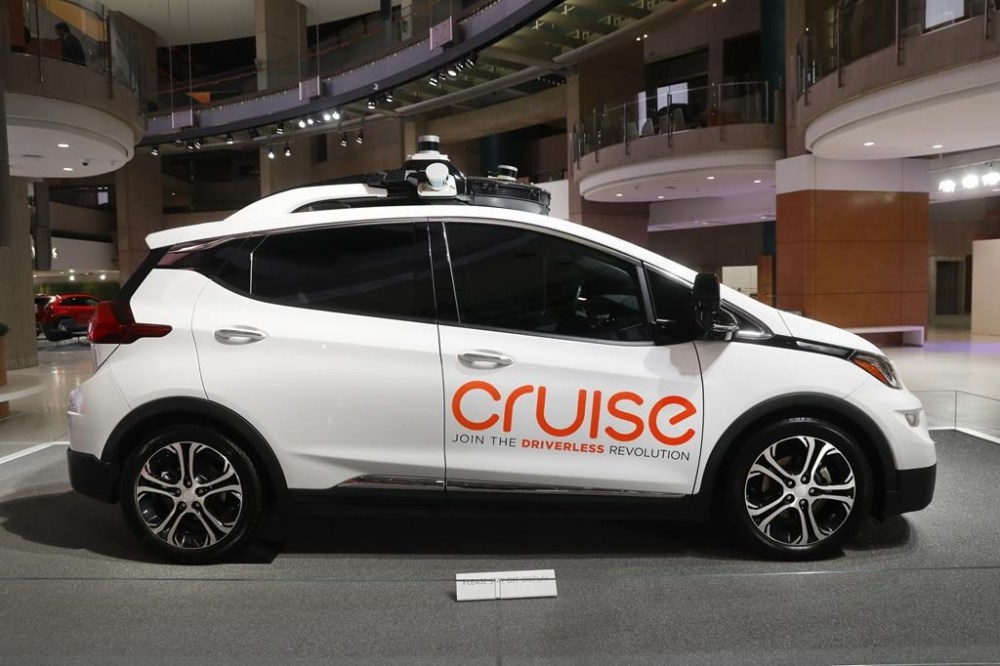
The development comes just over a week after California regulators allowed Cruise and Google spinoff Waymo to operate autonomous robotaxis throughout San Francisco at all hours, despite safety worries spurred by recurring problems with unexpected stops and other erratic behavior.
The decision Aug. 10 by the Public Utilities Commission made San Francisco the first major U.S. city with two fleets of driverless vehicles competing for passengers.
On Thursday around 10 p.m., the Cruise vehicle had a green light, entered an intersection, and was hit by the emergency vehicle responding to a call, the San Francisco Chronicle reported, based on tweets from Cruise.
The robotaxi was carrying a passenger, who was taken by ambulance to a hospital with injuries that were not severe, Cruise told the newspaper.
Also Thursday night, a Cruise car without a passenger collided with another vehicle in San Francisco, the newspaper reported.
The San Francisco Fire Department did not immediately respond to a request for comment from the newspaper.
The robotaxi almost immediately identified the emergency response vehicle as it came into view, Greg Dietrerich, Cruise’s general manager in San Francisco, said in a statement on the company website.
At the intersection, visibility is occluded by buildings, and it’s not possible to see objects around a corner until they are very close to the intersection, Dietrerich’s statement said. The Cruise autonomous vehicle detected the siren as soon it was distinguishable from background noise, he wrote.

“The AV’s ability to successfully chart the emergency vehicle’s path was complicated by the fact that the emergency vehicle was in the oncoming lane of traffic, which it had moved into to bypass the red light,” Dietrerich wrote.
The Cruise vehicle identified the risk of a crash and braked, reducing its speed, but couldn’t avoid the collision, he wrote.
Cruise vehicles have driven more than 3 million autonomous miles in the city and have interacted with emergency vehicles more than 168,000 times in the first seven months of this year alone, the statement said. “We realize that we’ll always encounter challenging situations, which is why continuous improvement is central to our work.”
The company will work with regulators and city departments to reduce the likelihood of a crash happening again, Dietrerich wrote.
The DMV said the fleet reduction will remain until its investigation ends and Cruise takes corrective action to improve safety. “The DMV reserves the right, following investigation of the facts, to suspend or revoke testing and/or deployment permits if there is determined to be an unreasonable risk to public safety.”