A Pennsylvania court says state police can’t hide how it monitors social media
Advertisement
Read this article for free:
or
Already have an account? Log in here »
To continue reading, please subscribe:

Digital Subscription
One year of digital access for only $205*
- Enjoy unlimited reading on winnipegfreepress.com
- Read the E-Edition, our digital replica newspaper
- Access News Break, our award-winning app
- Play interactive puzzles
*First annual payment billed as $205.00 + GST for one year. This annual subscription will automatically renew at $233.00 + GST every 52 weeks (10% off the regular annual price of $259.35). Offer available to new and qualified returning subscribers only. Cancel any time.
To continue reading, please subscribe:
Add Free Press access to your Brandon Sun subscription for only an additional
$1 for the first 4 weeks*
- Enjoy unlimited reading on winnipegfreepress.com
- Read the E-Edition, our digital replica newspaper
- Access News Break, our award-winning app
- Play interactive puzzles
*Your next Brandon Sun subscription payment will increase by $1.00 and you will be charged $17.95 plus GST for four weeks. After four weeks, your payment will increase to $24.95 plus GST every four weeks.
Read unlimited articles for free today:
or
Already have an account? Log in here »
Hey there, time traveller!
This article was published 22/08/2023 (1138 days ago), so information in it may no longer be current.
HARRISBURG, Pa. (AP) — Pennsylvania’s Supreme Court ruled Tuesday that the state police can’t hide from the public its policy on how it monitors social media.
Advocates for civil liberties cheered the decision. The law enforcement agency had argued that fully disclosing its policy for using software to monitor online postings may compromise public safety.
All four Democratic justices supported the majority decision, which said the lower Commonwealth Court went beyond its authority in trying to give the state police another attempt to justify keeping details of the policy a secret. Tuesday’s order appears to end a six-year legal battle.
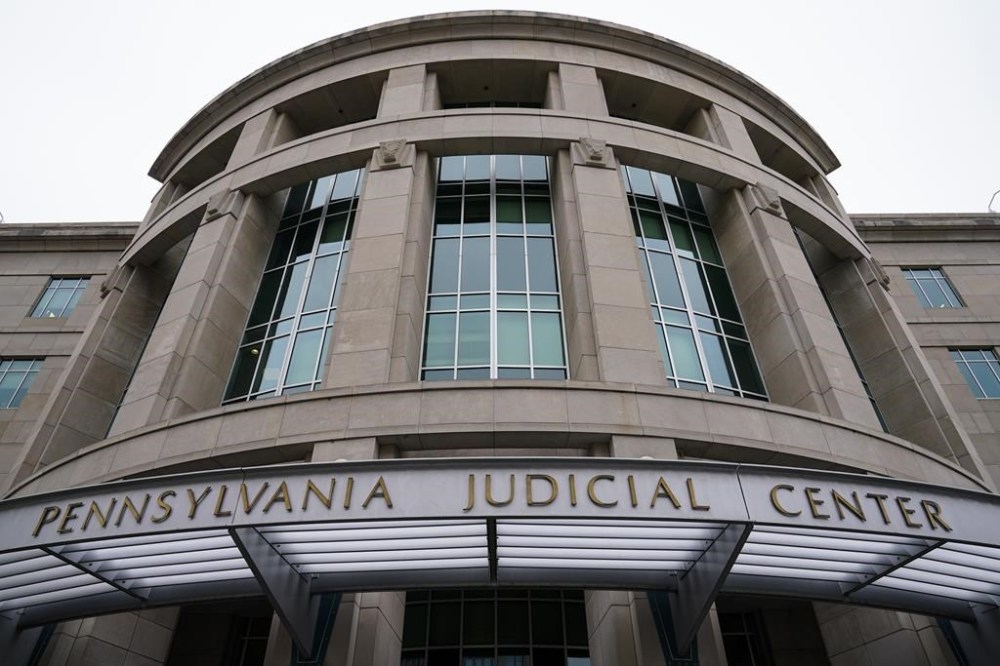
A state police spokesperson said the agency is reviewing the court decision.
Andrew Christy, a lawyer with the ACLU of Pennsylvania, said the ruling “sort of puts law enforcement on the same playing field as all government agencies. If they have a legal justification to keep something secret, then they have to put forth sufficient evidence to justify that.”
People need to know what police are doing in order to decide if it’s appropriate, he argued.
“Ultimately that relies on the voters understanding what law enforcement is doing so that then, through their elected representatives, they can rein them in when they’re acting in a way that doesn’t comport with what the public wants,” Christy said.
Justifying what the majority opinion described as heavy or complete redactions on every page of the nine-page regulation, the head of the state police’s bureau of criminal investigations argued that greater transparency about the policy would make its investigations less effective.
The state Office of Open Records held a private review of the blacked out material and and ruled that making the policy public would not be likely to harm investigations, calling the social media policy processes strictly internal and administrative in nature.
Redacted sections addressed the use of open sources, what approval is required, when to go undercover and use an online alias and how to verify information. State police also blacked out the entire section on using social media for employment background investigations.
A panel of three Republican Commonwealth Court judges reversed the Office of Open Records’ ruling that the policy should be disclosed without redactions, saying in May 2018 that the state police investigations chief based his analysis about the risk of exposure on his own extensive experience.
The majority decision issued Tuesday said Commonwealth Court should not have given the state police a new opportunity to lay out the supposed public safety risks. The majority ruled that Pennsylvania’s Right-to-Know Law does not permit Commonwealth Court to order additional fact-finding not sought by state police.
“If PSP had requested the opportunity for additional fact-finding, our disposition today may have been different,” Justice David Wecht wrote for the majority.
The open records law has a timely and efficient process that should be followed, he added, noting that “six years already have passed.”
“If and when appellate review is allowed to serve as a reset button based upon a court’s ill-defined policy concerns, there is no limiting principle, and the judiciary’s claims to neutrality and ordered decision-making vanish,” Wecht wrote.
In a dissent, Justice Sallie Mundy said the lower court identified a question of fact that was unresolved: “whether there was a connection between the text of the document and risks articulated in the agency’s affidavit” about public safety. She and Justice Kevin Brobson, who joined her dissent, are the high court’s two Republicans.