

Japan asks China to urge citizens to halt harassment after start of Fukushima wastewater release
Advertisement
Read this article for free:
or
Already have an account? Log in here »
To continue reading, please subscribe:
Monthly Digital Subscription
$0 for the first 4 weeks*
- Enjoy unlimited reading on winnipegfreepress.com
- Read the E-Edition, our digital replica newspaper
- Access News Break, our award-winning app
- Play interactive puzzles
*No charge for 4 weeks then price increases to the regular rate of $19.00 plus GST every four weeks. Offer available to new and qualified returning subscribers only. Cancel any time.
Monthly Digital Subscription
$4.75/week*
- Enjoy unlimited reading on winnipegfreepress.com
- Read the E-Edition, our digital replica newspaper
- Access News Break, our award-winning app
- Play interactive puzzles
*Billed as $19 plus GST every four weeks. Cancel any time.
To continue reading, please subscribe:
Add Free Press access to your Brandon Sun subscription for only an additional
$1 for the first 4 weeks*
*Your next subscription payment will increase by $1.00 and you will be charged $16.99 plus GST for four weeks. After four weeks, your payment will increase to $23.99 plus GST every four weeks.
Read unlimited articles for free today:
or
Already have an account? Log in here »
Hey there, time traveller!
This article was published 28/08/2023 (849 days ago), so information in it may no longer be current.
TOKYO (AP) — Japanese Prime Minister Fumio Kishida asked China on Monday to urge its citizens to halt acts of harassment, including crank calls and stone throwing at Japanese diplomatic facilities and schools, in response to Japan’s release of treated radioactive wastewater from the damaged Fukushima nuclear power plant.
“I must say it is regrettable,” Kishida said.
He said Vice Minister for Foreign Affairs Masataka Okano summoned China’s ambassador, Wu Jianghao, to ask that Chinese people act calmly and responsibly.

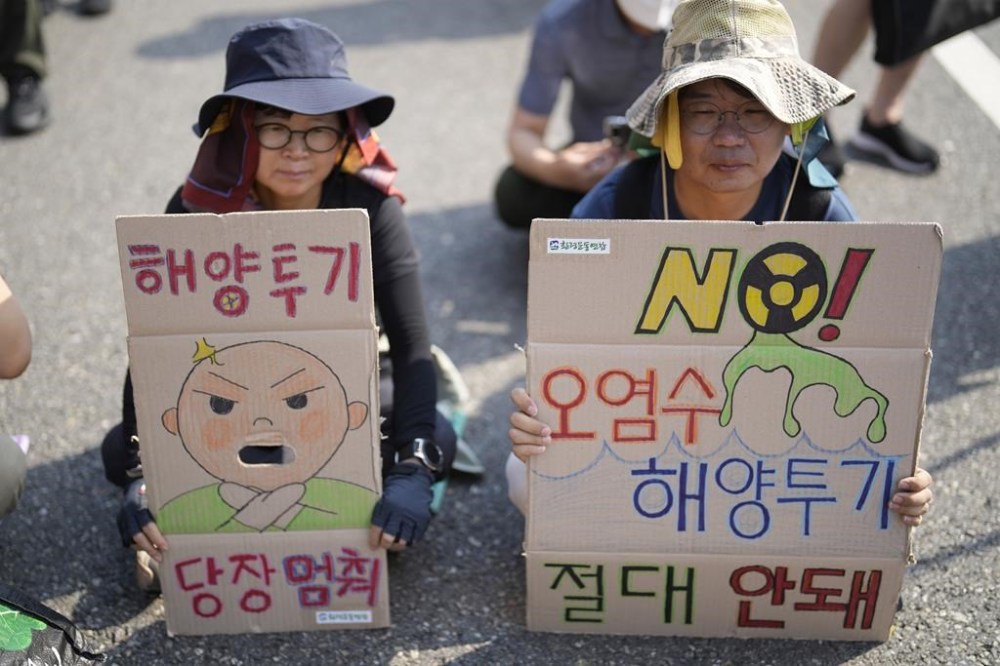
The release of the treated wastewater into the ocean, which began Thursday and is expected to continue for decades, has been strongly opposed by fishing groups and by neighboring countries. China immediately banned all imports of Japanese seafood in response. In South Korea, thousands of people joined rallies over the weekend to condemn the discharge.
Acts of harassment including crank phone calls and stone throwing have targeted Japan’s embassy and consulates and Japanese schools in China, while China’s government has not responded to requests from Japan for a joint scientific discussion of the release by experts, Kishida said. He said the Japanese plan is seen by many countries as scientific and transparent.
Japanese public broadcaster NHK said thousands of crank calls from China have targeted Fukushima government offices and the nuclear plant’s operator. It said many of the callers shouted in Chinese, and some yelled “stupid” and other swear words.
Japan’s government and the plant operator say treated radioactive wastewater that has accumulated since the March 2011 accident at the nuclear plant, now totaling 134 million tons and stored in about 1,000 tanks, is taking up much of the plant area and must be removed to free up space to build facilities for the plant’s cleanup and decommissioning, which are also expected to take decades.
Kishida also pledged Monday to do his utmost to protect Japan’s fisheries industry from the impact of China’s import ban and said he will announce support measures later this week.

Japan’s Foreign Ministry issued a travel advisory on Sunday urging Japanese citizens to use extra caution in China, citing an escalation of harassment and violent protests, and not talk loudly in Japanese to avoid attention.
At home, the release plan has faced fierce opposition from Japanese fishing groups which fear it will further hurt the reputation of seafood from the Fukushima area. The groups are still striving to repair the damage to their businesses caused by the meltdowns of three reactors at the power plant caused by a massive earthquake and tsunami.
All seawater and fish sampling data since the release have been way below set safety limits.
Economy and Industry Minister Yasutoshi Nishimura visited Fukushima on Monday to help with damage control. He joined officials from a supermarket chain and sampled locally caught surf clams and flounder.
“I hope to promote delicious Fukushima seafood to as many people in and outside Japan as possible,” Nishimura said. “While safely carrying out the release, we will be transparent in disclosing all data. That’s the best way to fight reputational damage.”
Related Articles
Residents and fishermen file a lawsuit demanding a halt to the release of Fukushima wastewater
Advertisement Advertise With Us
Advertisement Advertise With Us