

Residents and fishermen file a lawsuit demanding a halt to the release of Fukushima wastewater
Advertisement
Read this article for free:
or
Already have an account? Log in here »
To continue reading, please subscribe:
Monthly Digital Subscription
$0 for the first 4 weeks*
- Enjoy unlimited reading on winnipegfreepress.com
- Read the E-Edition, our digital replica newspaper
- Access News Break, our award-winning app
- Play interactive puzzles
*No charge for 4 weeks then price increases to the regular rate of $19.00 plus GST every four weeks. Offer available to new and qualified returning subscribers only. Cancel any time.
Monthly Digital Subscription
$4.75/week*
- Enjoy unlimited reading on winnipegfreepress.com
- Read the E-Edition, our digital replica newspaper
- Access News Break, our award-winning app
- Play interactive puzzles
*Billed as $19 plus GST every four weeks. Cancel any time.
To continue reading, please subscribe:
Add Free Press access to your Brandon Sun subscription for only an additional
$1 for the first 4 weeks*
*Your next subscription payment will increase by $1.00 and you will be charged $16.99 plus GST for four weeks. After four weeks, your payment will increase to $23.99 plus GST every four weeks.
Read unlimited articles for free today:
or
Already have an account? Log in here »
Hey there, time traveller!
This article was published 08/09/2023 (833 days ago), so information in it may no longer be current.
TOKYO (AP) — Fishermen and residents of Fukushima and five other prefectures along Japan’s northeastern coast filed a lawsuit Friday demanding a halt to the ongoing release of treated radioactive wastewater from the wrecked Fukushima nuclear plant into the sea.
In the lawsuit filed with Fukushima District Court, the 151 plaintiffs, two-thirds from Fukushima and the rest from Tokyo and four other prefectures, say the discharge damages the livelihoods of the fishing community and violates residents’ right to live peacefully, their lawyers said.
The release of the treated and diluted wastewater into the ocean, which began Aug. 24 and is expected to continue for several decades, is strongly opposed by fisheries groups that worry it will hurt the image of their catch even if it’s safe.

Three reactors at the Fukushima Daiichi nuclear plant melted after a magnitude 9.0 earthquake and tsunami in 2011 destroyed its cooling systems. The plant continues to produce highly radioactive water which is collected, treated and stored in about 1,000 tanks that cover much of the plant complex.
The government and the plant’s operator, Tokyo Electric Power Company Holdings, say the tanks need to be removed to allow the plant’s decommissioning.
The plaintiffs are demanding the revocation of safety permits granted by the Nuclear Regulation Authority for the wastewater’s release and a halt to the discharge, lawyer Kenjiro Kitamura said.
The government and TEPCO say the treated water meets legally releasable levels and is further diluted by hundreds of times with seawater before being released into the sea. The International Atomic Energy Agency, which reviewed the release plan at Japan’s request, concluded that the release’s impact on the environment, marine life and humans will be negligible.
“The intentional release to the sea is an intentional harmful act that adds to the (nuclear plant) accident,” said another lawyer, Hiroyuki Kawai. He said the ocean is a public resource and it is unethical for a company to discharge wastewater into it.

TEPCO said it could not comment until it receives a copy of the lawsuit.
China banned all imports of Japanese seafood in response to the release, while Hong Kong and Macau suspended imports from 10 prefectures including Fukushima. Groups in South Korea have also condemned the discharge.
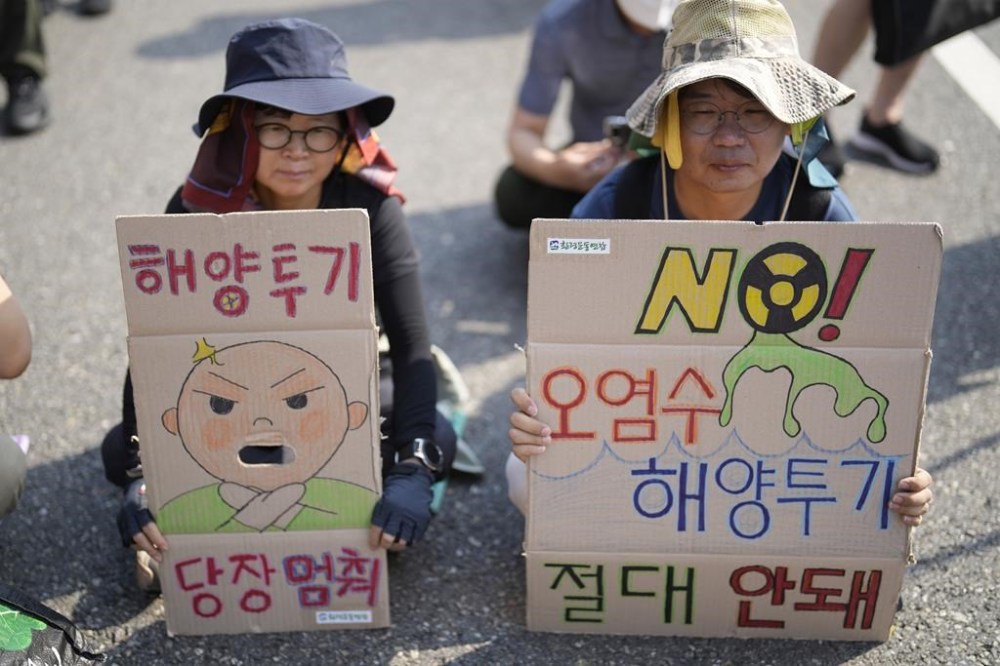
China is the biggest importer of Japanese seafood, and its ban has hit the industry hard.
Japanese Prime Minister Fumio Kishida’s Cabinet on Tuesday approved a 20.7 billion yen ($141 million) emergency fund to help exporters hurt by the Chinese ban. The fund is in addition to 80 billion yen ($547 million) that the government previously allocated to support fisheries and seafood processing and combat reputational damage to Japanese products.
Kishida said while attending a summit of Southeast Asian leaders in Indonesia that China’s ban contrasts sharply with a broad understanding of the release shown by many other countries.
Related Articles
Japan's Kishida says China seafood ban contrasts with wide support for Fukushima water release


Advertisement Advertise With Us
Advertisement Advertise With Us