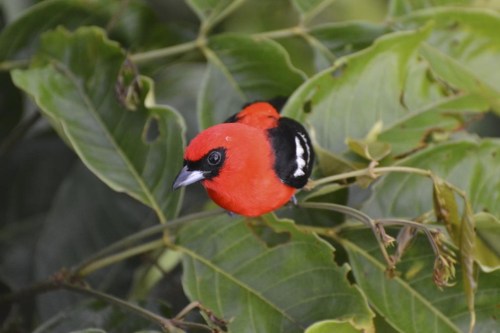
Farms with natural landscape features provide sanctuary for some Costa Rica rainforest birds
Advertisement
Read this article for free:
or
Already have an account? Log in here »
To continue reading, please subscribe:

Digital Subscription
One year of digital access for only $205*
- Enjoy unlimited reading on winnipegfreepress.com
- Read the E-Edition, our digital replica newspaper
- Access News Break, our award-winning app
- Play interactive puzzles
*First annual payment billed as $205.00 + GST for one year. This annual subscription will automatically renew at $233.00 + GST every 52 weeks (10% off the regular annual price of $259.35). Offer available to new and qualified returning subscribers only. Cancel any time.
To continue reading, please subscribe:
Add Free Press access to your Brandon Sun subscription for only an additional
$1 for the first 4 weeks*
- Enjoy unlimited reading on winnipegfreepress.com
- Read the E-Edition, our digital replica newspaper
- Access News Break, our award-winning app
- Play interactive puzzles
*Your next Brandon Sun subscription payment will increase by $1.00 and you will be charged $17.95 plus GST for four weeks. After four weeks, your payment will increase to $24.95 plus GST every four weeks.
Read unlimited articles for free today:
or
Already have an account? Log in here »
Hey there, time traveller!
This article was published 04/09/2023 (1129 days ago), so information in it may no longer be current.
Small farms with natural landscape features such as shade trees, hedgerows and tracts of intact forest provide a refuge for some tropical bird populations, according to an 18-year study in Costa Rica.
For almost two decades, ornithologist James Zook has been collecting detailed records on nearly 430 tropical bird species found on small farms, plantations and undisturbed forests in the country.
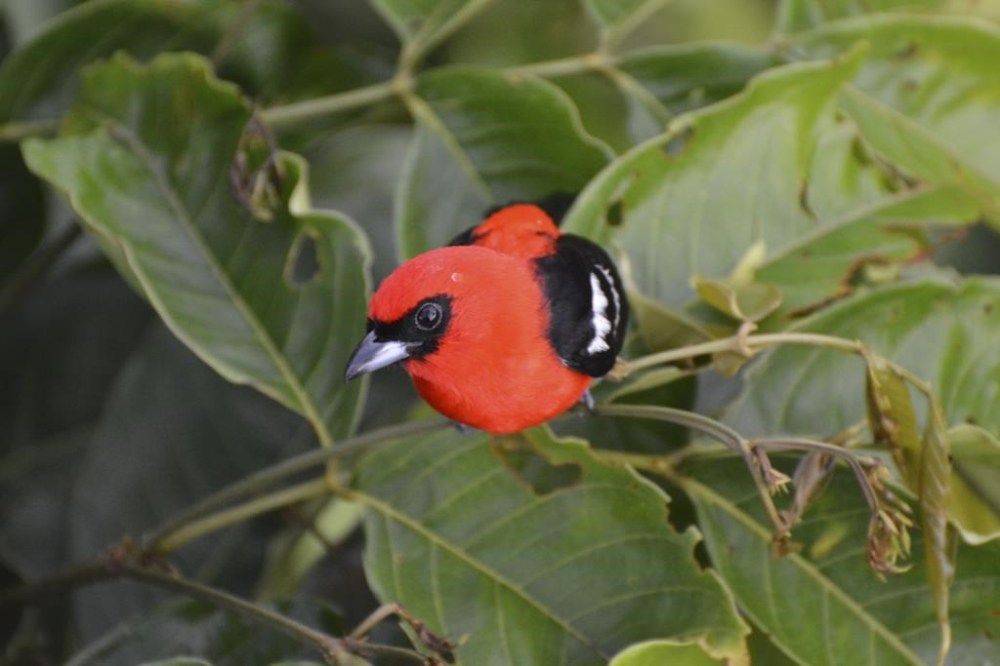
While birds thrive the most in undisturbed rainforests, Zook said some species usually found in forests can establish populations in “diversified farms” that partially mimic a natural forest environment.
“How you farm matters,” said Nicholas Hendershot, a Stanford University ecologist and co-author of the study published Monday in the journal Proceedings of the National Academy of Sciences.
“In these diversified farms, you see growth over the long term in bird species with specialized needs,” such as safe and shady nooks to build nests and a variety of food sources, Hendershot said.
That trend was “in stark contrast to what we saw in intensive agriculture,” or monocrop pineapple and banana plantations, he said.
The findings may seem intuitive, but Natalia Ocampo-Penuela, a University of California, Santa Cruz conservation ecologist not involved in the study, said it’s extremely rare to have detailed long-term data from tropical regions to show that varied farming landscapes can sustain some forest bird populations.
“With 18 years of data, you can show the species is persisting in that area, not simply passing by,” she said.
Three-quarters of the 305 species found in diversified farms showed stable or growing populations over the time of study. These include the collared aracari, a small toucan-like bird, with a yellow chest and enormous beak, as well as several members of the manakin family — small brightly colored forest birds known for elaborate courtship dances.
“It’s a huge contribution to have documented that some birds aren’t just going there, but staying there and populations are growing,” said Ruth Bennett, an ecologist at the Smithsonian Migratory Bird Center, who was not involved in the research.
Still, such habitat sanctuaries don’t offset overall population losses from the conversion of primary forests to plantations, the authors stressed. “A pineapple plantation is like a ‘bird desert’ here,” said Zook.
Increasingly, scientists say conserving species will require paying attention to landscapes with a human footprint — not just untouched areas.
“Modern conservation has to happen not only inside the fences of protected areas, but within agricultural areas and even urban areas, where there’s potential habitat for at least some species,” said the University of California’s Ocampo-Penuela.
___
The Associated Press Health and Science Department receives support from the Howard Hughes Medical Institute’s Science and Educational Media Group. The AP is solely responsible for all content.