The Biden administration wants more money and technology to prevent close calls between planes

Advertisement

Advertise with us

The Biden administration said Friday it will invest more money in aviation safety and consider requiring planes to be equipped with technology designed to prevent close calls around airports.

Read this article for free:


or

Already have an account? Log in here »

To continue reading, please subscribe:

Subscribe and receive a limited-edition Free Press branded hat or tote.

Digital Subscription

One year of digital access for only $205*

  • Enjoy unlimited reading on winnipegfreepress.com
  • Read the E-Edition, our digital replica newspaper
  • Access News Break, our award-winning app
  • Play interactive puzzles

*First annual payment billed as $205.00 + GST for one year. This annual subscription will automatically renew at $233.00 + GST every 52 weeks (10% off the regular annual price of $259.35). Offer available to new and qualified returning subscribers only. Cancel any time.

To continue reading, please subscribe:

Add Free Press access to your Brandon Sun subscription for only an additional

$1 for the first 4 weeks*

  • Enjoy unlimited reading on winnipegfreepress.com
  • Read the E-Edition, our digital replica newspaper
  • Access News Break, our award-winning app
  • Play interactive puzzles
Start now

*Your next Brandon Sun subscription payment will increase by $1.00 and you will be charged $17.95 plus GST for four weeks. After four weeks, your payment will increase to $24.95 plus GST every four weeks.

Hey there, time traveller!
This article was published 08/09/2023 (1125 days ago), so information in it may no longer be current.

The Biden administration said Friday it will invest more money in aviation safety and consider requiring planes to be equipped with technology designed to prevent close calls around airports.

The moves come after a string of close calls at airports around the country. Federal investigators have begun looking into seven such incidents since January, and those are only the most serious ones.

The White House said it is investing $26 million in new safety measures, including automation to alert air traffic controllers about planes that are heading for the wrong runway. The money will also outfit more airports with radar systems that track the movement of planes on runways and taxiways.
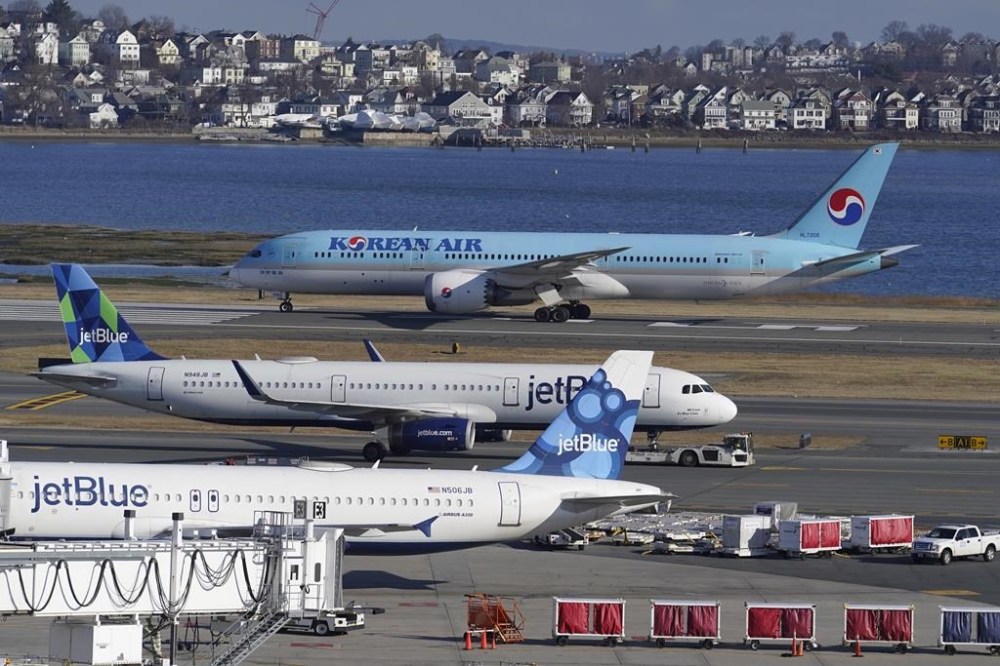
FILE - Passenger jets are seen on the tarmac at Logan International Airport, Jan. 11, 2023, in Boston. The Federal Aviation Administration is considering requiring that all planes be equipped with technology designed to prevent close calls around airports, Friday, Sept. 8. (AP Photo/Steven Senne, File)

Separately, the Federal Aviation Administration asked an internal advisory panel of experts to make recommendations on how to require systems that would alert pilots if they are lined up to land on the wrong runway or a taxiway, or when the runway they have chosen is too short.

Many new airline jets are equipped with some of this technology, but older ones are not, and neither are many private planes.

Planes typically have GPS-based systems that warn pilots if they are in danger of hitting the ground or an obstacle. Providers such as Honeywell augment those systems with more information during taxi, takeoffs and landings to reduce the risk of close calls or “runway incursions.”

On most airline planes, those systems also alert pilots when they are lined up to land on the wrong runway, but the technology is not currently required, said Douglas Moss, a retired airline pilot who teaches aviation at the University of Southern California.

Newer planes also have flight-management systems that include a wrong-runway alert, Moss said.

Chris Manno, an airline pilot who blogs about aviation, said limits in GPS precision can reduce the ability of the technology to warn pilots about landing on the wrong runway — especially where parallel runways are close together, as they are at San Francisco International Airport. An Air Canada jet preparing to land there in 2017 nearly crashed into other planes after mistaking a taxiway for the runway.

But being told that the runway is too short or that pilots are landing at the wrong airport “should be feasible and would be a valuable warning,” Manno said. He said the FAA move “sounds like a very good idea.”

Preliminary reports about close calls this year point to pilot error in some cases and air controller mistakes in others. The NTSB said Thursday that a blocked radio transmission caused a close call in June at San Diego International Airport between Southwest and SkyWest planes.

“When it comes to that most serious type (of close calls), we have seen a noticeable increase in the first part of this year,” Transportation Secretary Pete Buttigieg told The Associated Press last week. “We’re at about 15 so far this year, and typically you would expect that number in about a (whole) calendar year.”

Buttigieg pointed to the FAA’s “safety summit” of industry officials in March and more spending on airport infrastructure as examples of steps the agency is taking to reduce close calls.

Industry and government officials, including the acting administrator of the FAA who convened the safety summit, have often said that the lack of a fatal crash involving a U.S. airline since 2009 proves that safety is getting better. Buttigieg said those comments don’t indicate complacency.

“When you have a year with zero fatal crashes, you have to concentrate your efforts on keeping it that way by turning to anything that could have led to a problem if it hadn’t been caught,” he said. “We’re moving toward anything that could even come close to an incident.”

The FAA’s associate administrator for safety, David Boulter, said in a letter Friday to the advisory panel on rulemaking that alerting technologies “are only part of the solution” to avoiding close calls. He said more consideration needs to be given to “human factors.”

Report Error Submit a Tip

More Stories

Mayoral hopefuls trade accusations

Maggie Macintosh 4 minute read Preview

Mayoral hopefuls trade accusations

Maggie Macintosh 4 minute read Sunday, Oct. 4, 2026

Two mayoral hopefuls traded accusations about meddling in each other’s campaigns as the incumbent rallied supporters for his re-election bid on the eve of advanced polls opening across Winnipeg.

A social media post made by Mike Vogiatzakis, one of 12 nominees in the Oct. 28 race for the top job at city hall, caught the attention of rivals Sunday.

The funeral director took to Facebook midday to criticize Kevin Klein — a competitor he said he thought of “as a friend” until the former Tory cabinet minister made a U-turn after pledging to back the Vogiatzakis campaign.

“Good speaker? Yes. Good looking guy? Sure. Someone I trust now? Absolutely not,” he wrote in a lengthy post.

Read
Sunday, Oct. 4, 2026

Estate of woman who died from local anesthetic injected into blood vessel sues Morden dentist, his business, clinic

Erik Pindera 4 minute read Preview

Estate of woman who died from local anesthetic injected into blood vessel sues Morden dentist, his business, clinic

Erik Pindera 4 minute read Yesterday at 4:08 PM CDT

The estate of a 23-year-old woman who died after receiving a local anesthetic during a wisdom tooth extraction at a Morden dental clinic has filed a lawsuit over her death.

Virginia Blatz never returned home after she went to Boundary Trails Dental Centre to have her wisdom teeth removed on Nov. 27, 2024. An autopsy later confirmed she died from local anesthetic systemic toxicity caused by an inadvertent injection into a blood vessel, her family has previously said.

Her father, Dulaney Blatz, filed a lawsuit in the Court of King’s Bench on behalf of her estate late last month, naming Ronald David Janz — the dentist who performed the procedure — his dental corporation and the dental corporation that operates the clinic as defendants.

None of the defendants have filed statements of defence in response to the claim, which has not yet been heard in court.

Read
Yesterday at 4:08 PM CDT

Sidney Crosby sings praises of Jets' Bjorck, summer training partner Barron

Ken Wiebe 6 minute read Preview

Sidney Crosby sings praises of Jets' Bjorck, summer training partner Barron

Ken Wiebe 6 minute read Yesterday at 5:06 PM CDT

PITTSBURGH — It wasn’t that long ago when the shoe was on the other foot for Sidney Crosby.

Read
Yesterday at 5:06 PM CDT

Puzzles Palace

1 minute read Monday, Jul. 27, 2026

To solve our puzzles, please subscribe with this special offer: |

The Biden administration wants more money and technology to prevent close calls between planes

David Koenig, The Associated Press 4 minute read Preview

The Biden administration wants more money and technology to prevent close calls between planes

David Koenig, The Associated Press 4 minute read Friday, Sep. 8, 2023

The Biden administration said Friday it will invest more money in aviation safety and consider requiring planes to be equipped with technology designed to prevent close calls around airports.

The moves come after a string of close calls at airports around the country. Federal investigators have begun looking into seven such incidents since January, and those are only the most serious ones.

The White House said it is investing $26 million in new safety measures, including automation to alert air traffic controllers about planes that are heading for the wrong runway. The money will also outfit more airports with radar systems that track the movement of planes on runways and taxiways.

Separately, the Federal Aviation Administration asked an internal advisory panel of experts to make recommendations on how to require systems that would alert pilots if they are lined up to land on the wrong runway or a taxiway, or when the runway they have chosen is too short.

Read
Friday, Sep. 8, 2023

Manitoba Federation of Labour calls for independent review of Workers Compensation Board

Gabrielle Piché 5 minute read Preview

Manitoba Federation of Labour calls for independent review of Workers Compensation Board

Gabrielle Piché 5 minute read 9:54 PM CDT

A major labour association is calling for an independent Workers Compensation Board review as Manitoba leads the country in workplace injury rates.

Last year, 2.5 employees in every 100 reported a workplace injury serious enough to take time off, WCB tracking shows. The number is higher than any other province — just as it has been for the past three years, according to the Manitoba Federation of Labour.

(In 2025, the next highest time loss injury rate was in British Columbia: 2.04 people for every 100.)

“Our prevention work in Manitoba is failing Manitobans,” said Kevin Rebeck, president of the Manitoba Federation of Labour. “We need an independent review to help shine a light on, ‘What is happening on the prevention front of WCB?’”

Read
9:54 PM CDT