A security problem has taken down computer systems for almost all Kansas courts

Advertisement

Advertise with us

TOPEKA, Kan. (AP) — Computer systems for almost all of Kansas' courts have been offline for five days because of what officials call a “security incident,” preventing them from accepting electronic filings and blocking public access to many of their records.

Read this article for free:


or

Already have an account? Log in here »

To continue reading, please subscribe:

Subscribe and receive a limited-edition Free Press branded hat or tote.

Digital Subscription

One year of digital access for only $205*

  • Enjoy unlimited reading on winnipegfreepress.com
  • Read the E-Edition, our digital replica newspaper
  • Access News Break, our award-winning app
  • Play interactive puzzles

*First annual payment billed as $205.00 + GST for one year. This annual subscription will automatically renew at $233.00 + GST every 52 weeks (10% off the regular annual price of $259.35). Offer available to new and qualified returning subscribers only. Cancel any time.

To continue reading, please subscribe:

Add Free Press access to your Brandon Sun subscription for only an additional

$1 for the first 4 weeks*

  • Enjoy unlimited reading on winnipegfreepress.com
  • Read the E-Edition, our digital replica newspaper
  • Access News Break, our award-winning app
  • Play interactive puzzles
Start now

*Your next Brandon Sun subscription payment will increase by $1.00 and you will be charged $17.95 plus GST for four weeks. After four weeks, your payment will increase to $24.95 plus GST every four weeks.

Hey there, time traveller!
This article was published 17/10/2023 (1068 days ago), so information in it may no longer be current.

TOPEKA, Kan. (AP) — Computer systems for almost all of Kansas’ courts have been offline for five days because of what officials call a “security incident,” preventing them from accepting electronic filings and blocking public access to many of their records.

Judicial branch officials still don’t know the extent of the problem or how long the computer systems will remain offline, spokesperson Lisa Taylor said Tuesday. The problem, discovered Thursday, meant the systems haven’t been able to accept electronic filings, process payments, manage cases, grant public access to records, allow people to file electronically for protection-from-abuse orders and permit people to apply electronically for marriage licenses.

Divorced parents who are supposed to receive child support from their ex-spouses are likely to see delays in the processing of their payments, the state Department for Children and Families also announced Tuesday.
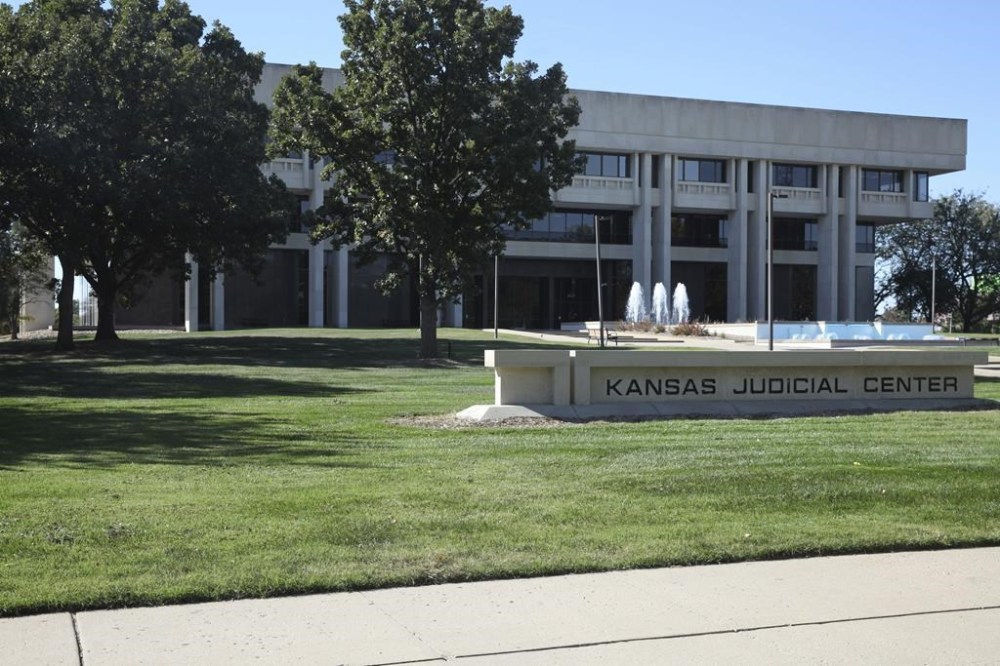
This photo shows the Kansas Judicial Center, home to the state Supreme Court, on Tuesday, Oct. 17, 2023, in Topeka, Kans. Multiple computer systems for almost all of the state's courts have been knocked offline by what officials are calling a
This photo shows the Kansas Judicial Center, home to the state Supreme Court, on Tuesday, Oct. 17, 2023, in Topeka, Kans. Multiple computer systems for almost all of the state's courts have been knocked offline by what officials are calling a "security incident." (AP Photo/John Hanna)

The problems don’t affect courts in Johnson County in the Kansas City area, the state’s most populous county, because it operates its own computer systems. But state Supreme Court Chief Justice Marla Luckert last week directed the courts in the state’s 104 other counties to accept paper filings and filings by fax or mail, suspending a requirement that attorneys file electronically.

Wisconsin’s court system reported an attack by hackers in March, a cybersecurity threat briefly forced Alaska’s courts offline in 2021, and Texas’ top criminal and civil courts were hit with a ransomware attack in 2020. The International Criminal Court also reported what it called a “cybersecurity incident” in September.

But Taylor said Kansas court officials do not yet know whether its “security incident” was a malicious attack.

“It’s not just one system. It’s multiple systems that are all interconnected,” she said. “We’ve got the electronic filing, which is separate from the case management system, yet they they are connected in some way.”

Because courts have in recent years been keeping only digital copies of many records, those records won’t be accessible to the public with computer systems down, Taylor said.

A joint legislative committee that examines state computer issues expects to receive an update Wednesday on the court system’s problem, said its chair, state Rep. Kyle Hoffman, a Republican from western Kansas. He said it’s possible that the computer systems may be offline for several weeks.

“The more we go electronic like this, I just think the more that stuff like this is going to happen,” Hoffman said. “We’ve got to figure out how to safeguard it better.”

In Sedgwick County, home to the state’s largest city of Wichita, District Attorney Marc Bennett said his office worked over the past two decades to fully integrate its internal system for managing records with the local district court’s and state’s system.

Bennett said in an email to The Associated Press that his office still has its own records management system, but it will have to enter information used to track cases by hand. It averaged 69 criminal court hearings a day last year.

He said the integration of his office’s system with the courts’ allowed it to issue subpoenas automatically and verify information from other counties about defendants in Sedgwick County. He said the state court system’s problem is “a far, far bigger issue than the inconvenience of having to hand-file paper documents.”

“Even the mid-size counties do not all have a stand-alone records management system in the county attorney’s office to rely on like we do,” Bennett said. “They will be reduced to white boards or Excel spreadsheets to keep track of the dockets.”


Report Error Submit a Tip

More Stories

Canada must not accept another Iranian autocracy

David Matas 5 minute read 2:01 AM CDT

Iran is a state run by a radical government victimizing its citizens and its neighbours. How do we change that? Any regime change that repeats the mistakes of the past is not a solution.

What went wrong in the past which led to the current regime? One answer is the U.K. and American aided coup which led to the ouster in 1953 of a democratically elected government headed at the time by Mohammad Mossadegh and its replacement with an American friendly autocrat, the Shah of Iran, Mohammad Reza Pahlavi.

The Shah imposed his rule through the Iranian National Intelligence and Security Organization — SAVAK, the acronym of its Persian name. SAVAK systematically inflicted torture, arbitrary killings and extra-judicial killings on perceived opponents of the regime. It was only a matter of time before repression of a regime directed to serving foreign interests would be overthrown.

What replaced the regime of the Shah, in 1979, the current regime of the mullahs, is a regime as intolerant and violent as the regime of the Shah and then some. That was not inevitable. But neither was it surprising. The vicious nature of the current regime, following the example set by the Shah, and its hatred for the United States, reacting to the U.S. aided imposition of the Shah, both echoes and reacts to the past. In 1979, the U.S. reaped what it sowed in 1953.

Not falling back means time loop remains unclosed

Jen Zoratti 4 minute read 2:01 AM CDT

I demand restitution. Where’s my hour?

In the traditional fall-back, spring-forward time change set up — you know, ol’ trusty that’s been effect for lo these 63 years — we lost an hour in the spring that we got back in the fall.

That was the social contract: you commit to feeling like you’re on cold medication for a week in March because you know a glorious extra hour of sleep will be returned to you in November. (Unless, of course, you have little kids, but look: we all make our choices.)

Well, that transaction, flawed as it was, isn’t happening this year. That hour you sacrificed to the sun gods in the spring? Gone. Not coming back. We’ve sprung forward and we shan’t be falling back — not in November, and (possibly) not ever. The scale shall remain unbalanced and the loop shall remain unclosed as Manitoba has adopted permanent daylight time.

‘She was looking to destroy me’: convicted harasser faces new charges

Dean Pritchard 6 minute read Preview

‘She was looking to destroy me’: convicted harasser faces new charges

Dean Pritchard 6 minute read Thursday, Sep. 17, 2026

When Agnieszka Ciochon-Newton moved into the 55-plus apartment building on Stradbrook Avenue last year, she came across as “timid, soft-spoken and sensitive,” said building manager Tanya Owen.

Little did Owen know the meek-looking 58-year-old woman would soon turn her life and the lives of many of her tenants upside down and threaten her career and family.

“She was looking to destroy me for a simple tenant disagreement,” Owen said Thursday.

Court records show Ciochon-Newton was arrested earlier this month and charged with seven counts of criminal harassment, two counts of uttering threats and one count each of fraud, breaking and entering, attempting to obstruct justice, intimidation of a justice official, mischief and defamatory libel.

Read
Thursday, Sep. 17, 2026

Desperate Poilievre wants Canadians to believe the sky is falling when it’s just cloudy outside

Tom Brodbeck 5 minute read Preview

Desperate Poilievre wants Canadians to believe the sky is falling when it’s just cloudy outside

Tom Brodbeck 5 minute read Yesterday at 12:47 PM CDT

Pierre Poilievre has a problem.

Canadians just don’t seem to be paying much attention to him anymore.

So, naturally, the Conservative Opposition leader has decided to turn up the volume.

At a recent party caucus retreat in Penticton, B.C., Poilievre delivered the familiar message: Canada is in trouble, Canadians are hurting and the Liberal government is making everything worse.

Read
Yesterday at 12:47 PM CDT

Near-future U.S. the setting for surreal dual-world storyline

Reviewed by Morley Walker 4 minute read Preview

Near-future U.S. the setting for surreal dual-world storyline

Reviewed by Morley Walker 4 minute read 2:01 AM CDT

It’s not every day you encounter a seriously intended literary novel that attempts to dramatize a mind-bending physics theory like quantum entanglement.

But then the B.C.-born-and-raised Emily St. John Mandel is not your everyday Canadian literary writer.

In her late 40s, she has lived in the U.S. for her entire writing career. She is best known for her 2014 dystopian novel Station Eleven, about a Shakespearean acting troupe navigating a pandemic-ravaged America.

Her new outing, her seventh, Exit Party, shares DNA with detective and sci-fi genres more than with conventional literary fiction.

Read
2:01 AM CDT

Manitoba abandoning spring, fall clock changes

Carol Sanders 8 minute read Preview

Manitoba abandoning spring, fall clock changes

Carol Sanders 8 minute read Updated: Yesterday at 8:48 AM CDT

Time’s up for the time change in Manitoba.

Manitobans won’t be setting their clocks back an hour in November. The province has decided to permanently stay on daylight time after surveying residents on the twice annual clock adjustment.

“We heard from Manitobans loud and clear — no more changing the clocks in Manitoba,” Premier Wab Kinew said in a news release Thursday.

Most of the 72,000 votes submitted in an online EngageMB survey — 92 per cent — said they would like to see the practice end. The survey asked if they preferred earlier sunrises in winter with standard time or the later sunsets in summer with daylight time. More than half of survey participants (58 per cent) indicated a preference to stay on permanent daylight time; 34 per cent voted to eliminate the time change but stay on standard time.

Read
Updated: Yesterday at 8:48 AM CDT