In early 2029, Earth will likely lock into breaching key warming threshold, scientists calculate

Advertisement

Advertise with us

In a little more than five years – sometime in early 2029 – the world will likely be unable to stay below the internationally agreed temperature limit for global warming if it continues to burn fossil fuels at its current rate, a new study says.

Read this article for free:


or

Already have an account? Log in here »

To continue reading, please subscribe:

Subscribe and receive a limited-edition Free Press branded hat or tote.

Digital Subscription

One year of digital access for only $205*

  • Enjoy unlimited reading on winnipegfreepress.com
  • Read the E-Edition, our digital replica newspaper
  • Access News Break, our award-winning app
  • Play interactive puzzles

*First annual payment billed as $205.00 + GST for one year. This annual subscription will automatically renew at $233.00 + GST every 52 weeks (10% off the regular annual price of $259.35). Offer available to new and qualified returning subscribers only. Cancel any time.

To continue reading, please subscribe:

Add Free Press access to your Brandon Sun subscription for only an additional

$1 for the first 4 weeks*

  • Enjoy unlimited reading on winnipegfreepress.com
  • Read the E-Edition, our digital replica newspaper
  • Access News Break, our award-winning app
  • Play interactive puzzles
Start now

*Your next Brandon Sun subscription payment will increase by $1.00 and you will be charged $17.95 plus GST for four weeks. After four weeks, your payment will increase to $24.95 plus GST every four weeks.

Hey there, time traveller!
This article was published 30/10/2023 (1078 days ago), so information in it may no longer be current.

In a little more than five years – sometime in early 2029 – the world will likely be unable to stay below the internationally agreed temperature limit for global warming if it continues to burn fossil fuels at its current rate, a new study says.

The study moves three years closer the date when the world will eventually hit a critical climate threshold, which is an increase of 1.5 degrees Celsius (2.7 degrees Fahrenheit) since the 1800s.

Beyond that temperature increase, the risks of catastrophes increase, as the world will likely lose most of its coral reefs, a key ice sheet could kick into irreversible melt, and water shortages, heat waves and death from extreme weather dramatically increase, according to an earlier United Nations scientific report.
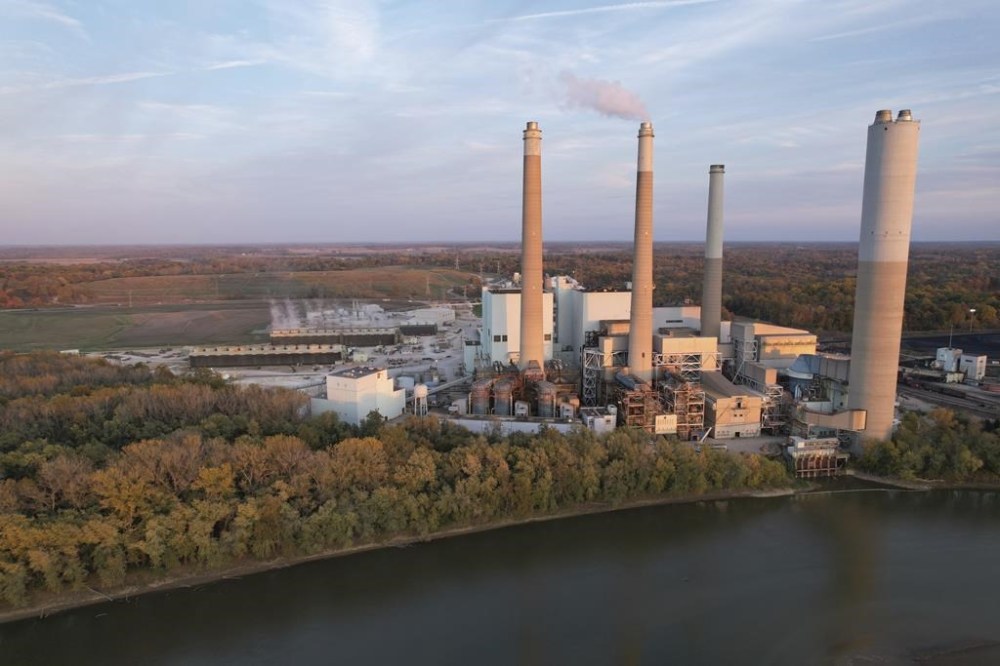
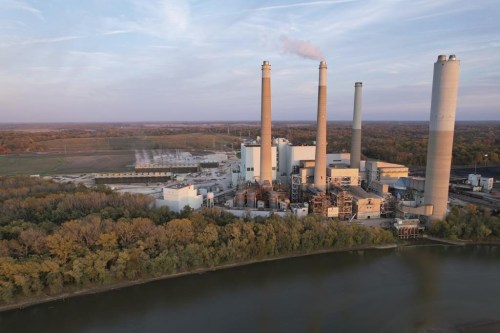
Steam rises from the AES Indiana Petersburg Generating Station, Wednesday, Oct. 25, 2023, in Petersburg, Ind. In a little more than five years – sometime in early 2029 – the world will likely be unable to stay below the internationally agreed temperature limit for global warming if it continues to burn fossil fuels at its current rate, a new study says. (AP Photo/Joshua A. Bickel)

Hitting that threshold will happen sooner than initially calculated because the world has made progress in cleaning up a different type of air pollution — tiny smoky particles called aerosols. Aerosols slightly cool the planet and mask the effects of burning coal, oil and natural gas, the study’s lead author said. Put another way, while cleaning up aerosol pollution is a good thing, that success means slightly faster rises in temperatures.

The study in Monday’s journal Nature Climate Change calculates what’s referred to as the remaining “carbon budget,” which is how much fossil fuels the world can burn and still have a 50% chance of limiting warming to 1.5 degrees Celsius since pre-industrial times. That is the threshold set by the 2015 Paris agreement.

The last 10 years are already on average 1.14 degrees Celsius (2.05 degrees Fahrenheit) hotter than the 19th century. Last year was 1.26 degrees Celsius (2.27 degrees Fahrenheit) warmer and this year is likely to blow past that, according to scientists.

The new study set the carbon budget at 250 billion metric tons. The world is burning a little more than 40 billion metric tons a year (and still rising), leaving six years left. But that six years started in January 2023, the study said, so that’s now only five years and a couple months away.

“It’s not that the fight against climate change will be lost after six years, but I think probably if we’re not already on a strong downward trajectory, it’ll be too late to fight for that 1.5 degree limit,” said study lead author Robin Lamboll, an Imperial College of London climate scientist.

A 2021 United Nations Intergovernmental Panel on Climate Change report gave a budget of 500 billion metric tons pointed to a mid 2032 date for locking in 1.5 degrees, Lamboll said. An update by many IPCC authors this June came up with a carbon budget the same as Lamboll’s team, but Lamboll’s analysis is more detailed, said IPCC report co-chair and climate scientist Valerie Masson-Delmotte.

The biggest change from the 2021 report to this year’s studies is that new research show bigger reductions in aerosol emissions — which come from wildfires, sea salt spray, volcanoes and burning fossil fuels — that lead to sooty air that cools the planet a tad, covering up the bigger greenhouse gas effect. As the world cleans up its carbon-emitting emissions it is simultaneously reducing the cooling aerosols too and the study takes that more into account, as do changes to computer simulations, Lamboll said.

Even though the carbon budget looks to run out early in the year 2029, that doesn’t mean the world will instantly hit 1.5 degrees warmer than pre-industrial times. The actual temperature change could happen a bit earlier or as much as a decade or two later, but it will happen once the budget runs out, Lamboll said.

People should not misinterpret running out of the budget for 1.5 degrees as the only time left to stop global warming, the authors said. Their study said the carbon budget with a 50% chance to keep warming below 2 degrees Celsius (3.6 degrees Fahrenheit) is 1220 billion metric tons, which is about 30 years.

“We don’t want this to be interpreted as six years to save the planet,” study co-author Christopher Smith, a University of Leeds climate scientist, said. “If we are able to limit warming to 1.6 degrees or 1.65 degrees or 1.7 degrees, that’s a lot better than 2 degrees. We still need to fight for every tenth of a degree.”

Climate scientist Bill Hare of Climate Action Tracker that monitors national efforts to reduce carbon emissions, said “breaching the 1.5 degree limit does not push the world over a cliff at that point, but it is very much an inflection point in increasing risk of catastrophic changes.”

As they head into climate negotiations in Dubai next month, world leaders still say “the 1.5-degree limit is achievable.” Lamboll said limiting warming to 1.5 degrees is technically possible, but politically is challenging and unlikely.

“We have got to the stage where the 1.5C carbon budget is so small that it’s almost losing meaning,” said climate scientist Glen Peters of the Norwegian CICERO climate institute, who wasn’t part of the research. “If your face is about to slam in the wall at 100 miles per hour, it is sort of irrelevant if your nose is currently 1 millimeter or 2 millimeters from the wall. … We are still heading in the wrong direction at 100 mph.”

People “shouldn’t worry — they should act,” said climate scientist Piers Forster of the University of Leeds, who wasn’t part of Lamboll’s team. Acting as fast as possible “can halve the rate of warming this decade.”

___

Read more of AP’s climate coverage at http://www.apnews.com/climate-and-environment.

___

Follow Seth Borenstein on X, formerly known as Twitter at @borenbears

___

Associated Press climate and environmental coverage receives support from several private foundations. See more about AP’s climate initiative here. The AP is solely responsible for all content.


Report Error Submit a Tip

More Stories

Eagles’ Jeremiah Trotter Jr. gets ejected in London 21 years after his father was tossed from a game

The Associated Press 2 minute read Preview

Eagles’ Jeremiah Trotter Jr. gets ejected in London 21 years after his father was tossed from a game

The Associated Press 2 minute read Updated: Yesterday at 4:00 PM CDT

LONDON (AP) — Philadelphia linebacker Jeremiah Trotter Jr.'s ejection from Sunday's 19-17 loss to the Jacksonville Jaguars in London came 21 years after his father was also tossed from an NFL game.

Bryan Thomas Jr. of the Jaguars also was ejected after a scrum at midfield at Tottenham Hotspur Stadium that followed the opening kickoff.

Trotter’s father, Jeremiah Trotter, was tossed in 2005 with Philadelphia after a pre-game scuffle in a meeting with Atlanta.

Jacksonville rookie Josh Cameron returned the kickoff 90 yards for a would-be touchdown, but it was called back because of offsetting penalties that included a hold by Branson Combs of the Jaguars.

Read
Updated: Yesterday at 4:00 PM CDT

Today’s horoscope

Georgia Nicols 4 minute read Preview

Today’s horoscope

Georgia Nicols 4 minute read 2:00 AM CDT

MOON ALERT: There are no restrictions to shopping or important decisions. The moon is in Scorpio.

ARIES (March 21-April 19)

Tread carefully as it’s easy to get into an argument, especially with your kids or even a romantic partner. Very likely the dispute will be about mutual expenses, shared property or perhaps differing values. Do what you can to keep the peace.

TAURUS (April 20-May 20)

Read
2:00 AM CDT

In early 2029, Earth will likely lock into breaching key warming threshold, scientists calculate

Seth Borenstein, The Associated Press 6 minute read Preview

In early 2029, Earth will likely lock into breaching key warming threshold, scientists calculate

Seth Borenstein, The Associated Press 6 minute read Monday, Oct. 30, 2023

In a little more than five years – sometime in early 2029 – the world will likely be unable to stay below the internationally agreed temperature limit for global warming if it continues to burn fossil fuels at its current rate, a new study says.

The study moves three years closer the date when the world will eventually hit a critical climate threshold, which is an increase of 1.5 degrees Celsius (2.7 degrees Fahrenheit) since the 1800s.

Beyond that temperature increase, the risks of catastrophes increase, as the world will likely lose most of its coral reefs, a key ice sheet could kick into irreversible melt, and water shortages, heat waves and death from extreme weather dramatically increase, according to an earlier United Nations scientific report.

Hitting that threshold will happen sooner than initially calculated because the world has made progress in cleaning up a different type of air pollution — tiny smoky particles called aerosols. Aerosols slightly cool the planet and mask the effects of burning coal, oil and natural gas, the study’s lead author said. Put another way, while cleaning up aerosol pollution is a good thing, that success means slightly faster rises in temperatures.

Read
Monday, Oct. 30, 2023

Trump sticks with tariffs even as US voters turn against them before the midterms

Bernard Condon, The Associated Press 5 minute read Preview

Trump sticks with tariffs even as US voters turn against them before the midterms

Bernard Condon, The Associated Press 5 minute read Updated: Yesterday at 9:13 AM CDT

NEW YORK (AP) — Maybe President Donald Trump really does believe that “tariff” is the most beautiful word in the dictionary.

Despite higher prices, criticism from trade experts and displeasure among voters, Trump holds fast to his belief that imposing the highest import duties on U.S. trading partners since the Great Depression is a winner.

A recent poll suggests that is a big gamble with less than a month before the Nov. 3 midterms. Most U.S. adults disapprove of his trade policies, with more than 64% saying he has gone too far with his latest tariffs, compared with 58% in January.

A look at the political, legal and economic challenges to the Republican president's approach to trade.

Read
Updated: Yesterday at 9:13 AM CDT

Person killed in workplace accident at Fairmont construction site

Morgan Modjeski 3 minute read Preview

Person killed in workplace accident at Fairmont construction site

Morgan Modjeski 3 minute read Friday, Oct. 9, 2026

Emergency responders were on scene and Manitoba Workplace Safety and Health is investigating after a worker died following an incident at a Winnipeg construction site Thursday.

Little information about the worker killed was provided, but the fatal incident happened at the Fairmont Winnipeg, located at 2 Lombard Place, with police responding around 5 p.m.

The hotel is currently closed and is an active construction site. The person killed has not been identified by name.

Information from a provincial spokesperson said the deceased was working for Kepsco Construction when they were fatally injured after a “portion of an overhead canopy collapsed during asbestos abatement work.”

Read
Friday, Oct. 9, 2026

Manitoba e-scooter legislation changes set to impose speed limit, age restrictions, sidewalk ban

Matthew Frank 5 minute read Preview

Manitoba e-scooter legislation changes set to impose speed limit, age restrictions, sidewalk ban

Matthew Frank 5 minute read Updated: Yesterday at 5:14 PM CDT

People riding e-scooters and other personal electric vehicles in Manitoba will have to strap on a helmet, stay off sidewalks and follow new age limits once new provincial rules for the devices take effect next year.

The vehicles, which also include electric skateboards, hoverboards and unicycles, will fall under The Highway Traffic Act starting in 2027, according to the province’s website. E-bikes are excluded from the new rules, according to the province’s frequently-asked-questions page.

All riders must be at least 16 years old and wear properly fitting helmets — that goes for passengers, too, the province said.

The proposed new legislation sets a speed limit of 25 km/h and would prohibit personal electric vehicles from sidewalks unless signs specifically allow sidewalk use. Riders would be using shared paths or roads with speed limits of 50 km/hr or less. They won’t be allowed to operate the vehicles under the influence of alcohol or drugs and they must use hand signals and obey traffic signs.

Read
Updated: Yesterday at 5:14 PM CDT