Privacy bill fails to address dangers of facial recognition technology: coalition

Advertisement

Advertise with us

OTTAWA - A coalition pushing for better regulation of facial recognition and other biometric surveillance technologies says proposed federal privacy legislation is in "dire need of significant amendments."

Read this article for free:


or

Already have an account? Log in here »

To continue reading, please subscribe:

Subscribe and receive a limited-edition Free Press branded hat or tote.

Digital Subscription

One year of digital access for only $205*

  • Enjoy unlimited reading on winnipegfreepress.com
  • Read the E-Edition, our digital replica newspaper
  • Access News Break, our award-winning app
  • Play interactive puzzles

*First annual payment billed as $205.00 + GST for one year. This annual subscription will automatically renew at $233.00 + GST every 52 weeks (10% off the regular annual price of $259.35). Offer available to new and qualified returning subscribers only. Cancel any time.

To continue reading, please subscribe:

Add Free Press access to your Brandon Sun subscription for only an additional

$1 for the first 4 weeks*

  • Enjoy unlimited reading on winnipegfreepress.com
  • Read the E-Edition, our digital replica newspaper
  • Access News Break, our award-winning app
  • Play interactive puzzles
Start now

*Your next Brandon Sun subscription payment will increase by $1.00 and you will be charged $17.95 plus GST for four weeks. After four weeks, your payment will increase to $24.95 plus GST every four weeks.

Hey there, time traveller!
This article was published 01/11/2023 (1066 days ago), so information in it may no longer be current.

OTTAWA – A coalition pushing for better regulation of facial recognition and other biometric surveillance technologies says proposed federal privacy legislation is in “dire need of significant amendments.”

In an open letter Wednesday to Industry Minister François-Philippe Champagne, the Right2YourFace Coalition warns the use of facial recognition technology threatens human rights, equity principles and fundamental freedoms, including the right to privacy.

Facial recognition tools can allow an image of a person’s face to be matched against a database of photos with the aim of identifying the individual.
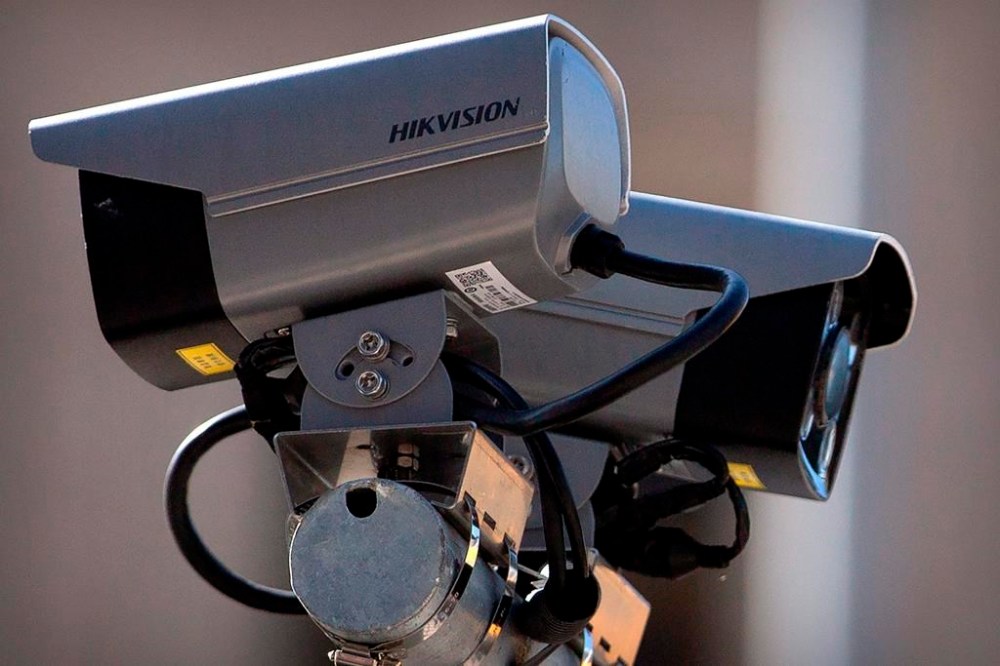
A coalition pushing for better regulation of facial recognition and other biometric surveillance technologies says proposed federal privacy legislation is in
A coalition pushing for better regulation of facial recognition and other biometric surveillance technologies says proposed federal privacy legislation is in "dire need of significant amendments." Security cameras monitor a pedestrian shopping street in Beijing, on Oct. 8, 2019. THE CANADIAN PRESS/AP-Mark Schiefelbein

The coalition says the technology can prompt biased or flawed results, creating a risk of false identifications.

The letter is signed by representatives of the Canadian Civil Liberties Association, the International Civil Liberties Monitoring Group, the Privacy and Access Council of Canada and several others.

The coalition says Bill C-27, now before Parliament, fails to address the harms posed by facial recognition tools as businesses and government agencies adopt artificial intelligence systems at an increasingly rapid pace.

“AI is neither artificial, nor is it intelligent, and its use is largely unregulated,” Sharon Polsky of the Privacy and Access Council told a news conference Wednesday.

“Research has repeatedly confirmed that facial recognition results are unreliable, yet hundreds of millions of dollars are spent every year by Canadian municipalities, airports, retailers, schools and of course, law enforcement, that embed more and more AI and facial recognition systems for safer communities.”

The Liberals introduced privacy legislation last year to give Canadians more control over how their personal data is used by commercial entities. The bill would also impose fines for non-compliant organizations and introduce new rules for the use of artificial intelligence.

The coalition is concerned about a lack of discussion on the bill’s “troubling implications for facial recognition,” said Daniel Konikoff, interim director of the privacy, technology and surveillance program at the Canadian Civil Liberties Association.

The letter says the privacy section of the bill must include special provisions for sensitive information and explicitly provide enhanced protection of biometric details, such as face data, fingerprints and vocal patterns, which can involve particular risks of racial and gender bias.

The coalition fears a provision of the bill that allows the collection of information for legitimate business purposes without the user’s knowledge or consent will be too broad, favouring profit over privacy.

The government says the artificial intelligence elements of the bill are aimed at protecting Canadians by ensuring high-impact AI systems are developed and deployed in a way that identifies, assesses and lessens the risks of harm and bias.

The bill would also establish an AI and data commissioner to monitor company compliance, order third-party audits and share information with other regulators.

The coalition is concerned the proposed legislation includes no definition of what qualifies as high-impact, leaving what they consider a crucial step to regulations. A definition of high-impact systems that includes facial recognition technology and other biometric identification tools must be included in the bill itself, the letter says.

Last month Champagne wrote the House of Commons committee on industry and technology, which is studying the bill, to say the government was prepared to work with MPs to develop amendments to define classes of high-impact systems.

Among the classes Champagne suggested for inclusion is the use of AI to process biometric information for the purposes of identifying someone without their consent, or to determine an individual’s behaviour or state of mind.

The coalition hasn’t seen “what those actual tangible amendments” would look like, Konikoff said.

“The devil’s in the details, but we don’t have any details here.”

In October last year, the Commons committee on information, privacy and ethics called for a moratorium on the use of facial recognition tools by federal police and Canadian businesses unless there is court authorization or input from the privacy watchdog.

The committee also urged the government to develop a regulatory framework concerning uses, prohibitions, oversight and privacy of the emerging tool.

This report by The Canadian Press was first published Nov. 1, 2023.

Report Error Submit a Tip

More Stories

Ferraro gets call-up to the Jets

Mike McIntyre 6 minute read Preview

Ferraro gets call-up to the Jets

Mike McIntyre 6 minute read Wednesday, Sep. 30, 2026

Landon Ferraro vividly recalls the moment his NHL career came to an extremely painful end — Oct. 20, 2017, in downtown Winnipeg.

“My last play was a breakaway on Connor Hellebuyck,” Ferraro told the Free Press this week.

“I tried to poke the puck past the first D. It was me and (Dustin) Byfuglien chasing it down. I thought he was going to throw me across the ice, so I tried to cut in on him, and he moved. I overextended, and I literally ripped my abductor off the bone and gave myself a hernia.”

Ferraro — at the time playing forward for the visiting Minnesota Wild — said he managed to get off a weak shot that hit the Jets goaltender square in the chest. But his 77th appearance in the big leagues would be his last following previous stops with Detroit (which drafted him 32nd overall in 2009) and Boston.

Read
Wednesday, Sep. 30, 2026

Woman took ‘meaningful’ responsibility after disposing of body: lawyer

Dean Pritchard 5 minute read Preview

Woman took ‘meaningful’ responsibility after disposing of body: lawyer

Dean Pritchard 5 minute read Wednesday, Sep. 30, 2026

A woman who was threatened with death if she didn’t help dispose the body of a Mexican man murdered in the basement of a North End home should serve no more jail time, a judge has been told.

Devlin Langlois, 25, has pleaded guilty to accessory after the fact to murder in the March 2025 killing of 28-year-old Diego Moscoza.

“By pleading guilty, Ms. Langlois has already taken meaningful accountability for her actions,” defence lawyer Joshua Rogala told King’s Bench Justice Candace Grammond at a sentencing hearing Monday.

He urged the judge to sentence Langlois to the equivalent of 14 months already served, plus two years supervised probation.

Read
Wednesday, Sep. 30, 2026

Man accused of killing five family members fires second legal team, but murder trial won’t be delayed, judge warns

Dean Pritchard 4 minute read Preview

Man accused of killing five family members fires second legal team, but murder trial won’t be delayed, judge warns

Dean Pritchard 4 minute read Updated: Yesterday at 6:44 PM CDT

A Manitoba man accused of killing five family members is once again looking for new lawyers to represent him at trial.

But Ryan Manoakeesick will stand trial, with or without a lawyer in April 2027, a judge warned him Thursday.

“I want to be clear, Mr. Manoakeesick, that the trial dates that have been set are going to remain,” King’s Bench Justice Candace Grammond told him. “Those trial dates are effectively written in stone.

“You may think that is a long time in the future, but in a trial of this kind you need to make sure you have appropriate representation and you will be ready to attend to the matter on that date.”

Read
Updated: Yesterday at 6:44 PM CDT

Retired guidance counsellor defends explicit 2025 sex-ed presentation to high school football team in disciplinary hearing

Maggie Macintosh 7 minute read Preview

Retired guidance counsellor defends explicit 2025 sex-ed presentation to high school football team in disciplinary hearing

Maggie Macintosh 7 minute read Yesterday at 7:12 PM CDT

Gus Watanabe, a former employee of Oak Park High School in Winnipeg, was the subject of a public disciplinary hearing on Thursday.

Read
Yesterday at 7:12 PM CDT

Nearly four in 10 Manitobans hope Canada restarts trade talks after U.S. midterm elections, poll reveals

Gabrielle Piché 4 minute read Preview

Nearly four in 10 Manitobans hope Canada restarts trade talks after U.S. midterm elections, poll reveals

Gabrielle Piché 4 minute read 7:00 AM CDT

Disorganized — that’s what Marcus Langlois calls recent United States tariffs.

He expects suppliers’ prices to increase — on mugs, pens, hoodies — for his employer, Dreamcatcher Promotions, if the United States–Canada trade war persists.

Still, he’s not pining for a quick trade deal.

“I think it should wait,” said Langlois, Dreamcatcher Promotions’ vice-president. “Let’s hope that it’s later on with proper negotiations happening.”

Read
7:00 AM CDT

Small businesses outline election priorities

Robin Bezte 5 minute read 2:00 AM CDT

Since moving to Winnipeg earlier this year, I have come to know the city through its small businesses. As a new Exchange District resident, grabbing coffee at Little Sister, walking through The Forks Market and stopping at Pho Hoang for lunch have become part of my routine. These are the places that give Winnipeg’s neighbourhoods their character and have helped make a new city feel like home.

That is why an empty storefront never feels like just vacant real estate. It represents someone’s investment and hope. When a small business disappears, the community loses a piece of itself.

On Oct. 28, Manitobans in most municipalities will choose their next mayors, reeves and councillors. While city councils may not set interest rates or negotiate global trade agreements, they do have some control over many of the barriers entrepreneurs encounter day to day, from property tax bills and permit applications to public safety and construction disruptions.

Ahead of the upcoming elections, the Canadian Federation of Independent Business (CFIB) surveyed Manitoba small business owners to get a sense of their municipal priorities and concerns.