Inspired by online dating, AI tool for adoption matchmaking falls short for vulnerable foster kids
Advertisement
Read this article for free:
or
Already have an account? Log in here »
To continue reading, please subscribe:

Digital Subscription
One year of digital access for only $205*
- Enjoy unlimited reading on winnipegfreepress.com
- Read the E-Edition, our digital replica newspaper
- Access News Break, our award-winning app
- Play interactive puzzles
*First annual payment billed as $205.00 + GST for one year. This annual subscription will automatically renew at $233.00 + GST every 52 weeks (10% off the regular annual price of $259.35). Offer available to new and qualified returning subscribers only. Cancel any time.
To continue reading, please subscribe:
Add Free Press access to your Brandon Sun subscription for only an additional
$1 for the first 4 weeks*
- Enjoy unlimited reading on winnipegfreepress.com
- Read the E-Edition, our digital replica newspaper
- Access News Break, our award-winning app
- Play interactive puzzles
*Your next Brandon Sun subscription payment will increase by $1.00 and you will be charged $17.95 plus GST for four weeks. After four weeks, your payment will increase to $24.95 plus GST every four weeks.
Read unlimited articles for free today:
or
Already have an account? Log in here »
Hey there, time traveller!
This article was published 05/11/2023 (1063 days ago), so information in it may no longer be current.
Some are orphans, others seized from their parents. Many are older and have overwhelming needs or disabilities. Most bear the scars of trauma from being hauled between foster homes, torn from siblings or sexually and physically abused.
Child protective services agencies have wrestled for decades with how to find lasting homes for such vulnerable children and teens –- a challenge so enormous that social workers can never guarantee a perfect fit.
Into this morass stepped Thea Ramirez with what she touted as a technological solution – an artificial intelligence-powered tool that ultimately can predict which adoptive families will stay together. Ramirez claimed this algorithm, designed by former researchers at an online dating service, could boost successful adoptions across the U.S. and promote efficiency at cash-strapped child welfare agencies.
“We’re using science – not merely preferences – to establish a score capable of predicting long-term success,” Ramirez said in an April 2021 YouTube video about her ambitions to flip “the script on the way America matches children and families” using the Family-Match algorithm.
An Associated Press investigation, however, found that the AI tool – among the few adoption algorithms on the market – has produced limited results in the states where it has been used, according to Family-Match’s self-reported data that AP obtained through public records requests from state and local agencies.
Ramirez also has overstated the capabilities of the proprietary algorithm to government officials as she has sought to expand its reach, even as social workers told AP that the tool wasn’t useful and often led them to unwilling families.
Virginia and Georgia dropped the algorithm after trial runs, noting its inability to produce adoptions, though both states have resumed business with Ramirez’s nonprofit called Adoption-Share, according to AP’s review of hundreds of pages of documents.
Tennessee scrapped the program before rolling it out, saying it didn’t work with their internal system even after state officials spent more than two years trying to set it up, and social workers reported mixed experiences with Family-Match in Florida, where its use has been expanding.
State officials told AP that the organization that Ramirez runs as CEO owns some of the sensitive data Family-Match collects. They also noted that the nonprofit provided little transparency about how the algorithm works.
Those experiences, the AP found, provide lessons for social service agencies seeking to deploy predictive analytics without a full grasp of the technologies’ limitations, especially when trying to address such enduring human challenges as finding homes for children described by judges as the “least adoptable.”
“There’s never going to be a foolproof way for us to be able to predict human behavior,” said Bonni Goodwin, a University of Oklahoma child welfare data expert. “There’s nothing more unpredictable than adolescence.”
Ramirez, of Brunswick, Georgia, where her nonprofit is also based, refused to provide details about the algorithm’s inner workings and declined interview requests. By email, she said the tool was a starting point for social workers and did not determine whether a child would be adopted. She also disputed child welfare leaders’ accounts of Family-Match’s performance.
“User satisfaction surveys and check-ins with our agency end users indicate that Family-Match is a valuable tool and helpful to users actively using it to support their recruitment + matching efforts,” Ramirez wrote.
INSPIRED BY ONLINE DATING
Ramirez, a former social worker and wife of a Georgia pastor, has long sought to promote adoption as a way to reduce abortions, according to her public statements, newsletters and a blog post.
More than a decade ago, she launched a website to connect pregnant women with potential adoptive parents. She marketed it as “the ONLY online community exclusively for networking crisis pregnancy centers” and pledged to donate 10% of membership fees to such anti-abortion counseling centers, whose aim is to persuade women to bring their pregnancies to term. Ramirez said in an email that Family-Match is not associated with such centers.
She next turned her focus to helping children living in foster care who don’t have family members to raise them. Most of the 50,000 children adopted nationwide in 2021 landed with relatives, federal statistics show, while about 5,000 ended up with people they didn’t previously know. Such recruitment-based adoptions are the most difficult to carry out, social workers say.
Ramirez has said she called Gian Gonzaga, a research scientist who had managed the algorithms at eharmony, a dating site with Christian roots that promises users “real love” for those seeking marriage. She asked Gonzaga if he would team up with her to create an adoption matchmaking tool.
Gonzaga, who worked with his wife Heather Setrakian at eharmony and then on the Family-Match algorithm, referred questions to Ramirez. Setrakian said she was very proud of her years of work developing the Family-Match model.
An eharmony spokesperson, Kristen Berry, said the dating site was “not affiliated with Family-Match.” Berry described Gonzaga and Setrakian as “simply former employees.”
NOT ‘PARTICULARLY USEFUL’
Later, Ramirez began crisscrossing the country promoting Family-Match to state officials. Her work and her religious convictions drew support primarily from conservatives, including first lady Melania Trump, who spotlighted Ramirez’s efforts at a foster care event in the White House Situation Room. Ramirez has co-written reports and given a high-profile presentation at the American Enterprise Institute, benefitted from attention-getting fundraisers and used connections to win over state officials to pilot her tool.
Social workers say Family-Match works like this: Adults seeking to adopt submit survey responses via the algorithm’s online platform, and foster parents or social workers input each child’s information.
After the algorithm generates a score measuring the “relational fit,” Family-Match displays a list of the top prospective parents for each child. Social workers then vet the candidates.
In a best-case scenario, a child is matched and placed in a home for a trial stay; parents then submit the legal paperwork to formalize the adoption.
Family-Match first started matching families in Florida and Virginia in 2018. Virginia’s then-governor Terry McAuliffe, a Democrat, ordered a pilot at the urging of a campaign donor he appointed as the state’s “adoption champion.” In Florida, which has a privatized child welfare system, regional care organizations soon signed up for the algorithm for free – thanks to a grant from a foundation founded by the then-CEO of the company that makes Patrón tequila and his wife.
Once philanthropic dollars dried up in Florida, the state government picked up the tab, awarding Adoption-Share a $350,000 contract last month for its services.
Pilot efforts in Tennessee and Georgia followed.
Adoption-Share has generated $4.2 million in revenue since 2016; it reported about $1.2 million in 2022, according to its tax returns.
In Virginia’s two-year test of Family-Match, the algorithm produced only one known adoption, officials said.
“The local staff reported that they did not find the tool particularly useful,” the Virginia Department of Social Services said in a statement, noting that Family-Match “had not proven effective” in the state.
Virginia social workers were also perplexed that the algorithm seemed to match all the children with the same group of parents, said Traci Jones, an assistant director at the state’s social services agency.
“We did not have access to the algorithm even after it was requested,” Jones said.
By 2022, Virginia had awarded Adoption-Share an even larger contract for a different foster care initiative that the nonprofit says “leverages” the Family-Match application.
Georgia officials said they ended their initial pilot in October 2022 because the tool didn’t work as intended, ultimately only leading to two adoptions during their year-long experiment.
Social workers said the tool’s matching recommendations often led them to unwilling parents, leading them to question whether the algorithm was properly assessing the adults’ capacity to adopt those kids.
Ramirez met with the governor’s office and also lobbied a statehouse committee for a direct appropriation, saying the tool was “an incredible feat.” By July, the Georgia Department of Human Services signed a new agreement with Adoption-Share to use Family-Match again – this time for free, said Kylie Winton, an agency spokesperson.
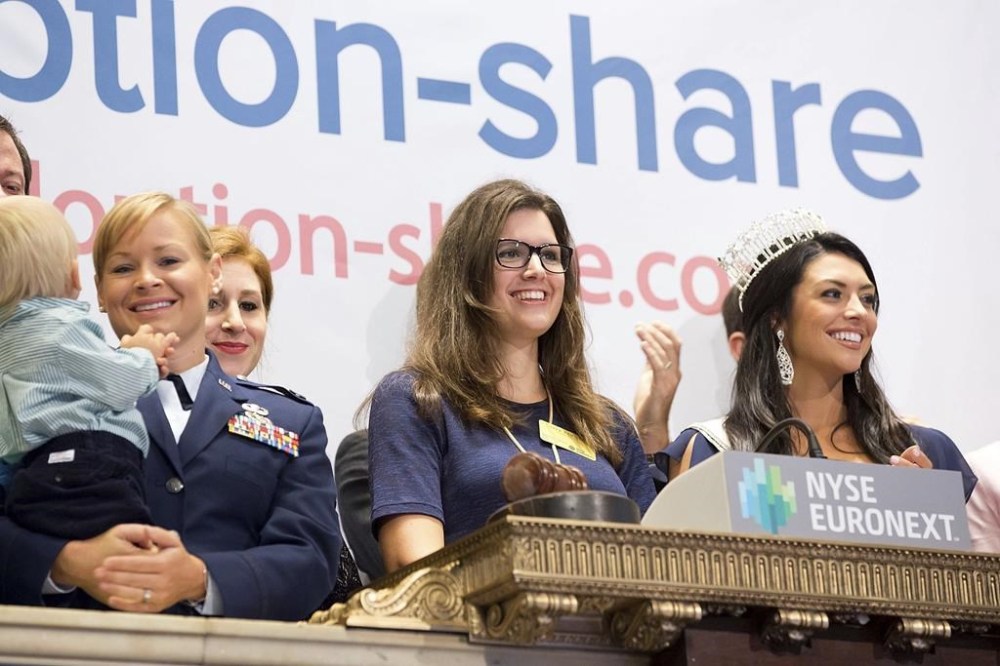
Florida’s privatized child welfare system operates with more than a dozen regional agencies providing foster care and adoption services. When AP requested public records about their Family-Match cases, many of those agencies gave the tool mixed reviews and couldn’t explain Family-Match’s self-reported data, making it difficult to assess the algorithm’s purported success rate.
Statewide in Florida, Family-Match claimed credit for 603 placements that resulted in 431 adoptions over a five-year period, according to Adoption-Share’s third-quarter report for the 2023 fiscal year that AP obtained from a Pensacola-based child welfare organization.
Scott Stevens, an attorney representing the FamiliesFirst Network, told AP in June that only three trial placements recommended by Family-Match failed since the agency started using the algorithm in 2019. But Adoption-Share’s records that Stevens provided to the AP indicate that his agency made 76 other Family-Match placements that didn’t show the children had been formally adopted. Asked by AP for clarification, Stevens couldn’t say what happened in those 76 cases and referred further questions to Family-Match.
Ramirez declined to discuss the discrepancy but acknowledged in an email that not all matches work out.
“Transitions can take time in the journey to adoption,” Ramirez said in an email, adding that the “decision to finalize the adoption is ultimately the responsibility” of agencies with input from the children and judges. On Sunday, Adoption-Share posted on its Facebook page that the organization had “reached 500 adoptions in Florida!”
Jenn Petion, the president and CEO of the organization that handles adoptions in Jacksonville, said she likes how the algorithm lets her team tap into a statewide pool of potential parents. Petion has also endorsed Family-Match for helping her find her adoptive daughter, whom she described as a “100% match” in an Adoption-Share annual report.
Family-Match assists social workers in making “better decisions, better matches,” Petion said, but her agency, Family Support Services declined to provide statistics about Family-Match.
The Fort Myers-based Children’s Network of Southwest Florida said in the past five years the Family-Match tool has led to 22 matches and eight adoptions, as compared to the hundreds of matches and hundreds of adoptions that its social workers did without the tool.
Bree Bofill, adoption program manager for Miami-based Citrus Family Care Network, said social workers found the tool didn’t work very well, often suggesting potential families that weren’t the right fit.
“It’s frustrating that it’s saying that the kids are matched but in reality, when you get down to it, the families aren’t interested in them,” Bofill said of the algorithm.
Bofill also said it was difficult to assess the tool’s utility because social workers who found potential parents were sometimes asked by Family-Match officials to tell the adults to register with the tool even if it played no role in the adoption, allowing the algorithm to claim credit for the match.
Winton, the Georgia agency spokesperson, told AP about a similar issue — Family-Match could claim credit for pairings if the child and parent already were in its system, even if the program didn’t generate the match. Family-Match, in an April 2023 “confidential” user guide posted on the internet, instructed social workers not to delete cases that were matched outside the tool. Instead, they were told to document the match in the system so that Adoption-Share could refine its algorithm and follow up with the families.
Ramirez didn’t address Bofill’s claim but said in an email that Family-Match’s reports reflect what social workers input into the system.
‘KIDS AS GUINEA PIGS’
Officials in Virginia, Georgia and Florida said they weren’t sure how the tool scored families based on the highly sensitive variables powering the algorithm.
In Georgia, Family-Match continues to gather data about whether foster youth have been sexually abused, the gender of their abuser, and whether they have a criminal record or “identify as LGBTQIA.” That kind of information is typically restricted to tightly secured child protective services case files.
In Tennessee, a version of the algorithm’s questionnaire for prospective parents asked for their specific household income and for them to rate how “conventional” or “uncreative” they were. They were also asked if they agreed – or disagreed – with a statement about whether they seek God’s help, according to records AP obtained.
When Tennessee Department of Children’s Services reviewed the proposed Family-Match assessment, they questioned some of the information Family-Match wanted to collect. Tennessee officials asked why Family-Match needed certain sensitive data points and how that data influenced the match score, according to an internal document in which state workers noted questions and feedback about the algorithm. Ramirez said the agency didn’t challenge the survey’s validity, and said the discussions were part of the streamlining process.
Virginia officials said once families’ data was entered into the tool, “Adoption Share owned the data.”
In Florida, two agencies acknowledged that they used Family-Match informally without a contract, but would not say how children’s data was secured.
Ramirez wouldn’t say if Family-Match has deleted pilot data from its servers, but said her organization maintains a compliance audit and abides by contract terms.
Social welfare advocates and data security experts have been raising alarms about government agencies’ increasing reliance on predictive analytics to assist them on the job. Those researchers and advocates say such tools can exacerbate racial disparities and discriminate against families based on characteristics they cannot change.
Adoption-Share is part of a small cadre of organizations that say their algorithms can help social workers place children with foster or adoptive families.
“We’re using, essentially, kids as guinea pigs for these tools. They are the crash test dummies,” said Suresh Venkatasubramanian, a former assistant director of the Biden White House’s Office of Science and Technology Policy now at Brown University. “That’s a big problem right there.”
SEEKING TO EXPAND
Adoption-Share continues to try to expand, seeking business in places like New York City, Delaware and Missouri, where child welfare agency officials were reviewing its pitch. Ramirez said she also saw an opportunity last year to present Family-Match to the U.S. Health and Human Services Department “to demonstrate our tool and how it can be a helpful resource.”
This year, Adoption-Share landed a deal with the Florida Department of Health for Family-Match to build an algorithm intended “to increase the pool of families willing to foster and/or adopt medically complex children,” according to state contracts. Health department officials didn’t respond to repeated requests for comment.
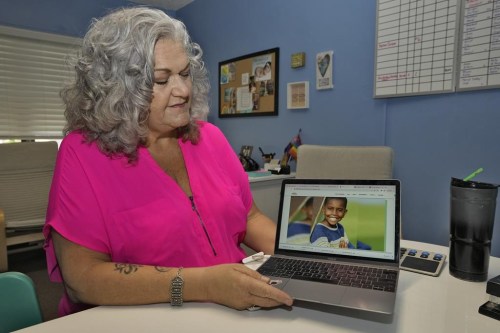
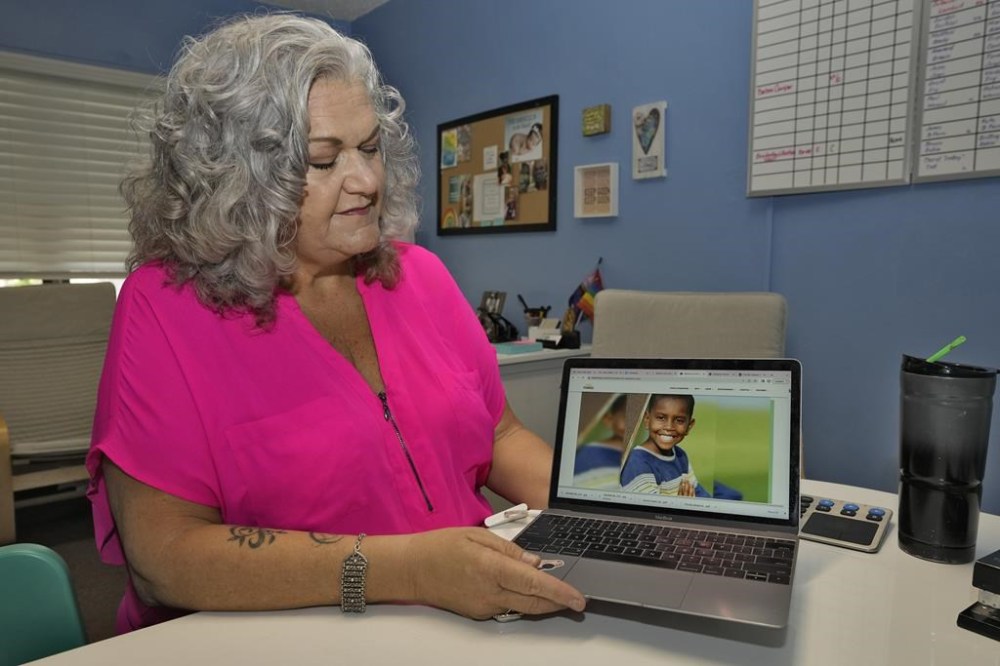
Connie Going, a longtime Florida social worker whose own viral adoption story Ramirez has described as her inspiration for Family-Match, said she didn’t believe the tool would help such vulnerable children. Going said the algorithm gives false hope to waiting parents by failing to deliver successful matches, and ultimately makes her job harder.
“We’ve put our trust in something that is not 100% useful,” Going said. “It’s wasted time for social workers and wasted emotional experiences for children.”
___
Contact AP’s global investigative team at Investigative@ap.org or https://www.ap.org/tips/