EU commission to prolong use of glyphosate for 10 more years after member countries fail to agree

Advertisement

Advertise with us

BRUSSELS (AP) — The European Commission will continue the use of the controversial chemical herbicide glyphosate in the European Union for 10 more years after the 27 member countries again failed to find a common position.

Read this article for free:


or

Already have an account? Log in here »

To continue reading, please subscribe:

Subscribe and receive a limited-edition Free Press branded hat or tote.

Digital Subscription

One year of digital access for only $205*

  • Enjoy unlimited reading on winnipegfreepress.com
  • Read the E-Edition, our digital replica newspaper
  • Access News Break, our award-winning app
  • Play interactive puzzles

*First annual payment billed as $205.00 + GST for one year. This annual subscription will automatically renew at $233.00 + GST every 52 weeks (10% off the regular annual price of $259.35). Offer available to new and qualified returning subscribers only. Cancel any time.

To continue reading, please subscribe:

Add Free Press access to your Brandon Sun subscription for only an additional

$1 for the first 4 weeks*

  • Enjoy unlimited reading on winnipegfreepress.com
  • Read the E-Edition, our digital replica newspaper
  • Access News Break, our award-winning app
  • Play interactive puzzles
Start now

*Your next Brandon Sun subscription payment will increase by $1.00 and you will be charged $17.95 plus GST for four weeks. After four weeks, your payment will increase to $24.95 plus GST every four weeks.

Hey there, time traveller!
This article was published 16/11/2023 (1052 days ago), so information in it may no longer be current.

BRUSSELS (AP) — The European Commission will continue the use of the controversial chemical herbicide glyphosate in the European Union for 10 more years after the 27 member countries again failed to find a common position.

Representatives of EU states were unable to reach a decision last month, and a new vote by an appeal committee was again unconclusive on Thursday. Because of the deadlock, the EU’s executive arm said it will endorse its own proposal and renew the approval of glyphosate for 10 years, with new conditions attached.

“These restrictions include a prohibition of pre-harvest use as a desiccant and the need for certain measures to protect non-target organisms,” it said in a statement.
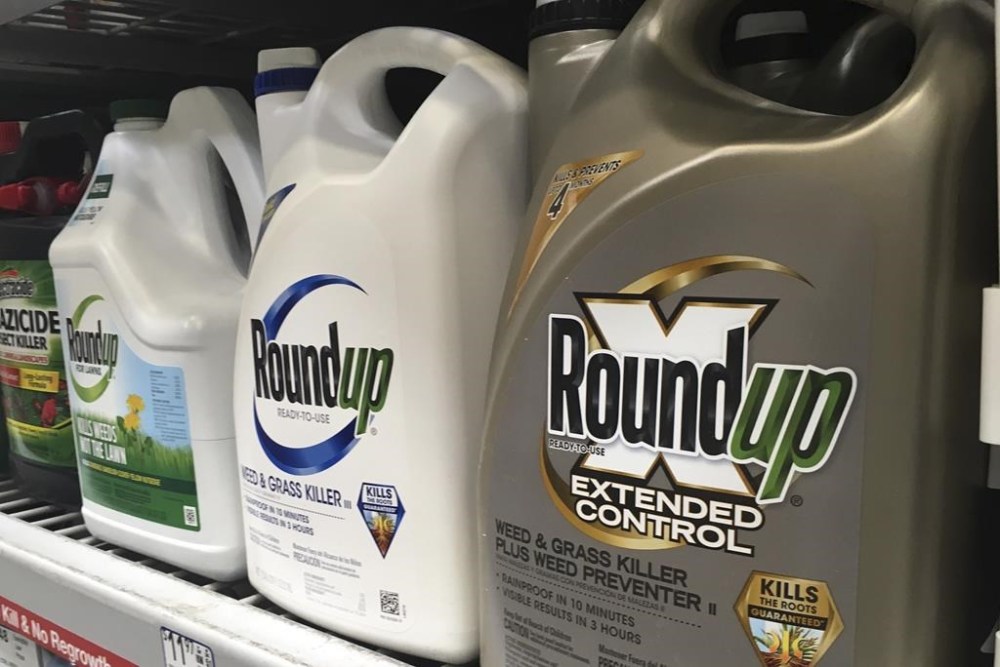
FILE - Containers of Roundup sit on a store shelf on Feb. 24, 2019, in San Francisco. A decision on whether to authorize the use of the controversial chemical herbicide glyphosate in the European Union for at least 10 more years has been delayed after member countries failed to agree. The chemical, which is widely used in the 27-nation bloc, is approved on the EU market until mid-December. (AP Photo/Haven Daley, File)

The chemical, which is widely used in the bloc to the great anger of environment groups, had been approved in the EU market until mid-December.

The Greens political group of the EU Parliament immediately urged the Commission to backpedal and ban the use of glyphosate.

“We should not gamble with our biodiversity and public health like this,” said Bas Eickhout, the vice chair of the Environment Committee.

Over the past decade, glyphosate, used in products like the weedkiller Roundup, has been at the heart of heated scientific debate about whether it causes cancer and its possible disruptive effect on the environment. The chemical was introduced by chemical giant Monsanto in 1974 as an effective way of killing weeds while leaving crops and other plants intact.

Bayer bought Monsanto for $63 billion in 2018 and has been trying to deal with thousands of claims and lawsuits related to Roundup. In 2020, Bayer announced it would pay up to $10.9 billion to settle about 125,000 filed and unfiled claims. Just weeks ago, a California jury awarded $332 million to a man who sued Monsanto contending that his cancer was related to decades of using Roundup.

The France-based International Agency for Research on Cancer, which is part of the World Health Organization, classified glyphosate as a “probable human carcinogen” in 2015.

But the EU’s food safety agency paved the way for a 10-year extension when it said in July it “did not identify critical areas of concern” in the use of glyphosate.

The U.S. Environmental Protection Agency found in 2020 that the herbicide did not pose a health risk to people, but a federal appeals court in California last year ordered the agency to reexamine that ruling, saying it wasn’t supported by enough evidence.

EU member states are responsible for authorizing the use of products in their national markets, following a safety evaluation.

The 10-year extension proposed by the European Commission required a “qualified majority,” defined as 55% of the 27 members representing at least 65% of the total EU population of some 450 million people. Several member states abstained and that was not achieved, leaving the final say to the EU’s executive arm.

In France, President Emmanuel Macron had committed to ban glyphosate before 2021 but has since backpedaled. Germany, the EU’s biggest economy, plans to stop using it from next year, but the decision could be challenged. Luxembourg’s national ban, for instance, was overturned in court earlier this year.

Greenpeace has called on the EU to reject the market reapproval, citing studies indicating that glyphosate may cause cancer and other health problems and could also be toxic to bees. The agroindustry sector, however, says there are no viable alternatives.
Report Error Submit a Tip

More Stories

J’accuse!: Kinew uses French to fry interim Tory leader over alleged caucus subterfuge

Chris Kitching and Maggie Macintosh 4 minute read Preview

J’accuse!: Kinew uses French to fry interim Tory leader over alleged caucus subterfuge

Chris Kitching and Maggie Macintosh 4 minute read Thursday, Oct. 1, 2026

NDP Premier Wab Kinew took a dig at the Progressive Conservatives’ leadership change while facing off with Obby Khan’s short-term replacement for the first time in question period Thursday.

Read
Thursday, Oct. 1, 2026

Blown lead spoils Jets opener

Mike McIntyre 7 minute read Preview

Blown lead spoils Jets opener

Mike McIntyre 7 minute read Yesterday at 11:09 PM CDT

Younger. Faster. Stronger.

They may still be a long ways from a finished product, but it’s safe to say the new-look Winnipeg Jets made a mostly favourable first impression on Friday night in front of a sold-out crowd at Canada Life Centre.

Sure, a 4-3 overtime loss to a hard-nosed Boston Bruins outfit is going to sting a little, especially since the home team was just 98 seconds away from a regulation victory.

But if the Jets can bottle up this kind of energy and effort, they should enjoy plenty of success over the course of the 84-game campaign.

Read
Yesterday at 11:09 PM CDT

A 22-year-old man is dead and an 18-year-old is in hospital in critical condition after a two-vehicle crash on Highway 8 on Thursday evening.

A Gimli RCMP officer was driving north on the highway, near Riverton, when he witnessed the collision at about 6:45 p.m.

A vehicle headed north had passed the Mountie at a high speed before colliding with an SUV that was turning west onto Provincial Road 329 from Highway 8.

The driver of the first vehicle, an 18-year-old man from Arborg, was rushed to hospital by a helicopter ambulance with injuries RCMP describe as serious and life-threatening.

Sisters relieved hospital takes accountability after mother’s death

Scott Billeck 5 minute read Preview

Sisters relieved hospital takes accountability after mother’s death

Scott Billeck 5 minute read Thursday, Oct. 1, 2026

Eight months after losing their mother, two Winnipeg sisters say an internal hospital review has finally given them something they had been seeking since her death: accountability.

Chelsea Mann and Samantha Burns said St. Boniface Hospital officials acknowledged mistakes were made in the care of their mother, Judy Burns, during a recent meeting to discuss the findings of a critical incident review into her death.

The acknowledgement marked a significant departure from an earlier meeting with hospital officials, when they felt their concerns were largely dismissed.

Burns, 68, died on Jan. 21, three days after being admitted, after experiencing rectal bleeding.

Read
Thursday, Oct. 1, 2026

Dynacare workers provide essential services that must be maintained during strike, labour board rules

Nicole Buffie 5 minute read Preview

Dynacare workers provide essential services that must be maintained during strike, labour board rules

Nicole Buffie 5 minute read Thursday, Oct. 1, 2026

The Manitoba Labour Board has ruled Dynacare workers are essential employees and their services must be maintained during a labour dispute.

Read
Thursday, Oct. 1, 2026

EU commission to prolong use of glyphosate for 10 more years after member countries fail to agree

Samuel Petrequin, The Associated Press 4 minute read Preview

EU commission to prolong use of glyphosate for 10 more years after member countries fail to agree

Samuel Petrequin, The Associated Press 4 minute read Thursday, Nov. 16, 2023

BRUSSELS (AP) — The European Commission will continue the use of the controversial chemical herbicide glyphosate in the European Union for 10 more years after the 27 member countries again failed to find a common position.

Representatives of EU states were unable to reach a decision last month, and a new vote by an appeal committee was again unconclusive on Thursday. Because of the deadlock, the EU's executive arm said it will endorse its own proposal and renew the approval of glyphosate for 10 years, with new conditions attached.

“These restrictions include a prohibition of pre-harvest use as a desiccant and the need for certain measures to protect non-target organisms,” it said in a statement.

The chemical, which is widely used in the bloc to the great anger of environment groups, had been approved in the EU market until mid-December.

Read
Thursday, Nov. 16, 2023