Tiny beetle to the rescue of N.S. hemlocks attacked by woolly invasive insect

Advertisement

Advertise with us

FREDERICTON - On comfortable beds of wood shavings inside multiple boxes, 3,600 Laricobius nigrinus beetles made overnight journeys last month from the forests of British Columbia all the way to southwestern Nova Scotia.

Read this article for free:


By clicking the button above, an account will be created and you will begin to receive some of our recommended newsletters. You may opt out of any newsletter by visiting your Email and Communication Preferences page or by clicking "unsubscribe" at the bottom of any email.

or

Already have an account? Log in here »

To continue reading, please subscribe:

Digital Subscription

One year of digital access for only $1.44 a week*

  • Enjoy unlimited reading on winnipegfreepress.com
  • Read the E-Edition, our digital replica newspaper
  • Access News Break, our award-winning app
  • Play interactive puzzles

*Billed as $5.77 plus GST every four weeks. After 52 weeks, price increases to the regular rate of $19.95 plus GST every four weeks. Offer available to new and qualified returning subscribers only. Cancel any time.

To continue reading, please subscribe:

Add Free Press access to your Brandon Sun subscription for only an additional

$1 for the first 4 weeks*

  • Enjoy unlimited reading on winnipegfreepress.com
  • Read the E-Edition, our digital replica newspaper
  • Access News Break, our award-winning app
  • Play interactive puzzles
Start now

*Your next Brandon Sun subscription payment will increase by $1.00 and you will be charged $17.95 plus GST for four weeks. After four weeks, your payment will increase to $24.95 plus GST every four weeks.

Hey there, time traveller!
This article was published 19/11/2023 (1065 days ago), so information in it may no longer be current.

FREDERICTON – On comfortable beds of wood shavings inside multiple boxes, 3,600 Laricobius nigrinus beetles made overnight journeys last month from the forests of British Columbia all the way to southwestern Nova Scotia.

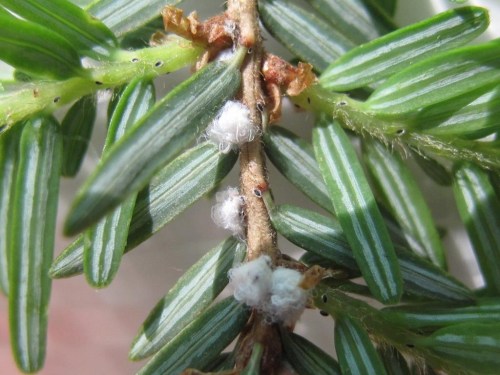
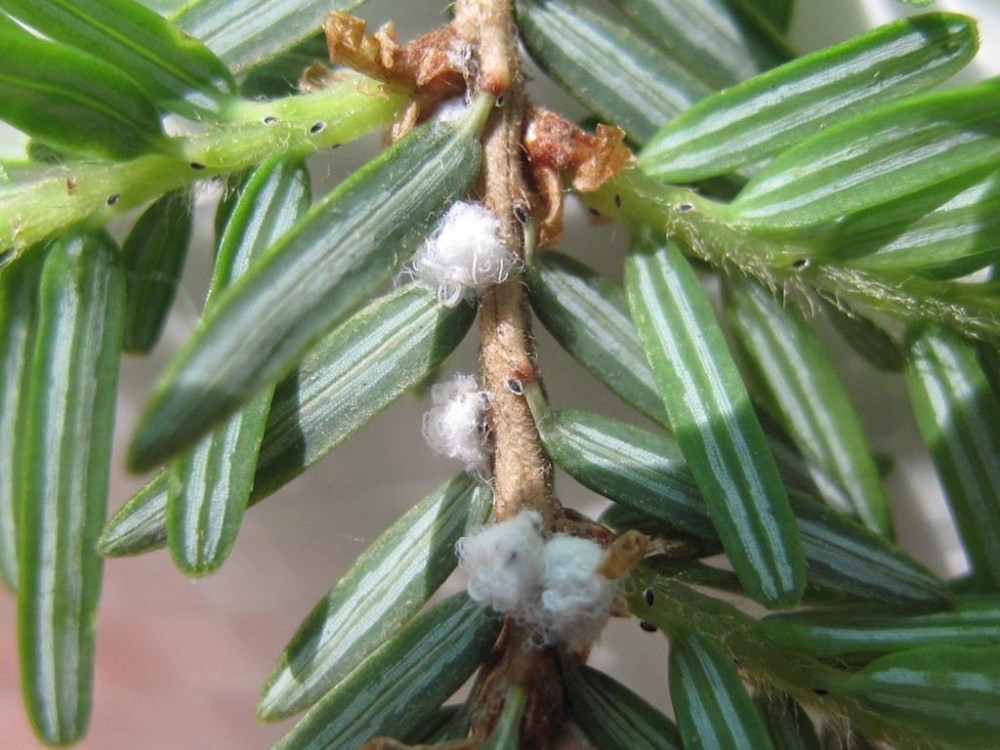
The Lari, as the beetles are affectionately nicknamed by some scientists who study them, were imported to help protect hemlocks from the woolly adelgid, an invasive species that came from Japan.

“The idea is that this first year is a kind of a pilot project to see if this insect will survive Nova Scotia’s winters,” said Lucas Roscoe, research scientist with the Canadian Forest Service.
A woolly adelgid beetle is shown in a handout photo.The woolly adelgid was first seen in southwestern Nova Scotia in 2017, and has since been spreading northward. THE CANADIAN PRESS/HO-Ontario Ministry of Natural Resources and Forestry **MANDATORY CREDIT**

“As the project develops, we’ll be monitoring the beetle on the landscape and looking for it and seeing if it’s tracking these hemlock woolly adelgid populations across the landscape.”

The woolly adelgid, about the size of a peppercorn, was first seen in southwestern Nova Scotia in 2017 and has since spread northward, he said.

After landing on a tree, it settles in one spot for most of its life and begins “literally sucking the life out” of the tree after piercing the bark, Roscoe said. It gets its name from the white, woolly layer it develops. “And it’s within this kind of woolly ball that it lays its eggs, and then the eggs hatch, and then they spread,” he said.

Aided by milder winters on the East Coast, the woolly adelgid seems to have adapted to the area, and spread to large swaths of hemlocks. If left to spread unchecked, Roscoe said the insect would wipe out 90 per cent of hemlocks in Nova Scotia. The pest has also been seen in parts of Ontario.

“Entire stands can be damaged quite severely by the hemlock woolly adelgid,” he said. “There’s areas where there’s a lot of hemlock trees and you’re seeing most of the stand damaged or dead.”

The woolly adelgid is transferred from one tree to another by wind, birds, animals or even humans, he added. “They can land on your shirt, you won’t even know. You’ll go for a walk and move it.”

Enter the beetle.

“It’s like a ladybug, but it’s very small … one to two millimetres in length,” Roscoe said, describing the predator. “It’s just a little black beetle, but they just love eating hemlock woolly adelgid.”

He took part in the release of some beetles over the past month in Nova Scotia. “I watched the beetles leave the cup and immediately start eating hemlock woolly adelgid,” he said. “They crawled right up, and they just stuck their head right into one and just started eating it.”

Gwylim Blackburn, a research scientist at the Pacific Forestry Centre in Victoria, said foresters in British Columbia tapped on hemlock branches to knock off the beetles and collect them in nets for shipment to Nova Scotia. “They’re actually quite easy to miss, until you have a trained eye,” he said.

While it is the first time this kind of biocontrol has been used on Canadian hemlocks, he said the beetles have been used to control woolly adelgid in the United States for about 20 years.

Research on the woolly adelgid was pioneered by a Canadian scientist in the 1980s and the beetles’ effectiveness has since been shown to have concrete results, Blackburn said. Current research, including introduction of the beetles in Nova Scotia, has brought together different branches of governments and Indigenous communities and is drawing lessons from the United States, he added.

Chemical treatments have also been used to kill the woolly adelgid but they have proven expensive. “They’re very work-intensive and of course can only be conducted on individual trees with great worker investment,” Blackburn said. “What we need here for a pest spreading across a landscape is a landscape-scale solution.”

Roscoe said the Nova Scotia project will cost about $72,000, which includes shipping the beetles from B.C. “It’s definitely quite a good investment if we’re going to save hemlock,” he said.

Blackburn said that when the beetle was first introduced in eastern United States about 20 years ago, scientists were concerned it might become an invasive species itself. But long-term monitoring has shown the beetle doesn’t have what scientists refer to as “off-target effects” and it only attacks the woolly adelgids on hemlocks, he noted.

Hemlocks are a keystone species, meaning large populations depend on these trees, Roscoe said.

“They can grow in areas that not very many other trees can grow in and thrive in places like river valleys, or streams, alongside lakes and ponds,” he said.

“There’s a lot of other species like insects, other plants and birds, small mammals that need hemlock in order to survive themselves. Removing hemlock from these areas where it’s the majority constituent would lead to a complete ecological collapse in these areas. So, basically, kind of a biodiversity desert.”

The main task for scientists now is to monitor how the beetle fares over the frigid and sustained Nova Scotia winter.

“It’s tough to say right now,” Roscoe said. “We’re going to check on them — probably February, March — and we’re going to see.”

This report by The Canadian Press was first published Nov. 19, 2023.

Report Error Submit a Tip

More Stories

Prosecutions branch reviewing new evidence from police HQ public inquiry

Scott Billeck 3 minute read Preview

Prosecutions branch reviewing new evidence from police HQ public inquiry

Scott Billeck 3 minute read 2:54 PM CDT

Prosecutors are reviewing new evidence from the public inquiry into Winnipeg’s police headquarters project to determine whether criminal charges could be pursued.

The Manitoba Prosecution Service said Monday the review, launched in July, is examining whether evidence presented during the inquiry could change previous decisions not to lay charges in the scandal-plagued project.

The $2.1-million public inquiry took place over 27.5 hearing dates between February and May, and commissioner Garth Smorang released his final report Monday.

The prosecution service has twice previously explored criminal charges stemming from the project.

Read
2:54 PM CDT

Detox centre ready but staffing challenges persist

Scott Billeck 6 minute read Preview

Detox centre ready but staffing challenges persist

Scott Billeck 6 minute read 2:01 AM CDT

Peter McMullen’s decade-long struggle with addiction gives him insight into the challenges Lighthouse Mission hopes to address with a new Main Street detox facility focused on connecting people with longer-term treatment.

McMullen, executive director of Lighthouse Mission, knows how difficult it can be to navigate Winnipeg’s addiction treatment system, particularly when someone is ready to seek help but the services they need aren’t immediately available.

Now, after years of planning and a lengthy renovation of two century-old buildings, the downtown organization is preparing to open a 10-bed detox facility at 667 and 669 Main St., with five beds each for men and women.

The facility could begin accepting clients as early as November, provided Lighthouse Mission can overcome one final hurdle: recruiting enough staff to operate it.

Read
2:01 AM CDT

Province looks to keep nearly $1M from traffic stop

Erik Pindera 4 minute read Preview

Province looks to keep nearly $1M from traffic stop

Erik Pindera 4 minute read 2:01 AM CDT

The RCMP constable could see that Alireza Haghgoo was nervous. The 22-year-old, seated as a passenger in a rental Nissan SUV the Mountie pulled over for speeding outside Brandon in late July, was breathing heavily and tapping his foot constantly.

Read
2:01 AM CDT

Enter the beetle: N.S. hemlocks get West Coast aid

Hina Alam, The Canadian Press 5 minute read Preview

Enter the beetle: N.S. hemlocks get West Coast aid

Hina Alam, The Canadian Press 5 minute read Sunday, Nov. 19, 2023

FREDERICTON - On comfortable beds of wood shavings inside multiple boxes, 3,600 Laricobius nigrinus beetles made overnight journeys last month from the forests of British Columbia all the way to southwestern Nova Scotia.

The Lari, as the beetles are affectionately nicknamed by some scientists who study them, were imported to help protect hemlocks from the woolly adelgid, an invasive species that came from Japan.

"The idea is that this first year is a kind of a pilot project to see if this insect will survive Nova Scotia's winters," said Lucas Roscoe, research scientist with the Canadian Forest Service.

"As the project develops, we'll be monitoring the beetle on the landscape and looking for it and seeing if it's tracking these hemlock woolly adelgid populations across the landscape."

Read
Sunday, Nov. 19, 2023

‘Make eye contact’: police urge extra caution amid spate of vehicle-pedestrian collisions

Scott Billeck 5 minute read Preview

‘Make eye contact’: police urge extra caution amid spate of vehicle-pedestrian collisions

Scott Billeck 5 minute read 12:32 PM CDT

Winnipeg police are urging motorists and pedestrians to exercise extra caution at intersections following a rash of collisions across the city, including one that claimed the life of a woman.

“Having the right of way does not make you safe,” Insp. Helen Peters of the Winnipeg Police Service’s traffic division said during a news conference Monday morning.

“This isn’t just about who’s at fault. This is about keeping each other safe and doing everything we can as drivers, motor vehicles or pedestrians to help each other out and navigate our roads.”

Police said a woman in her 80s was struck by a vehicle that failed to stop at a stop sign while turning right onto eastbound Roblin Boulevard from Hunterspoint Road on Sept. 29.

Read
12:32 PM CDT

Four charged in St. James fight

2 minute read Yesterday at 4:03 PM CDT

Four people are facing charges after an assault at a St. James apartment building.

A man was struck in the face with a pistol when he answered the door at his apartment suite in the 2200 block of Portage Avenue at about 2:15 a.m. Oct. 18, and a physical fight broke out in the hallway. Bear spray was used during the fight, the Winnipeg Police Service stated in a news release Sunday.

Police learned one of the men involved in the fight had been armed at a nearby restaurant, in the 2100 block of Portage Avenue, where he was refused service. Restaurant staff called police after seeing what appeared to be a gun in the man's hand as he was leaving.

A group of men then went to the apartment building and knocked on a suite door, police said, adding the men involved knew each other. The man who was armed at the restaurant was involved in the altercation, police stated, but no specific details about his role were released.