What does Sam Altman’s firing – and quick reinstatement – mean for the future of AI?

Advertisement

Advertise with us

NEW YORK (AP) — It's been quite a week for ChatGPT-maker OpenAI — and co-founder Sam Altman.

Read this article for free:


or

Already have an account? Log in here »

To continue reading, please subscribe:

Subscribe and receive a limited-edition Free Press branded hat or tote.

Digital Subscription

One year of digital access for only $205*

  • Enjoy unlimited reading on winnipegfreepress.com
  • Read the E-Edition, our digital replica newspaper
  • Access News Break, our award-winning app
  • Play interactive puzzles

*First annual payment billed as $205.00 + GST for one year. This annual subscription will automatically renew at $233.00 + GST every 52 weeks (10% off the regular annual price of $259.35). Offer available to new and qualified returning subscribers only. Cancel any time.

To continue reading, please subscribe:

Add Free Press access to your Brandon Sun subscription for only an additional

$1 for the first 4 weeks*

  • Enjoy unlimited reading on winnipegfreepress.com
  • Read the E-Edition, our digital replica newspaper
  • Access News Break, our award-winning app
  • Play interactive puzzles
Start now

*Your next Brandon Sun subscription payment will increase by $1.00 and you will be charged $17.95 plus GST for four weeks. After four weeks, your payment will increase to $24.95 plus GST every four weeks.

Hey there, time traveller!
This article was published 22/11/2023 (1047 days ago), so information in it may no longer be current.

NEW YORK (AP) — It’s been quite a week for ChatGPT-maker OpenAI — and co-founder Sam Altman.

Altman, who helped start OpenAI as a nonprofit research lab back in 2015, was removed as CEO Friday in a sudden and mostly unexplained exit that stunned the industry. And while his chief executive title was swiftly reinstated just days later, a lot of questions are still up in the air.

If you’re just catching up on the OpenAI saga and what’s at stake for the artificial intelligence space as a whole, you’ve come to the right place. Here’s a rundown of what you need to know.
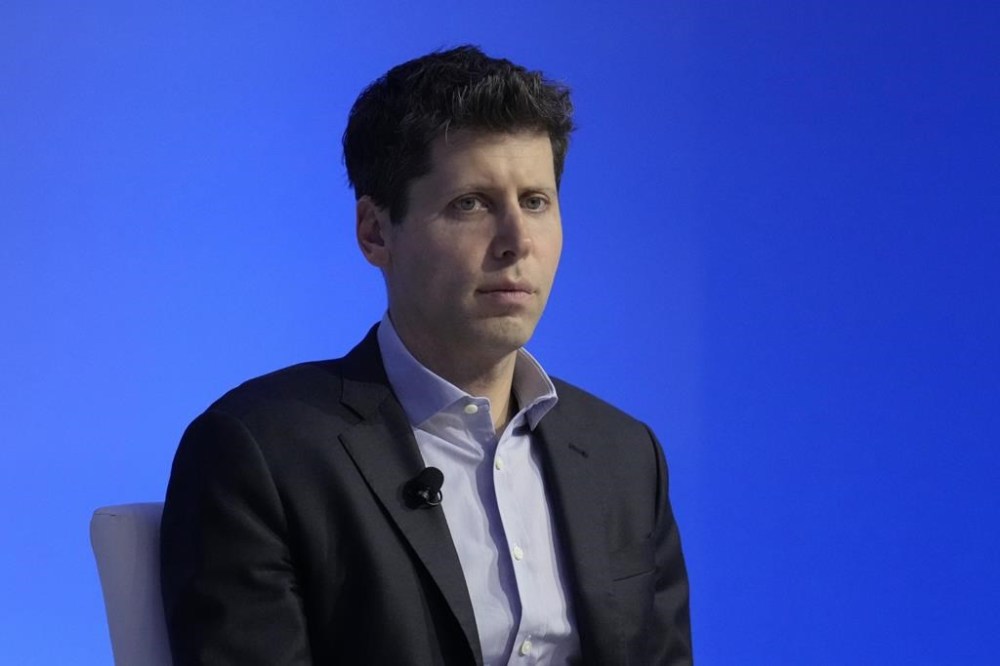
FILE - OpenAI CEO Sam Altman participates in a discussion during the Asia-Pacific Economic Cooperation (APEC) CEO Summit, Nov. 16, 2023, in San Francisco. Altman, the ousted leader of ChatGPT-maker OpenAI, is returning to the company that fired him late last week, the latest in a saga that has shocked the artificial intelligence industry. San Francisco-based OpenAI said in a statement late Tuesday, Nov. 21: “We have reached an agreement in principle for Sam Altman to return to OpenAI as CEO with a new initial board of Bret Taylor (Chair), Larry Summers, and Adam D’Angelo.” (AP Photo/Eric Risberg, File)

WHO IS SAM ALTMAN AND HOW DID HE RISE TO FAME?

Altman is co-founder of OpenAI, the San Francisco-based company behind ChatGPT (yes, the chatbot that’s seemingly everywhere today — from schools to health care ).

The explosion of ChatGPT since its arrival one year ago propelled Altman into the spotlight of the rapid commercialization of generative AI — which can produce novel imagery, passages of text and other media. And as he became Silicon Valley’s most sought-after voice on the promise and potential dangers of this technology, Altman helped transform OpenAI into a world-renowned startup.

But his position at OpenAI hit some rocky turns in a whirlwind that was the past week. Altman was fired as CEO Friday — and days later, he was back on the job with a new board of directors.

Within that time, Microsoft, which has invested billions of dollars in OpenAI and has rights to its existing technology, helped drive Altman’s return, quickly hiring him as well as another OpenAI co-founder and former president, Greg Brockman, who quit in protest after the CEO’s ousting. Meanwhile, hundreds of OpenAI employees threatened to resign.

Both Altman and Brockman celebrated their returns to the company in posts on X, the platform formerly known as Twitter, early Wednesday.

WHY DOES HIS REMOVAL — AND REINSTATEMENT — MATTER?

There’s a lot that remains unknown about Altman’s initial ousting. Friday’s announcement said he was “not consistently candid in his communications” with the then-board of directors, which refused to provide more specific details.

Regardless, the news sent shockwaves throughout the AI world — and, because OpenAI and Altman are such leading players in this space, may raise trust concerns around a burgeoning technology that many people still have questions about.

“The OpenAI episode shows how fragile the AI ecosystem is right now, including addressing AI’s risks,” said Johann Laux, an expert at the Oxford Internet Institute focusing on human oversight of artificial intelligence.

The turmoil also accentuated the differences between Altman and members of the company’s previous board, who have expressed various views on the safety risks posed by AI as the technology advances.

Multiple experts add that this drama highlights how it should be governments — and not big tech companies — that should be calling the shots on AI regulation, particularly for fast-evolving technologies like generative AI.

The OpenAI logo appears on a mobile phone in front of a screen showing a portion of the company website in this photo taken on Tuesday, Nov. 21, 2023 in New York. (AP Photo/Peter Morgan)

“The events of the last few days have not only jeopardized OpenAI’s attempt to introduce more ethical corporate governance in the management of their company, but it also shows that corporate governance alone, even when well-intended, can easily end up cannibalized by other corporate’s dynamics and interests,” said Enza Iannopollo, principal analyst at Forrester.

The lesson, Iannopollo said, is that companies can’t alone deliver the level of safety and trust in AI that society needs. “Rules and guardrails, designed with companies and enforced by regulators with rigor, are crucial if we are to benefit from AI,” he added.

WHAT IS GENERATIVE AI? HOW IS IT BEING REGULATED?

Unlike traditional AI, which processes data and completes tasks using predetermined rules, generative AI (including chatbots like ChatGPT) can create something new.

Tech companies are still leading the show when it comes to governing AI and its risks, while governments around the world work to catch up.

In the European Union, negotiators are putting the final touches on what’s expected to be the world’s first comprehensive AI regulations. But they’ve reportedly been bogged down over whether and how to include the most contentious and revolutionary AI products, the commercialized large-language models that underpin generative AI systems including ChatGPT.

Chatbots were barely mentioned when Brussels first laid out its initial draft legislation in 2021, which focused on AI with specific uses. But officials have been racing to figure out how to incorporate these systems, also known as foundation models, into the final version.

Meanwhile, in the U.S., President Joe Biden signed an ambitious executive order last month seeking to balance the needs of cutting-edge technology companies with national security and consumer rights.

The order — which will likely need to be augmented by congressional action — is an initial step that is meant to ensure that AI is trustworthy and helpful, rather than deceptive and destructive. It seeks to steer how AI is developed so that companies can profit without putting public safety in jeopardy.


Report Error Submit a Tip

More Stories

Creative powerhouse Perry Rosemond never lost Winnipeg roots

Ben Waldman 7 minute read Preview

Creative powerhouse Perry Rosemond never lost Winnipeg roots

Ben Waldman 7 minute read Yesterday at 6:00 AM CDT

He created King of Kensington, directed the troops in the Royal Canadian Air Farce, and his creative eye was behind the lens for television shows starring Johnny Cash, Tom Jones, Mr. Dress-Up and the Friendly Giant.

He also wrote and developed the Canadian version of Sesame Street during his time as the head of school and preschool programming for CBC in Toronto, and directed a televised special in 2002 for Winnipeg sketch comedy troupe Royal Liechtenstein Theatre Company.

But before his name featured in the credits of some of the most iconic and influential pieces of the Cancon canon, Perry Rosemond was an only child living in a crammed, multi-generational home in Winnipeg’s North End, racing each day to beat the morning bell next door at William Whyte School.

In memoirs that have yet to be published, the late television producer recalled his childhood. “(T)here were 14 of us in the house at 193 Andrews St., and it wasn’t that big of a house,” he writes.

Read
Yesterday at 6:00 AM CDT

Broadening prediction-market gambling a bad idea

Editorial 4 minute read Preview

Broadening prediction-market gambling a bad idea

Editorial 4 minute read Yesterday at 2:01 AM CDT

Let’s make a prediction: sooner or later, when Canadian governments find a way to take their own cut of the action, prediction-contract gambling on everything from sports to entertainment to political decisions is going to come to Canada.

And that’s a horrible, dangerous, pernicious idea.

Unless you have particular access to information — either inside information or strategic information based on skills or education — you’re not likely to make money at it. In fact, structurally, you’re likely to lose. In prediction markets, you basically pay an amount, plus fees from the company involved, to bet on whether something will or will not happen within a certain time frame. The amount you pay for your contract depends on how other people are also betting.

As Wealthsimple describes it, “You buy whichever side you think is right. Prices move with demand, so if the market leans towards one outcome, the more that side costs. If a lot of people are backing the TSX to finish above 38,000, yes gets more expensive and no gets cheaper.”

Read
Yesterday at 2:01 AM CDT

Winnipeggers witness unveiling of Japanese Canadian monument in B.C.

Morgan Modjeski 6 minute read Preview

Winnipeggers witness unveiling of Japanese Canadian monument in B.C.

Morgan Modjeski 6 minute read Yesterday at 8:39 PM CDT

As Miki Stewart gathered with her family at the Japanese Cultural Association of Manitoba on Saturday afternoon, she was thinking of her parents, Yoshimaru and Yoshi Abe.

Both Stewart, 80, and her sister Yumi Falk, 81, alongside an older brother, were born in the Tashme internment camp in British Columbia. They were among more than 2,600 Japanese Canadians who were forcefully removed and interred at the camp following the bombing of Pearl Harbour and Canada’s declaration of war on Japan in 1941.

“They didn’t talk much about how they suffered,” Stewart said of her parents. “But they did.”

She was amongst a group of more than 150 people who gathered at the association’s McPhillips headquarters on Saturday afternoon to watch the unveiling of the Japanese Canadian Monument in Victoria B.C.

Read
Yesterday at 8:39 PM CDT

Brandonmeat packer thriving on its own

Abiola Odutola 3 minute read Preview

Brandonmeat packer thriving on its own

Abiola Odutola 3 minute read Yesterday at 2:01 AM CDT

BRANDON — Canada Packers has strengthened its business and laid the foundation for future growth during its first year as an independent company, its president says.

The Brandon-based pork producer, separated from Maple Leaf Foods in October 2025, established its own leadership, strategy, systems, culture and identity while continuing operations across its hog production farms and regional hog barns in southern and eastern Manitoba.

The company’s first year was focused on building a successful standalone business while continuing to serve customers, communities and shareholders, president Dennis Organ said.

“Market conditions over the past year have been more challenging than we anticipated when we became a separate entity,” he said in an email. “Despite that, we continued to execute against our priorities, including increasing processing volumes, maintaining disciplined operations and strengthening the business.”

Read
Yesterday at 2:01 AM CDT

Volunteer pop-up library axed from Manitoba Youth Centre

Matthew Frank 4 minute read Preview

Volunteer pop-up library axed from Manitoba Youth Centre

Matthew Frank 4 minute read Updated: Yesterday at 11:25 AM CDT

Manitoba Corrections has cancelled a pop-up library program at the Manitoba Youth Centre, leaving inmates without librarian services and fewer options to borrow certain books.

The Prison Libraries Committee, part of the non-profit Manitoba Library Association, operated and funded the volunteer program since 2024 before it was shut down by the province last month. The group previously partnered with the province to offer the service because the facility has no dedicated library of its own.

“It is concerning that community members who are incarcerated, especially youth, are losing out on meaningful programming, access to information and rehabilitation efforts, which are offered at no cost to (Manitoba) Corrections. We urge Manitoba Justice to promote more library services and programming, not less,” said a Sept. 24 letter from the non-profit addressed to the justice minister.

Ashley Huot, chair of the Prison Libraries Committee, said she was puzzled when she received an email last month from Manitoba Corrections stating that the pop-up library was no longer needed.

Read
Updated: Yesterday at 11:25 AM CDT

Province looks to seize notorious drug den

Erik Pindera 5 minute read Preview

Province looks to seize notorious drug den

Erik Pindera 5 minute read Yesterday at 12:00 PM CDT

Provincial justice officials are trying to seize a Dominion Street drug den that has been the source of trouble in the West End for years.

The owner of 982 Dominion St., 45-year-old Robert Edward Johnson, was most recently arrested in June along with several others after a lengthy Winnipeg Police investigation into thefts and illicit drug sales connected to the house.

“The residence has a reputation within the neighbourhood as being a location where individuals habitually attend for the purpose of purchasing and/or consuming controlled substances,” reads a statement of claim filed by the province’s director of civil forfeiture in the Court of King’s Bench last week.

“For several years, the residence has been associated with criminal activity, violence, and disorder, resulting in numerous police attendances and complaints from members of the surrounding community.”

Read
Yesterday at 12:00 PM CDT