Multiple threats to election systems prompt US cybersecurity agency to boost cooperation with states

Advertisement

Advertise with us

WASHINGTON (AP) — The nation’s cybersecurity agency on Thursday launched a program aimed at boosting election security in the states, shoring up support for local offices and hoping to provide reassurance to voters that this year's presidential elections will be safe and accurate.

Read this article for free:


or

Already have an account? Log in here »

To continue reading, please subscribe:

Subscribe and receive a limited-edition Free Press branded hat or tote.

Digital Subscription

One year of digital access for only $205*

  • Enjoy unlimited reading on winnipegfreepress.com
  • Read the E-Edition, our digital replica newspaper
  • Access News Break, our award-winning app
  • Play interactive puzzles

*First annual payment billed as $205.00 + GST for one year. This annual subscription will automatically renew at $233.00 + GST every 52 weeks (10% off the regular annual price of $259.35). Offer available to new and qualified returning subscribers only. Cancel any time.

To continue reading, please subscribe:

Add Free Press access to your Brandon Sun subscription for only an additional

$1 for the first 4 weeks*

  • Enjoy unlimited reading on winnipegfreepress.com
  • Read the E-Edition, our digital replica newspaper
  • Access News Break, our award-winning app
  • Play interactive puzzles
Start now

*Your next Brandon Sun subscription payment will increase by $1.00 and you will be charged $17.95 plus GST for four weeks. After four weeks, your payment will increase to $24.95 plus GST every four weeks.

Hey there, time traveller!
This article was published 08/02/2024 (950 days ago), so information in it may no longer be current.

WASHINGTON (AP) — The nation’s cybersecurity agency on Thursday launched a program aimed at boosting election security in the states, shoring up support for local offices and hoping to provide reassurance to voters that this year’s presidential elections will be safe and accurate.

Officials with the U.S. Cybersecurity and Infrastructure Security Agency are introducing the program this week to the National Association of State Election Directors and National Association of Secretaries of State, which are meeting in the nation’s capital.

For state and local election officials, the list of security challenges keeps growing. Among them: potential cyberattacks waged by foreign governments, criminal ransomware gangs attacking computer systems and the persistence of election misinformation that has led to harassment of election officials and undermined public confidence.
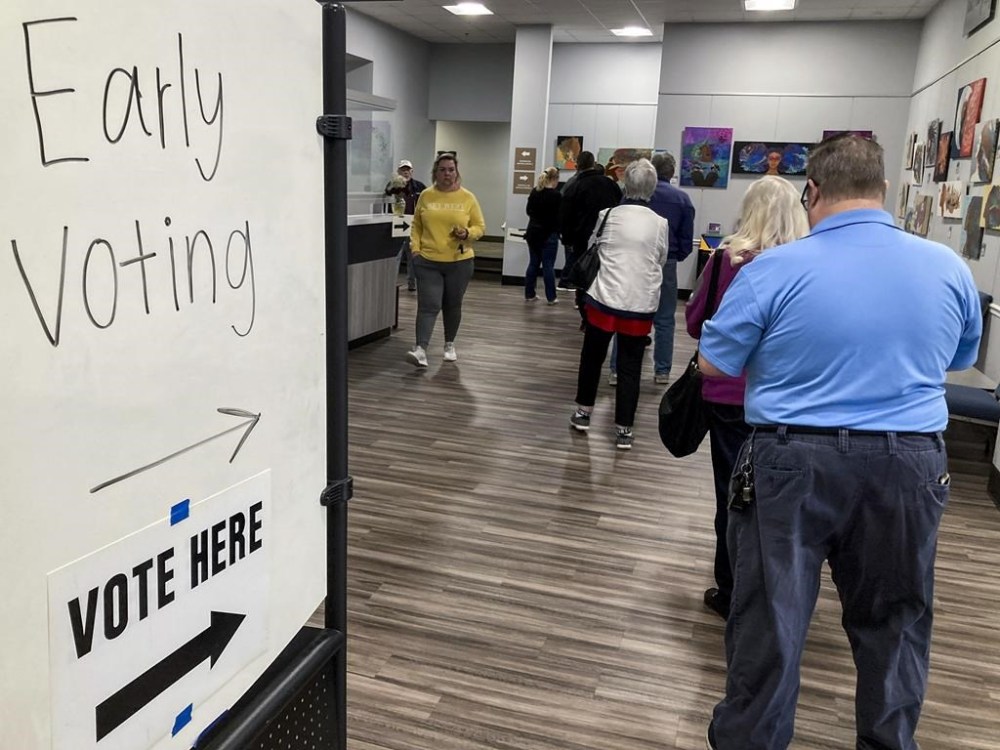
FILE - People wait in line to early vote Nov. 28, 2022, in Kennesaw, Ga. The nation's cybersecurity agency is launching a program aimed at boosting election security in the states, shoring up support for local offices and hoping to provide reassurance to voters that this year's presidential elections will be safe and accurate. (AP Photo/Mike Stewart, File)

Just in the past few weeks, AI-generated robocalls surfaced in New Hampshire before the state’s presidential primary and a cyberattack affecting the local government in Fulton County, Georgia, has created challenges for its election office.

The prospect of hostile governments abroad attacking election systems has been a particular concern this year for the agency. Eric Goldstein, CISA’s executive assistant director for cybersecurity, described “a really difficult cybersecurity environment” that includes “extraordinary advances by nation-state adversaries China, Russia, Iran, North Korea.”

CISA was formed in the aftermath of the 2016 election, when Russia sought to interfere with a multipronged effort that included accessing and releasing campaign emails and scanning state voter registration systems for vulnerabilities. Election systems were designated as critical infrastructure, alongside the nation’s banks, dams and nuclear power plants, opening them up to receiving additional support from the federal government.

The program announced this week includes 10 new hires, all of whom join the federal agency with extensive election experience. They will be based throughout the country and join other staff already in place that have been conducting cyber and physical security reviews for election offices that request them.

The agency’s director, Jen Easterly, announced plans for the program at a July meeting of the state election directors in South Carolina. The new team will be entirely focused on elections, which is critical because of the complexities surrounding voting that vary by jurisdiction, said CISA Senior Advisor Cait Conley, who leads the agency’s election security efforts.

“Understanding the complexity of each state’s election operating environment and their security needs is critical to us being effective partners in helping them mitigate those needs and ensuring the infrastructure security and resilience,” Conley said.

The new advisers include the former state election director in Texas, Keith Ingram; the former chief information officer for the Ohio Secretary of State’s Office, Spencer Wood; and the former elections supervisor in Escambia County, Florida, David Stafford.

“No county is going through this alone without partners and no state is going through this alone without partners. And we’re lucky to have this relationship with CISA to help make sure that our cybersecurity infrastructure is hardened against efforts by bad faith actors to interfere with it,” said Al Schmidt, who serves as Pennsylvania’s chief elections officer.

State election officials welcomed the additional help. Some relayed to federal officials concerns about their personal safety, given the death threats and harassment they have faced since the 2020 election.

“I know what they are up against, particularly in the smaller jurisdictions. I want to be there to help them prepare for what’s ahead and support them on the good and more challenging days by linking them to our expertise and services,” said Lori Augino, another of the new election security advisers who previously served as the state election director in Washington state. “The resiliency of our election system depends on this network of support.”

Karen Brinson Bell, executive director of the North Carolina State Board of Elections, said she has already spoken with the new CISA election security adviser for her region and shared some of her needs.

“For CISA to be able to be more on the front lines assisting us is really the right step forward,” Brinson Bell said.
Report Error Submit a Tip

More Stories

Feds chip in $27M for Winnipeg sewage project

Joyanne Pursaga 3 minute read Preview

Feds chip in $27M for Winnipeg sewage project

Joyanne Pursaga 3 minute read Yesterday at 3:00 PM CDT

The federal government is offering Winnipeg $27 million to help reduce combined sewer overflows, its first financial contribution to the major environmental project.

The City of Winnipeg is provincially mandated to complete a $1.15-billion master plan by 2045 that reduces such sewage spills. The municipal government has so far paid for that work alone, however, as provincial and federal funding focused on the city’s separate $3.1-billion upgrade of the north end sewage treatment plant.

“It’s wonderful to see the federal government (do this) … It’s going to make a difference on the (combined sewer overflow) projects. We’ve got a lot of them to do in the city … With the rain events we saw this year, the importance of accelerating combined sewer projects across the city is more (pressing) than ever,” said Coun. Jeff Browaty (North Kildonan), chairman of finance.

Older combined sewers still serve about one third of Winnipeg, collecting both precipitation and wastewater in a single pipe. Heavy rain or snow can cause the pipes to overflow, which releases billions of litres of diluted sewage into Winnipeg rivers each year.

Read
Yesterday at 3:00 PM CDT

Menstruation, consent move up in sex-ed lesson plan

Maggie Macintosh 5 minute read Preview

Menstruation, consent move up in sex-ed lesson plan

Maggie Macintosh 5 minute read Yesterday at 6:00 AM CDT

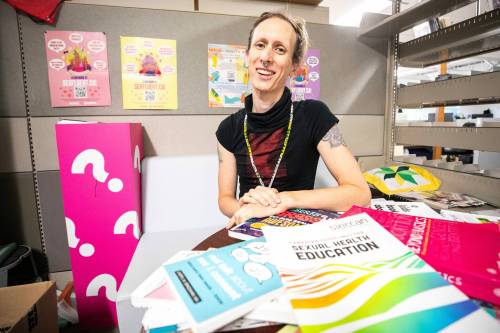
Manitoba’s newest curriculum introduces the menstrual cycle earlier and repeatedly calls for explicit lessons on how students can give, seek, and decline to provide their consent.

The education department has released its sweeping proposal to overhaul how exercise, nutrition and sexuality are taught between kindergarten and Grade 12.

Grade 5 has long served as a key turning point for “the talk,” said J Fiedler, a sexual and reproductive health educator who provided input on the new curriculum.

“There’s no ‘the talk’ anymore. Now, there’s continuations of multiple ‘talks,’ which can hopefully reduce stress for students and stigma that people experience talking about sexuality.”

Read
Yesterday at 6:00 AM CDT

MMF walks away from bid to buy Fort Garry Hotel

Carol Sanders 3 minute read Preview

MMF walks away from bid to buy Fort Garry Hotel

Carol Sanders 3 minute read Yesterday at 3:03 PM CDT

The Manitoba Métis Federation won’t buy the historic Fort Garry Hotel, President David Chartrand said Monday.

Read
Yesterday at 3:03 PM CDT

Mayoral candidate denounced for online comments

Morgan Modjeski 3 minute read Preview

Mayoral candidate denounced for online comments

Morgan Modjeski 3 minute read Sunday, Sep. 13, 2026

A Winnipeg mayoral candidate is facing criticism after he posted derogatory comments about immigrants and used the word “gay” as an insult online.

Read
Sunday, Sep. 13, 2026

Transit safety drives first mayoral debate

Morgan Modjeski 4 minute read Preview

Transit safety drives first mayoral debate

Morgan Modjeski 4 minute read 2:01 AM CDT

The safety of Winnipeg Transit drivers was front and centre Monday as the first mayoral debate of the 2026 election focused on public transit.

Kevin Klein, the most experienced of the 10 candidates at the Amalgamated Transit Union 1505-hosted debate, said the time for partial safety shields has passed.

“The partial shields have failed drivers. That’s why we need change,” the former PC MLA and city councillor said, adding driver safety is not a staffing issue, but a “protection failure.”

If elected, Klein said he will bring in full-shield implementation across the city within two years and start a nine-bus pilot project immediately.

Read
2:01 AM CDT

Winnipeg and choosing its future direction

Kate Kehler 5 minute read 2:00 AM CDT

Winnipeg, the capital of ‘Friendly Manitoba’, is becoming far less friendly to anyone who is struggling to survive. The city is also less and less supportive of the not-for-profit sector which struggles to support those struggling to survive.

Municipal politicians have long insisted that social services are provincial responsibilities. However, the city charter makes it clear that mayor and council are “to promote and maintain the health, safety and welfare of the inhabitants.”

Mayor and council are empowered to decide how they do that. Every four years, we citizens get to vote on what we think and feel about those decisions. That’s our democracy, weighted against the disenfranchised though it is.

In 2022, only 37.17 per cent of eligible voters, the lowest percentage since 1989, voted. Recent Probe Research data demonstrates that only one-third of Winnipeggers believe the next mayor and council will make even a minor difference in addressing Winnipeg’s challenges, and another third believe they will make no difference at all.