For threatened polar bears, the climate change diet is a losing proposition
Advertisement
Read this article for free:
or
Already have an account? Log in here »
To continue reading, please subscribe:

Digital Subscription
One year of digital access for only $205*
- Enjoy unlimited reading on winnipegfreepress.com
- Read the E-Edition, our digital replica newspaper
- Access News Break, our award-winning app
- Play interactive puzzles
*First annual payment billed as $205.00 + GST for one year. This annual subscription will automatically renew at $233.00 + GST every 52 weeks (10% off the regular annual price of $259.35). Offer available to new and qualified returning subscribers only. Cancel any time.
To continue reading, please subscribe:
Add Free Press access to your Brandon Sun subscription for only an additional
$1 for the first 4 weeks*
- Enjoy unlimited reading on winnipegfreepress.com
- Read the E-Edition, our digital replica newspaper
- Access News Break, our award-winning app
- Play interactive puzzles
*Your next Brandon Sun subscription payment will increase by $1.00 and you will be charged $17.95 plus GST for four weeks. After four weeks, your payment will increase to $24.95 plus GST every four weeks.
Read unlimited articles for free today:
or
Already have an account? Log in here »
Hey there, time traveller!
This article was published 13/02/2024 (957 days ago), so information in it may no longer be current.
For polar bears, the climate change diet is a losing proposition, a new study suggests.
With Arctic sea ice shrinking from climate change, many polar bears have to shift their diets to land during parts of the summer. A study looking at Hudson Bay polar bears tries to figure out if they can keep up their roly-poly figure, which is what’s needed and found that an overwhelming number of them are dropping the pounds no matter what they do to try to beef up their weight.
Some bears find a lot of food — berries, eggs, sea birds and even caribou antlers — but it takes so much effort, so many calories are burned trying to eat, that they end up losing weight and expending more energy than they take in, according to a study in Tuesday’s journal Nature Communications.
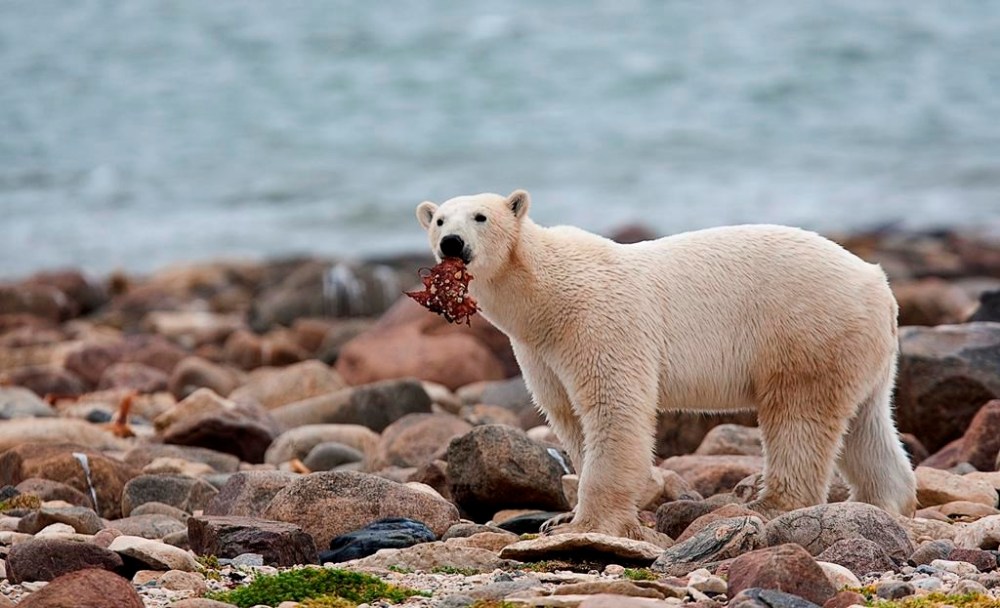
Other bears go into a stage of semi-hibernation, don’t do much, but they also shed the pounds, so either way doesn’t work, said study lead author Anthony Pagano, a U.S. Geological Survey wildlife biologist.
Researchers found that 19 of the 20 bears studied dropped an average of 47 pounds (21 kilograms) over three weeks of being studied in research that monitored their calorie intake, energy use and respiration in the wild. That’s losing about 7% of their body mass on average in just 21 days, the study concluded.
Polar bears try to keep up their weight in the summer after a spring when they feast and fatten prodigiously. In the area of the Hudson Bay where researchers studied, lack of sea ice has meant polar bears are on land three weeks longer than in the 1980s, Pagano said.
Usually polar bears eat high-fat seals while based on sea ice, near where the seals are. It’s especially good hunting in the spring when seal pups are weaning and easy pickings for polar bears before they learn to swim away from the ice base, Pagano said.
Last September, when Arctic sea ice hit its annual low in September, there was about 1 million square miles (2.6 million square kilometers) less of sea ice than the same time in 1979, according to the National Snow and Ice Data Center. The United States Fish and Wildlife Service lists polar bears as a threatened species “due to the loss of its sea ice habitat.”
“This paper clearly shows that polar bears cannot adapt to the pace of change in the Arctic and that the bears are already using everything they have to stay alive,” said University of Alberta biologist Andrew Derocher, who wasn’t part of the research, but called it profoundly elegant and insightful.
“This is concerning because of course it really does raise the question of when will the individual bears run out of energy,” Derocher said. While research shows that some of the bears will be OK, “other bears were basically right on the edge of where they would potentially suffer from starvation and subsequent death.”
Overall, it shows that it’s unlikely polar bears can adapt to living on land, Derocher said.
When polar bears have sea ice, they feast on seals. Not just the seals, but their fat. About 70% of the polar bear diet while on ice is fat, said study co-author Karyn Rode, a USGS wildlife biologist.
“They have the highest fat content diet of any species in the world,” Rode said.
University of Washington biologist Kristin Laidre, who wasn’t part of the study team, said, “polar bears need sea ice to feed — this is how they access their primary prey (ice seals). They evolved from grizzly bears to live on a marine diet of fat and they have a remarkable ability to consume and digest lipids.”
To figure out what happens on land, the joint U.S.-Canada team of biologists put video on the bears’ collars, fed bears a type of water that allowed their calorie intake and expenditures to be tracked and returned them to the wild to watch.
The bears’ hunt for food was impressive. All but one of them ate grass and kelp, 10 of them feasted on berries, eight of them chomped on bird carcasses, a third of them chewed on bones and four of them ate caribou antlers, with bird eggs, a rodent and a rabbit also consumed.
But the bears had to expend a lot of energy in their efforts to fill their bellies. On average they travelled 58 miles (93 kilometers) with one young female putting in 233 miles (375 miles) in three weeks.
“This paper adds to a growing body of evidence that polar bears cannot sustain themselves on land as we continue to lose sea ice due to climate warming,” said Laidre, who chairs the polar bear specialist group for the International Union for Conservation of Nature, the international organization that monitors endangered species status.
___
Associated Press journalist Stephanie Windeler contributed from London.
___
Read more of AP’s climate coverage at http://www.apnews.com/climate-and-environment
___
Follow Seth Borenstein on X at @borenbears
___
The Associated Press’ climate and environmental coverage receives financial support from multiple private foundations. AP is solely responsible for all content. Find AP’s standards for working with philanthropies, a list of supporters and funded coverage areas at AP.org.