Biden orders US investigation of national security risks posed by Chinese-made ‘smart cars’
Advertisement
Read this article for free:
or
Already have an account? Log in here »
To continue reading, please subscribe:

Digital Subscription
One year of digital access for only $205*
- Enjoy unlimited reading on winnipegfreepress.com
- Read the E-Edition, our digital replica newspaper
- Access News Break, our award-winning app
- Play interactive puzzles
*First annual payment billed as $205.00 + GST for one year. This annual subscription will automatically renew at $233.00 + GST every 52 weeks (10% off the regular annual price of $259.35). Offer available to new and qualified returning subscribers only. Cancel any time.
To continue reading, please subscribe:
Add Free Press access to your Brandon Sun subscription for only an additional
$1 for the first 4 weeks*
- Enjoy unlimited reading on winnipegfreepress.com
- Read the E-Edition, our digital replica newspaper
- Access News Break, our award-winning app
- Play interactive puzzles
*Your next Brandon Sun subscription payment will increase by $1.00 and you will be charged $17.95 plus GST for four weeks. After four weeks, your payment will increase to $24.95 plus GST every four weeks.
Read unlimited articles for free today:
or
Already have an account? Log in here »
Hey there, time traveller!
This article was published 29/02/2024 (929 days ago), so information in it may no longer be current.
WASHINGTON (AP) — Citing potential national security risks, the Biden administration says it will investigate Chinese-made “smart cars” that can gather sensitive information about Americans driving them.
The probe could lead to new regulations aimed at preventing China from using sophisticated technology in electric vehicles and other so-called connected vehicles to track drivers and their personal information. Officials are concerned that features such as driver assistance technology could be used to effectively spy on Americans.
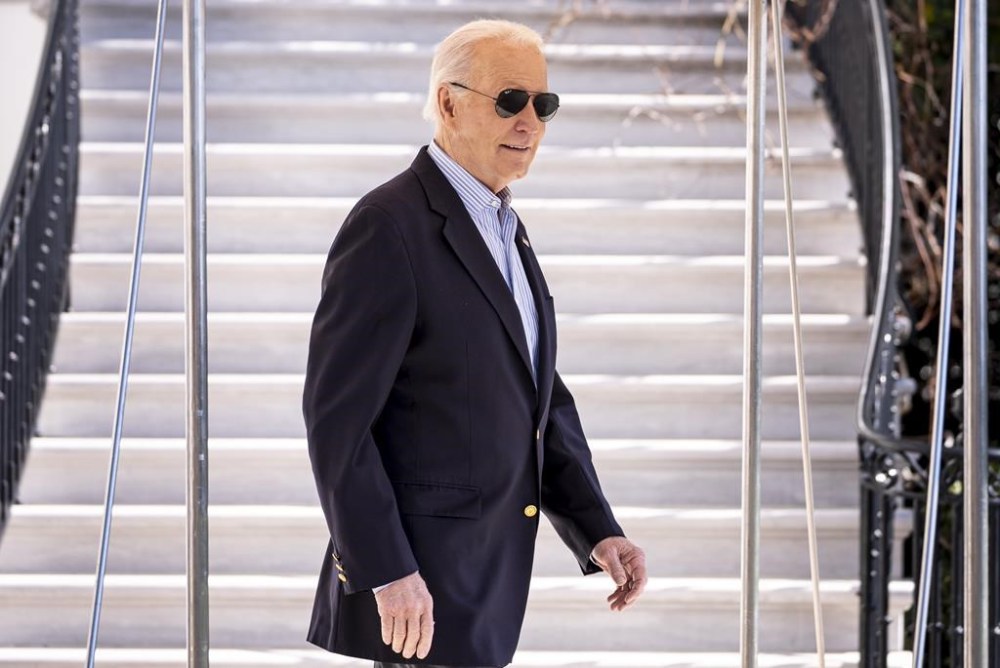
While the action stops short of a ban on Chinese imports, President Joe Biden said he is taking unprecedented steps to safeguard Americans’ data.

“China is determined to dominate the future of the auto market, including by using unfair practices,” Biden said in a statement Thursday. “China’s policies could flood our market with its vehicles, posing risks to our national security. I’m not going to let that happen on my watch.”
The probe is the latest action by the Biden administration to guard against what officials see as the growing threat of Chinese cyberattacks. Biden signed an executive order this week aimed at better protecting Americans’ personal data such as health and finance records from foreign adversaries like China and Russia.
Biden and other officials noted that China has imposed wide-ranging restrictions on American autos and other foreign vehicles.
Commerce Secretary Gina Raimondo said connected cars “are like smartphones on wheels” and pose a serious national security risk.
“These vehicles are connected to the internet. They collect huge amounts of sensitive data on the drivers — personal information, biometric information, where the car goes,” she told reporters late Wednesday. “So it doesn’t take a lot of imagination to figure out how a foreign adversary like China, with access to this sort of information at scale, could pose a serious risk to our national security and the privacy of U.S. citizens.”
Data collection is not the only concern, she and other officials said. Connected vehicles could also be remotely enabled or manipulated by bad actors.
“Imagine if there were thousands or hundreds of thousands of Chinese-connected vehicles on American roads that could be immediately and simultaneously disabled by somebody in Beijing,” Raimondo said. “So it’s scary to contemplate the cyber risks, espionage risks that these pose.”
A spokesperson for China’s Foreign Ministry said Thursday that Biden’s order limiting access to Americans’ personal data “overstretches the concept of national security.” Biden’s actions “are discriminatory practices clearly targeted at certain countries,” spokesperson Mao Ning said.
Few Chinese cars are currently imported to the United States, in part because of steep tariffs the U.S. imposes on vehicles imported from China. Still, officials are concerned tariffs are not sufficient to address the problem. Some Chinese companies seek to avoid U.S. tariffs by setting up assembly plants in nearby countries such as Mexico.
Under a plan announced Thursday, the Commerce Department is issuing notice of a proposed rulemaking that will launch an investigation into national security risks posed by “connected vehicles” from China and other countries considered hostile to the United States.
Commerce will seek information from the auto industry and the public on the nature of the risks and potential steps to mitigate them, the White House said. Officials will then develop potential regulations to govern the use of technology in vehicles from China and other “countries of concern,” including Russia and Iran.
“We’re doing it now, before Chinese manufactured vehicles become widespread in the United States and potentially threaten our privacy and our national security,” Raimondo said.
The investigation is the first action taken by the Commerce Department’s Bureau of Industry and Security under executive orders Biden issued to protect domestic information and communications technology from national security threats.
Electric vehicles and other cars increasingly rely on advanced technologies to enable navigational tools, provide driver-assist features and reduce operating costs and carbon emissions through fast charging, the White House said. The cars are constantly connecting with personal devices, other cars, U.S. infrastructure and their original manufacturer, posing national security risks, the White House said.
New vulnerabilities and threats “could arise with connected autos if a foreign government gained access to these vehicles’ systems or data,” the White House said.
High tariffs imposed by the Trump administration and continued by Biden have effectively deterred Chinese automakers from entering the U.S. market, but U.S. officials and industry leaders worry that Chinese companies might choose to absorb the additional costs as China leans more heavily on exports. Chinese car makers are looking to build more vehicles overseas, with EV giant BYD announcing plans last year for its first European plant.
Ford CEO Jim Farley has said his company and others will have trouble competing on EVs with Chinese automakers, who have gone from no EV market share in Europe two years ago to about 10% now.
The Alliance for Automotive Innovation, which represents Ford, General Motors, Toyota and other major automakers, said it supports Biden’s goal to protect the safety of the traveling public.
In a statement, the group urged Commerce to work closely with the auto industry to determine the scope of any action so it targets transactions that pose undue risk to U.S. economic and national security. At the same time, U.S. regulators must not impede “low-risk transactions” that advance “safety technologies essential to vehicles on the road today,” the group said, warning that such actions “could have unintended near-term impacts.”

The Alliance for American Manufacturing, another industry group, said it agreed that “data security of connected vehicles is an issue critical to national security, especially when manufactured by companies based in China.”
The group hopes the investigation “swiftly leads to decisive action,” said Scott Paul, the group’s president. “We also believe more will need to be done to stem the threat of Chinese autos to our national and economic security,” including higher tariffs and limiting EV tax credits.
The European Union, concerned about rising imports from China, opened a trade investigation last year into Chinese subsidies for electric vehicles. The investigation is ongoing.
___
Associated Press writers Josh Boak in Washington and Tom Krisher in Detroit contributed to this story.