Deepsea eruption expected off Vancouver Island after 200 earthquakes in an hour

Advertisement

Advertise with us

An eruption of magma under the Pacific Ocean floor far off Vancouver Island will be so hot the water will fizz but only scientists will notice.

Read this article for free:


or

Already have an account? Log in here »

To continue reading, please subscribe:

Subscribe and receive a limited-edition Free Press branded hat or tote.

Digital Subscription

One year of digital access for only $205*

  • Enjoy unlimited reading on winnipegfreepress.com
  • Read the E-Edition, our digital replica newspaper
  • Access News Break, our award-winning app
  • Play interactive puzzles

*First annual payment billed as $205.00 + GST for one year. This annual subscription will automatically renew at $233.00 + GST every 52 weeks (10% off the regular annual price of $259.35). Offer available to new and qualified returning subscribers only. Cancel any time.

To continue reading, please subscribe:

Add Free Press access to your Brandon Sun subscription for only an additional

$1 for the first 4 weeks*

  • Enjoy unlimited reading on winnipegfreepress.com
  • Read the E-Edition, our digital replica newspaper
  • Access News Break, our award-winning app
  • Play interactive puzzles
Start now

*Your next Brandon Sun subscription payment will increase by $1.00 and you will be charged $17.95 plus GST for four weeks. After four weeks, your payment will increase to $24.95 plus GST every four weeks.

Hey there, time traveller!
This article was published 11/03/2024 (930 days ago), so information in it may no longer be current.

An eruption of magma under the Pacific Ocean floor far off Vancouver Island will be so hot the water will fizz but only scientists will notice.

Scientists with Ocean Networks Canada are predicting an eruption is coming anywhere from a few weeks to a few years from now after they detected up to 200 small earthquakes per hour in the area last week.

They say the expected rupture – about five kilometres deep and 260 kilometres off the coast of Tofino, on the west coast of Vancouver Island – will be too distant and small to be cause for concern.
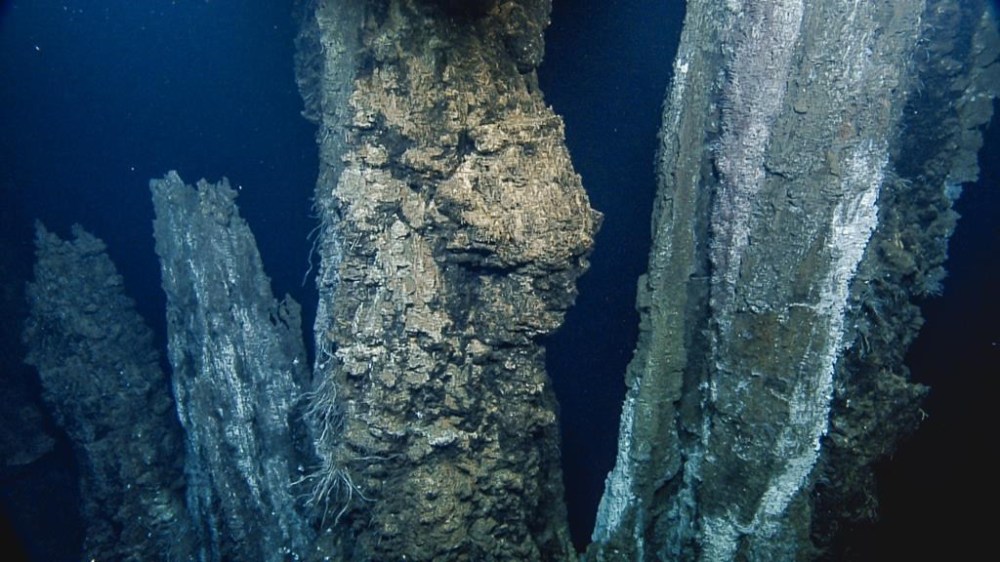
An image of the sea floor at the Endeavour segment of the Juan de Fuca Ridge is shown in a handout photo. Scientists say they recorded 200 earthquakes in an hour on the sea floor 260 kilometres off the coast of Tofino, B.C., suggesting it will erupt. THE CANADIAN PRESS/HO-Ocean Network Canada/Ocean Exploration Trust **MANDATORY CREDIT**

However, it offers a unique opportunity to learn more about how the Earth’s crust is formed.

Martin Scherwath, a senior scientist with the organization, said it will be the first chance for the phenomenon to be captured by the network’s underwater instruments.

The Neptune observatory has been collecting data from the site since equipment was first installed in 2009.

“So, this is the first time where a cable network observatory (has been) there all the time, and we actually have a chance to realize what’s happening,” Scherwath said.

He said the Earth’s crust doesn’t build slowly over time, but rather develops through this type of burst of cooled magma that was last recorded about 20 years ago.

“There will be a major spreading event, and we want to know exactly how much is it spreading, how much new ocean crust it is generating, (and) how fast,” he said.

Ocean Networks Canada says the observatory has seen increased earthquake activity in the area known as the Endeavour segment of the Juan de Fuca Ridge for years, but that peaked on March 6, when it recorded the highest level of earthquake activity in nearly two decades.

“What happened last week was just really outstanding in comparison (with) the gradual increase that we have seen,” Scherwath said.

“So, there might have been a few a day on average, but 200 is an outstanding number.”

During the last eruption 20 years ago, scientists only had seismometers on the ocean floor to collect information about the earthquakes.

This time, data will be collected in almost real time and include additional equipment to measure temperature changes, or any sound from lava breaching the sea floor.

The magma is estimated to be about 800 degrees Celsius but will cool rapidly when it hits the ocean water.

Scherwath said “almost fluid, runny rock” will come out of the sea floor, solidify and quickly turn black, while the heat causes the water around it to fizz.

He said he and fellow geophysicists will be watching to see how much of the Earth’s crust is formed with one eruption, while biologists will be most interested in how animals respond to any changes.

This report by The Canadian Press was first published March 11, 2024.

Report Error Submit a Tip

More Stories

Positive anticipation is growing about major housing developments underway in Winnipeg’s downtown

Gabrielle Piché 10 minute read Preview

Positive anticipation is growing about major housing developments underway in Winnipeg’s downtown

Gabrielle Piché 10 minute read Friday, Sep. 25, 2026

If traffic is light and the wind is down, Somia Sadiq is able to hear the roar of Winnipeg Jets fans twice: first through her window, then on TV.

From her apartment view high above downtown, she can look out at Graham Avenue’s painted pedestrian landscape, see construction cranes and hear the heavy equipment at work as massive housing projects take shape at The Forks, at what used to be Portage Place shopping centre and at the former Hudson’s Bay building.

Sadiq has lived at 300 Main for 2 1/2 years, a few steps from the city’s famous, windy and reopened-to-pedestrians Portage Avenue intersection. At 42 storeys, it’s the tallest building in Winnipeg.

She is among 18,000 downtown residents who will soon be joined by thousands of others attracted to the city’s core by the new wave of major construction projects.

Read
Friday, Sep. 25, 2026

Time for the PUB to review Winnipeg water rates

Editorial 4 minute read Preview

Time for the PUB to review Winnipeg water rates

Editorial 4 minute read Yesterday at 2:01 AM CDT

We take you now to just over a month ago, to the Public Utilities Board and its decision about water and sewer rates for Russell, Binscarth, Angusville, Rossburn and Gambler First Nation.

Why? Just wait.

The area is supplied with water and sewage services by the Russell-Binscarth Water and Wastewater Utility, which has a total of 1,014 customers.

As the PUB noted in an Aug. 27, 2026 order on the utility’s rates, “The [water treatment plant] gets water from two groundwater wells that were upgraded in 2016 and the raw water main was installed in 1984. The water distribution system is primarily cast iron pipe. The raw water line will need to be upgraded in the near future to keep up with demand.”

Read
Yesterday at 2:01 AM CDT

Bison kicker Turner named captain, shows she belongs

Joshua Frey-Sam 8 minute read Preview

Bison kicker Turner named captain, shows she belongs

Joshua Frey-Sam 8 minute read Yesterday at 11:17 PM CDT

Even on nights like this, Maya Turner can appreciate how far she’s come.

Though it feels like yesterday that the Manitoba Bisons kicker arrived on the scene with an unheralded right leg and a point to prove, these days the fifth-year student-athlete is lining up to split the uprights with a veteran boot and the added responsibility of being a team captain.

Getting to this point wasn’t easy, though.

It’s now four years ago that Turner ditched her NCAA Division 1 soccer career at Loyola University in Chicago to kick a different ball on the gridiron and signed with the Bisons, who were one of more than one hundred programs across North America that she sent tape to in hopes of realizing a new dream.

Read
Yesterday at 11:17 PM CDT

Special teams woes hurt Bombers in loss to Argos

Ken Wiebe 7 minute read Preview

Special teams woes hurt Bombers in loss to Argos

Ken Wiebe 7 minute read Yesterday at 8:06 PM CDT

They’ve been the most consistent of the three phases in the Winnipeg Blue Bombers arsenal this season.

A port in the proverbial storm, throughout this topsy-turvy campaign of ups-and-downs, the special-teams units have been supplying strength to a group that is still searching for consistency with only four games left in the regular season.

That’s what made this momentary lapse so costly in a 30-28 loss to the Toronto Argonauts on Friday at Princess Auto Stadium.

“We didn’t keep up our end of the bargain. And that hurts our football team, hurts our chances of winning games,” said Blue Bombers special teams ace Tanner Cadwallader. “And if we want to win close games. we’ve got to be a whole lot better than that. And we will. We’re going to come in (on Saturday for the film session) and go through it with a fine-tooth comb and just work a little bit harder.”

Read
Yesterday at 8:06 PM CDT

‘In Normandy, we remember’

Aaron Epp 4 minute read Preview

‘In Normandy, we remember’

Aaron Epp 4 minute read Yesterday at 6:23 PM CDT

Travelling nearly 7,000 km from his home in France to Winnipeg gave Gabriel Zaranski a new perspective on warfare.

“It’s very different to speak about war in school (than) to speak with real people who (have fought) in a war,” he said. “We can feel the emotion when they speak … The testimony has more impact when it’s real soldiers.”

Zaranski is one of 14 Grade 12 students from Bayeux, a town in France’s Normandy region, in Winnipeg this week for a learning tour.

The students, who attend Lycée Arcisse de Caumont high school, met on Saturday with veterans from the Queen’s Own Cameron Highlanders of Canada, a local military regiment, to discuss their studies and the regiment’s role in the Second World War.

Read
Yesterday at 6:23 PM CDT

Restaurants ‘under pressure’

Gabrielle Piché 5 minute read Preview

Restaurants ‘under pressure’

Gabrielle Piché 5 minute read Friday, Sep. 25, 2026

Happy hour outings are on Jackie Piggott’s calendar — but even those are fewer.

She and her husband might visit a restaurant once a month. It’s a change over the past year: earlier, they may go twice, thrice or weekly.

“It’s something that we’ve talked about, my husband and myself, just because the pricing is so expensive,” Piggott said, stopping during a grocery run in St. Vital. “It’s also better for our health.”

She’s in the majority: a new Restaurants Canada report found 80 per cent of Canadians are eating out less frequently because of higher living costs, up from 75 per cent in 2025.

Read
Friday, Sep. 25, 2026