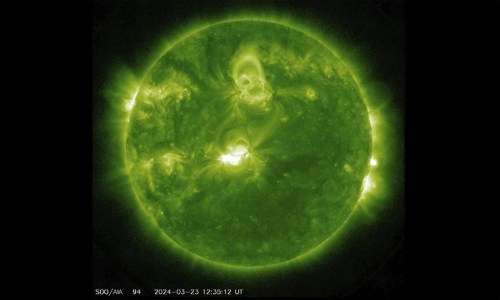
Geomagnetic storm from a solar flare could disrupt radio communications and create a striking aurora
Advertisement
Read this article for free:
or
Already have an account? Log in here »
To continue reading, please subscribe:

Digital Subscription
One year of digital access for only $205*
- Enjoy unlimited reading on winnipegfreepress.com
- Read the E-Edition, our digital replica newspaper
- Access News Break, our award-winning app
- Play interactive puzzles
*First annual payment billed as $205.00 + GST for one year. This annual subscription will automatically renew at $233.00 + GST every 52 weeks (10% off the regular annual price of $259.35). Offer available to new and qualified returning subscribers only. Cancel any time.
To continue reading, please subscribe:
Add Free Press access to your Brandon Sun subscription for only an additional
$1 for the first 4 weeks*
- Enjoy unlimited reading on winnipegfreepress.com
- Read the E-Edition, our digital replica newspaper
- Access News Break, our award-winning app
- Play interactive puzzles
*Your next Brandon Sun subscription payment will increase by $1.00 and you will be charged $17.95 plus GST for four weeks. After four weeks, your payment will increase to $24.95 plus GST every four weeks.
Read unlimited articles for free today:
or
Already have an account? Log in here »
Hey there, time traveller!
This article was published 24/03/2024 (906 days ago), so information in it may no longer be current.
BOULDER, Colo. (AP) — Space weather forecasters have issued a geomagnetic storm watch through Monday, saying an ouburst of plasma from a solar flare could interfere with radio transmissions on Earth. It could also make for great aurora viewing.
There’s no reason for the public to be concerned, according to the alert issued Saturday by NOAA’s Space Weather Prediction Center in Boulder, Colorado.
The storm could interrupt high-frequency radio transmissions, such as by aircraft trying to communicate with distant traffic control towers. Most commercial aircraft can use satellite transmission as backup, said Jonathan Lash, a forecaster at the center.
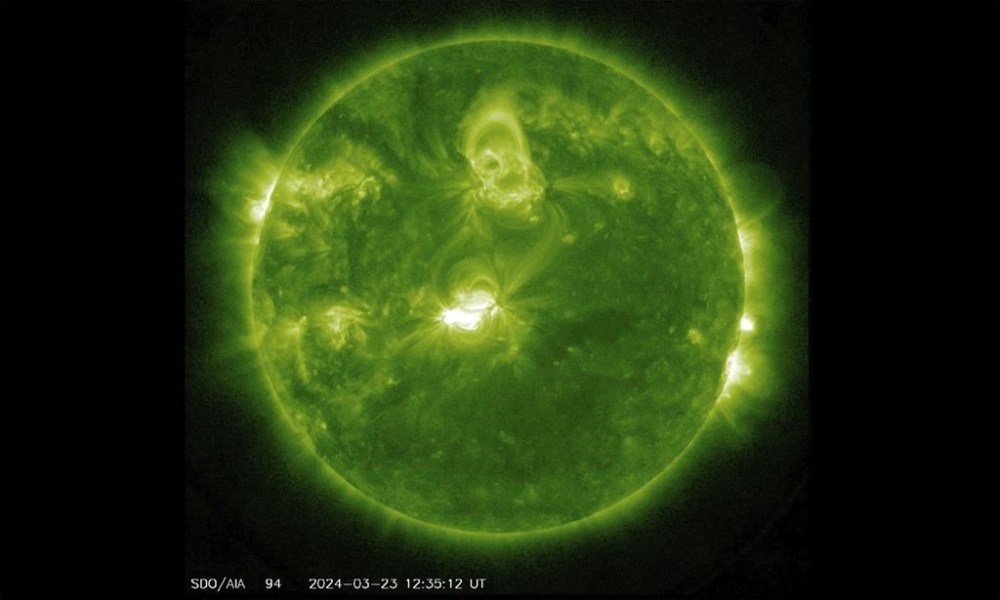
Satellite operators might have trouble tracking their spacecraft, and power grids could also see some “induced current” in their lines, though nothing they can’t handle, he said.
“For the general public, if you have clear skies at night and you are at higher latitudes, this would be a great opportunity to see the skies light up,” Lash said.
Every 11 years, the sun’s magnetic field flips, meaning its north and south poles switch positions. Solar activity changes during that cycle, and it’s now near its most active, called the solar maximum.
During such times, geomagnetic storms of the type that arrived Sunday can hit Earth a few times a year, Lash said. During solar minimum, a few years may pass between storms.
In December, the biggest solar flare in years disrupted radio communications.