Russian Soyuz spacecraft with 3 astronauts docks at the International Space Station
Advertisement
Read this article for free:
or
Already have an account? Log in here »
To continue reading, please subscribe:

Digital Subscription
One year of digital access for only $205*
- Enjoy unlimited reading on winnipegfreepress.com
- Read the E-Edition, our digital replica newspaper
- Access News Break, our award-winning app
- Play interactive puzzles
*First annual payment billed as $205.00 + GST for one year. This annual subscription will automatically renew at $233.00 + GST every 52 weeks (10% off the regular annual price of $259.35). Offer available to new and qualified returning subscribers only. Cancel any time.
To continue reading, please subscribe:
Add Free Press access to your Brandon Sun subscription for only an additional
$1 for the first 4 weeks*
- Enjoy unlimited reading on winnipegfreepress.com
- Read the E-Edition, our digital replica newspaper
- Access News Break, our award-winning app
- Play interactive puzzles
*Your next Brandon Sun subscription payment will increase by $1.00 and you will be charged $17.95 plus GST for four weeks. After four weeks, your payment will increase to $24.95 plus GST every four weeks.
Read unlimited articles for free today:
or
Already have an account? Log in here »
Hey there, time traveller!
This article was published 25/03/2024 (926 days ago), so information in it may no longer be current.
MOSCOW (AP) — A Russian spacecraft with three astronauts successfully docked Monday at the International Space Station.
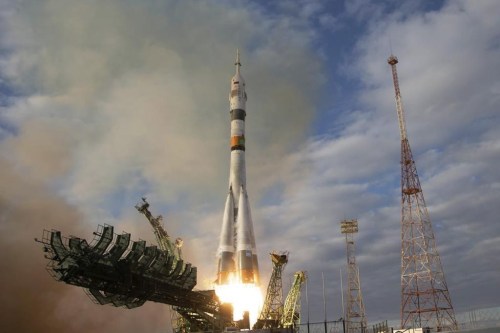
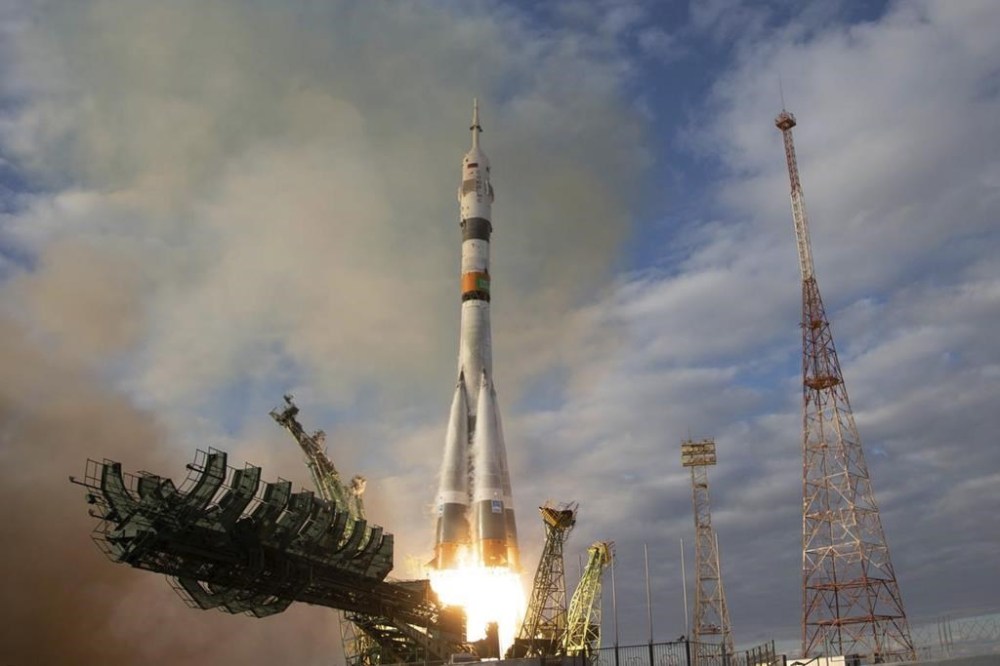
The Soyuz MS-25 spacecraft carrying NASA astronaut Tracy Dyson, Russian Oleg Novitsky and Marina Vasilevskaya of Belarus reached the space outpost after Saturday’s blastoff from the Russian-leased Baikonur launch facility in Kazakhstan that followed an aborted launch attempt two days earlier.
Thursday’s attempted launch was halted by an automatic safety system about 20 seconds before the scheduled liftoff. Roscosmos and NASA said the crew wasn’t in danger during the aborted launch.
The head of the Russian space agency, Yuri Borisov, said the launch abort was triggered by a voltage drop in a power source.
The three astronauts join the station’s crew consisting of NASA astronauts Loral O’Hara, Matthew Dominick, Mike Barratt, and Jeanette Epps, as well as Russians Oleg Kononenko, Nikolai Chub, and Alexander Grebenkin.
Dyson is on her third trip to the orbital complex, where she is set to spend six months before returning to Earth in September with Kononenko and Chub, who will complete a year-long mission on the space lab.

Novitsky, who is making his fourth flight to the orbiting outpost, and Vasilevskaya, on her first space mission as her country’s first astronaut, will spend 12 days on the station and will return to Earth along with O’Hara.
The space station, which has served as a symbol of post-Cold War international cooperation, is now one of the last remaining areas of collaboration between Russia and the West amid tensions over Moscow’s military action in Ukraine. NASA and its partners hope to continue operating the orbiting outpost until 2030.