Debate emerges over whether modern protections could have saved Baltimore bridge
Advertisement
Read this article for free:
or
Already have an account? Log in here »
To continue reading, please subscribe:

Digital Subscription
One year of digital access for only $205*
- Enjoy unlimited reading on winnipegfreepress.com
- Read the E-Edition, our digital replica newspaper
- Access News Break, our award-winning app
- Play interactive puzzles
*First annual payment billed as $205.00 + GST for one year. This annual subscription will automatically renew at $233.00 + GST every 52 weeks (10% off the regular annual price of $259.35). Offer available to new and qualified returning subscribers only. Cancel any time.
To continue reading, please subscribe:
Add Free Press access to your Brandon Sun subscription for only an additional
$1 for the first 4 weeks*
- Enjoy unlimited reading on winnipegfreepress.com
- Read the E-Edition, our digital replica newspaper
- Access News Break, our award-winning app
- Play interactive puzzles
*Your next Brandon Sun subscription payment will increase by $1.00 and you will be charged $17.95 plus GST for four weeks. After four weeks, your payment will increase to $24.95 plus GST every four weeks.
Read unlimited articles for free today:
or
Already have an account? Log in here »
Hey there, time traveller!
This article was published 27/03/2024 (921 days ago), so information in it may no longer be current.
When a 900-foot container ship struck the San Francisco–Oakland Bay Bridge in 2007, the span stood firm and no one died, either on the ship or the highway above.
The bridge’s supports were protected by a fendering system of concrete and other materials that was installed to absorb such strikes. And it’s now prompting the question: Could such a system — or others like it — have saved Baltimore’s Francis Scott Key Bridge?
Some experts are saying yes.
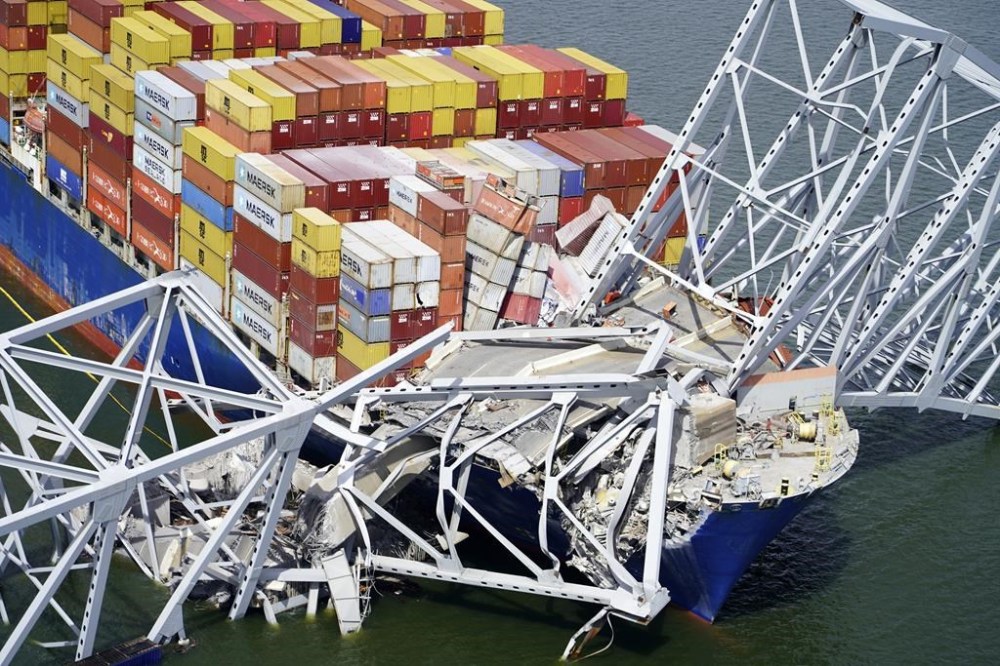
Sherif El-Tawil, a University of Michigan engineering professor, said there are several safety measures that “would have made a huge difference” had they been in place Tuesday morning when a cargo ship plowed into the bridge and caused its collapse.
El-Tawil said a fendering system may have softened the 985-foot-long ship’s blow. Pilings anchored to the river bottom, known as dolphins, are another measure that could have helped to deflect the container ship Dali. And yet another potential protection would have been islands of rocks or concrete around the bridge’s supports.
“It may seem like a very large force,” El-Tawil said of the massive cargo ship. “But I think you can design around it, either through a protective system or by designing the bridge itself to have massive towers.”
Such protections have become a focal point in the wake of the tragedy, which claimed the lives of six construction workers. Experts say the 47-year-old Key Bridge did not appear to have the protections that are common among newer spans.
The incident is raising questions about how much money American taxpayers are willing to spend to protect against these rare but deadly catastrophes. And not everyone agrees the Key Bridge could have been saved.
“There’s a lot of debate taking place among the engineering community about whether any of those features could have had any role in a situation like this,” U.S. Transportation Secretary Pete Buttigieg said Wednesday at a White House briefing.
“It’s difficult to overstate the impact of this collision we’re talking about,” Buttigieg said. “It’s not just as big as a building, it’s really as big as a block —- 100,000 tons all going into this pier all at once.”
Buttigieg did not directly answer a question about whether steps should be taken to protect the nation’s bridges. But the secretary noted that many bridges have been designed to better protect against collisions since a freighter struck Florida’s Sunshine Skyway Bridge in 1980, killing 35 people.
Baltimore’s Key Bridge opened three years before that disaster in 1977, a time when cargo ships were much smaller in size. In recent years, vessels have grown to carry more containers to save on shipping costs. Ports in Georgia and South Carolina have dredged deeper channels to accommodate them, while part of a bridge was elevated to allow bigger ships to reach New York City-area ports.
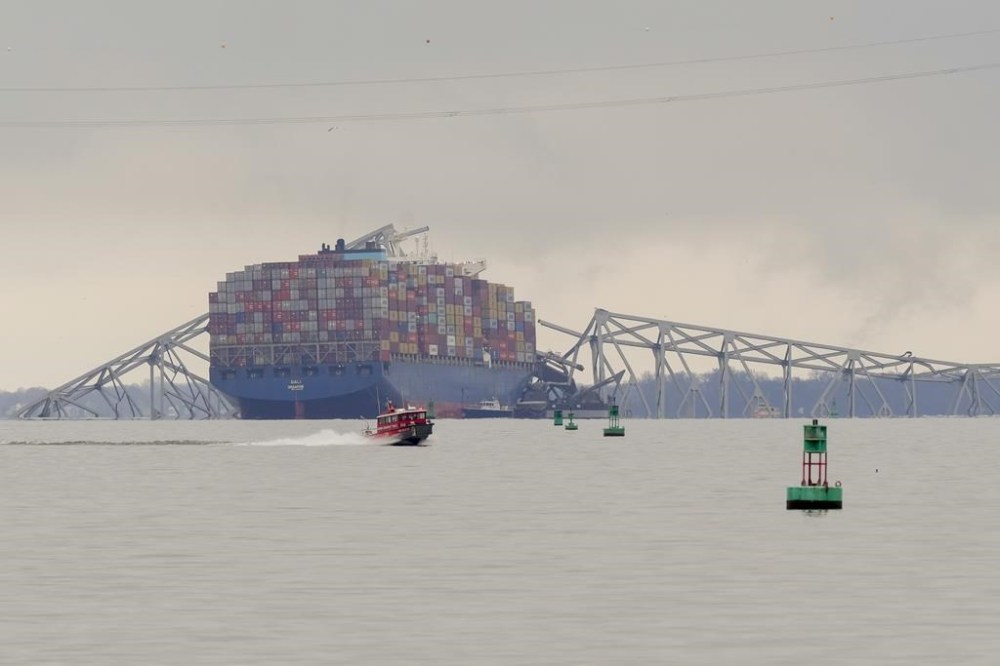
The Skyway Bridge disaster in Tampa prompted a paradigm shift in design in the early 1980s, said Mark Luther, a University of South Florida oceanography professor and director of the USF Center for Maritime and Port Studies.

The new Skyway Bridge was built with rock islands around its main supports and large cylindrical piers on either side of those islands to make it “very difficult for a vessel to strike any part of the bridge and knock it down,” Luther said.
“To go back and retrofit a bridge like the Key Bridge with these features would be extremely expensive,” Luther said. “And to my knowledge nobody’s done it. (They’ve) just had to accept what risk there is with the construction that was state-of-the art in the ’70s.”
Roberto Leon, a Virginia Tech engineering professor, said the technology exists to protect a bridge against a collision with a massive cargo ship like the Dali.
But he cautioned that governments will always be weighing the costs and the risks. And the protections put in place don’t always match up to the size of the disaster, even if the Key bridge was retrofitted with modern safety measures.
“This was an enormous load,” he said of the ship that struck the Key Bridge. “If the protection system had been designed for that load. I think it would have protected the bridge. But a big question is: Would you design it for such an enormous load? Because as the load increases, it becomes much more expensive.”