Your morning coffee may be more than a half million years old

Advertisement

Advertise with us

That coffee you slurped this morning? It’s 600,000 years old.

Read this article for free:


or

Already have an account? Log in here »

To continue reading, please subscribe:

Subscribe and receive a limited-edition Free Press branded hat or tote.

Digital Subscription

One year of digital access for only $205*

  • Enjoy unlimited reading on winnipegfreepress.com
  • Read the E-Edition, our digital replica newspaper
  • Access News Break, our award-winning app
  • Play interactive puzzles

*First annual payment billed as $205.00 + GST for one year. This annual subscription will automatically renew at $233.00 + GST every 52 weeks (10% off the regular annual price of $259.35). Offer available to new and qualified returning subscribers only. Cancel any time.

To continue reading, please subscribe:

Add Free Press access to your Brandon Sun subscription for only an additional

$1 for the first 4 weeks*

  • Enjoy unlimited reading on winnipegfreepress.com
  • Read the E-Edition, our digital replica newspaper
  • Access News Break, our award-winning app
  • Play interactive puzzles
Start now

*Your next Brandon Sun subscription payment will increase by $1.00 and you will be charged $17.95 plus GST for four weeks. After four weeks, your payment will increase to $24.95 plus GST every four weeks.

Hey there, time traveller!
This article was published 15/04/2024 (900 days ago), so information in it may no longer be current.

That coffee you slurped this morning? It’s 600,000 years old.

Using genes from coffee plants around the world, researchers built a family tree for the world’s most popular type of coffee, known to scientists as Coffea arabica and to coffee lovers simply as “arabica.”

The researchers, hoping to learn more about the plants to better protect them from pests and climate change, found that the species emerged around 600,000 years ago through natural crossbreeding of two other coffee species.
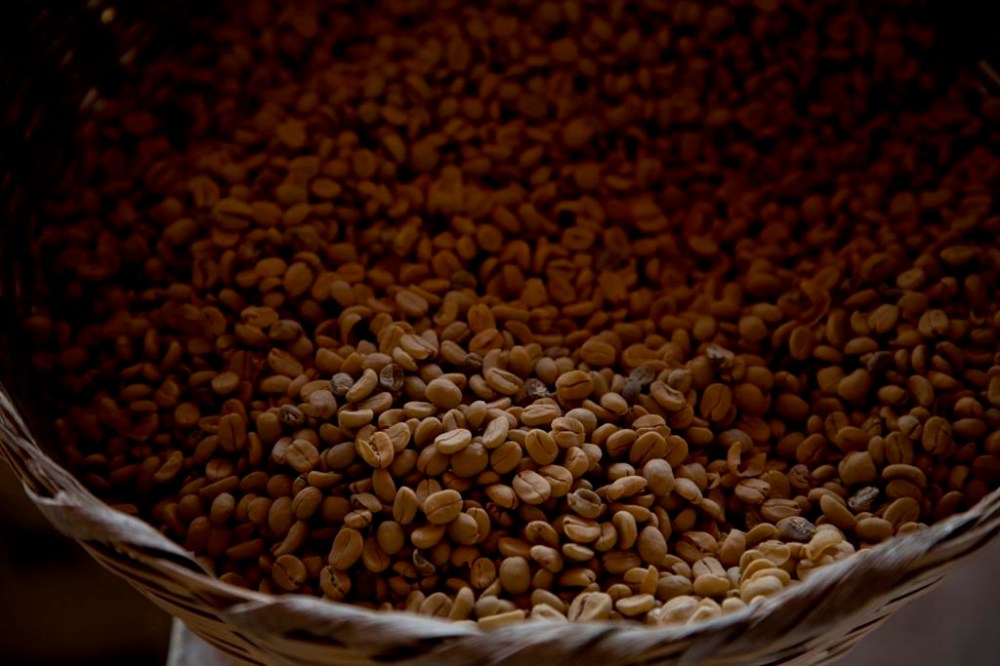
FILE - Arabica coffee beans harvested the previous year are stored at a coffee plantation in Ciudad Vieja, Guatemala, on May 22, 2014. In a study published in the journal Nature Genetics on Monday, April 15, 2024, researchers estimate that Coffea arabica came to be from natural crossbreeding of two other coffee species over 600,000 years ago. (AP Photo/Moises Castillo, File)

“In other words, prior to any intervention from man,” said Victor Albert, a biologist at the University at Buffalo who co-led the study.

These wild coffee plants originated in Ethiopia but are thought to have been first roasted and brewed primarily in Yemen starting in the 1400s. In the 1600s, Indian monk Baba Budan is fabled to have smuggled seven raw coffee beans back to his homeland from Yemen, laying the foundation for coffee’s global takeover.

Arabica coffee, prized for its smooth and relatively sweet flavor, now makes up 60% – 70% of the global coffee market and is brewed by brands such as Starbucks, Tim Horton’s and Dunkin’. The rest is robusta, a stronger and more bitter coffee made from one of arabica’s parents, Coffea canephora.

To piece together arabica coffee’s past, researchers studied genomes of C. canephora, another parent called Coffea eugenioides, and more than 30 different arabica plants, including a sample from the 1700s — courtesy of the Natural History Museum in London — that Swedish naturalist Carl Linnaeus used to name the plant.

The study was published Monday in the journal Nature Genetics. Researchers from Nestlé, which owns several coffee brands, contributed to the study.

The arabica plant’s population fluctuated over thousands of years before humans began cultivating it, flourishing during warm, wet periods and suffering through dry ones. These lean times created so-called population bottlenecks, when only a small number of genetically similar plants survived.

Today, that renders arabica coffee plants more vulnerable to diseases like coffee leaf rust, which cause billions of dollars in losses every year. The researchers explored the makeup of one arabica variety that is resistant to coffee leaf rust, highlighting sections of its genetic code that could help protect the plant.

The study clarifies how arabica came to be and spotlights clues that could help safeguard the crop, said Fabian Echeverria, an adviser for the Center for Coffee Research and Education at Texas A&M University who was not involved with the research.

Exploring arabica’s past and present could yield insight into keeping coffee plants healthy – and coffee cups full – for future early mornings.

___

The Associated Press Health and Science Department receives support from the Howard Hughes Medical Institute’s Science and Educational Media Group. The AP is solely responsible for all content.

Report Error Submit a Tip

More Stories

Netminder no stranger to heavy workload as Jets new No. 1 readies for regular-season start

Ken Wiebe 7 minute read Preview

Netminder no stranger to heavy workload as Jets new No. 1 readies for regular-season start

Ken Wiebe 7 minute read Yesterday at 2:42 PM CDT

Stuart Skinner is quick to admit that he wasn’t always wired this way.

As the Winnipeg Jets new starting goalie prepares for his fifth NHL season, Skinner conceded that the accountability aspect that is now synonymous with his character took some time to build up.

“As I grew up and got older, you go through certain things in life that either build character or make things worse for you. It depends on your choice and your decision,” Skinner said during a recent conversation with the Free Press. “I learned it through trial and error. I learned that, sometimes, it’s hard to get honest with yourself… For me, it’s definitely been a road for me to get to a place like this.

“It definitely is one of my pillars. Accountability is so important because that brings you into a spot of what you’re going to do next. It’s easy to let yourself off the hook. I’m more in the business of putting myself on the hook.”

Read
Yesterday at 2:42 PM CDT

Around the NSL: Silano’s spectacular strike; Rapid treading water; Post-season posturing

Grace Anne Paizen 5 minute read Preview

Around the NSL: Silano’s spectacular strike; Rapid treading water; Post-season posturing

Grace Anne Paizen 5 minute read 6:24 PM CDT

And just like that, the Northern Super League playoffs are nearly set with only fourth place — and home-field advantage, of course — up for grabs.

AFC Toronto is on a tear, and the Wild continue to terrorize the post-season race. Week 23 was a wild ride — pun intended.

With three weeks of the regular-season schedule remaining, the crystal ball of who has the best chance of taking the Diana B. Matheson Cup has never been cloudier.

And with a pivotal Friday night matchup, here’s an early edition of View from Row Z.

Read
6:24 PM CDT

Wawanesa rebrands newest branch WSI

Aaron Epp 5 minute read Preview

Wawanesa rebrands newest branch WSI

Aaron Epp 5 minute read 8:00 PM CDT

Wawanesa Mutual Insurance Co. has completed its acquisition of Ontario-based Everest Insurance Company of Canada and rebranded it as WSI, expanding Wawanesa’s commercial capabilities.

WSI will operate as a distinct organization within the Wawanesa group of companies, retaining the expertise, talent and underwriting discipline that established Everest as a respected player in the speciality market, Wawanesa announced on Thursday.

Wawanesa acquired Everest Canada from Everest Group Ltd., a Delaware-based global reinsurance and insurance provider. The deal was first announced in March and received regulatory approval in September. Financial terms were not disclosed.

“It was a very competitive process,” Wawanesa president and CEO Evan Johnston said. “This was a sought-after asset and we were the successful bidder, which I’m very proud of.”

Read
8:00 PM CDT

Province has provided $20M in flood relief so far, infrastructure minister says

Chris Kitching 2 minute read Preview

Province has provided $20M in flood relief so far, infrastructure minister says

Chris Kitching 2 minute read 6:38 PM CDT

The province has sent out $20 million in relief to Manitobans and municipalities affected by severe flooding in several communities in June and July, Transportation and Infrastructure Minister Lisa Naylor told MLAs Thursday.

Naylor said the government received more than 2,400 applications for financial assistance from residents and businesses, plus applications from 64 local authorities.

Provincial staff have so far processed more than 2,000 applications, she said.

Manitoba offered financial assistance after many homes and businesses were inundated, swathes of farm land were submerged and municipal roads and provincial highways were washed out by overland flooding from western Manitoba to the Interlake.

Read
6:38 PM CDT

Sisters relieved hospital takes accountability after mother’s death

Scott Billeck 6 minute read Preview

Sisters relieved hospital takes accountability after mother’s death

Scott Billeck 6 minute read 6:39 PM CDT

Eight months after losing their mother, two Winnipeg sisters say an internal hospital review has finally given them something they had been seeking since her death: accountability.

Chelsea Mann and Samantha Burns said St. Boniface Hospital officials acknowledged mistakes were made in the care of their mother, Judy Burns, during a recent meeting to discuss the findings of a critical incident review into her death.

The acknowledgement marked a significant departure from an earlier meeting with hospital officials, when they felt their concerns were largely dismissed.

Burns, 68, died on Jan. 21, three days after being admitted, after experiencing rectal bleeding.

Read
6:39 PM CDT

Hero fought to remember children lost at residential school

Niigaan Sinclair 5 minute read Preview

Hero fought to remember children lost at residential school

Niigaan Sinclair 5 minute read Tuesday, Sep. 29, 2026

The story of the gravesites of students who attended the Brandon Indian Residential School underneath the Turtle Crossing Campground is truly a Manitoba tragedy.

Read
Tuesday, Sep. 29, 2026