Binance founder Changpeng Zhao sentenced to 4 months for allowing money laundering
Advertisement
Read this article for free:
or
Already have an account? Log in here »
To continue reading, please subscribe:

Digital Subscription
One year of digital access for only $205*
- Enjoy unlimited reading on winnipegfreepress.com
- Read the E-Edition, our digital replica newspaper
- Access News Break, our award-winning app
- Play interactive puzzles
*First annual payment billed as $205.00 + GST for one year. This annual subscription will automatically renew at $233.00 + GST every 52 weeks (10% off the regular annual price of $259.35). Offer available to new and qualified returning subscribers only. Cancel any time.
To continue reading, please subscribe:
Add Free Press access to your Brandon Sun subscription for only an additional
$1 for the first 4 weeks*
- Enjoy unlimited reading on winnipegfreepress.com
- Read the E-Edition, our digital replica newspaper
- Access News Break, our award-winning app
- Play interactive puzzles
*Your next Brandon Sun subscription payment will increase by $1.00 and you will be charged $17.95 plus GST for four weeks. After four weeks, your payment will increase to $24.95 plus GST every four weeks.
Read unlimited articles for free today:
or
Already have an account? Log in here »
Hey there, time traveller!
This article was published 29/04/2024 (872 days ago), so information in it may no longer be current.
SEATTLE (AP) — Changpeng Zhao, founder of the world’s largest cryptocurrency exchange, was sentenced Tuesday to four months in prison for looking the other way as criminals used the platform to move money connected to child sex abuse, drug trafficking and terrorism.
U.S. District Judge Richard A. Jones credited the founder and former CEO of Binance for taking responsibility for his wrongdoing. Zhao, 47, pleaded guilty in November to one count of failing to maintain an anti-money-laundering program. Binance agreed to pay $4.3 billion to settle related allegations from the U.S. government.
“I failed here,” Zhao told the court Tuesday. “I deeply regret my failure, and I am sorry.”
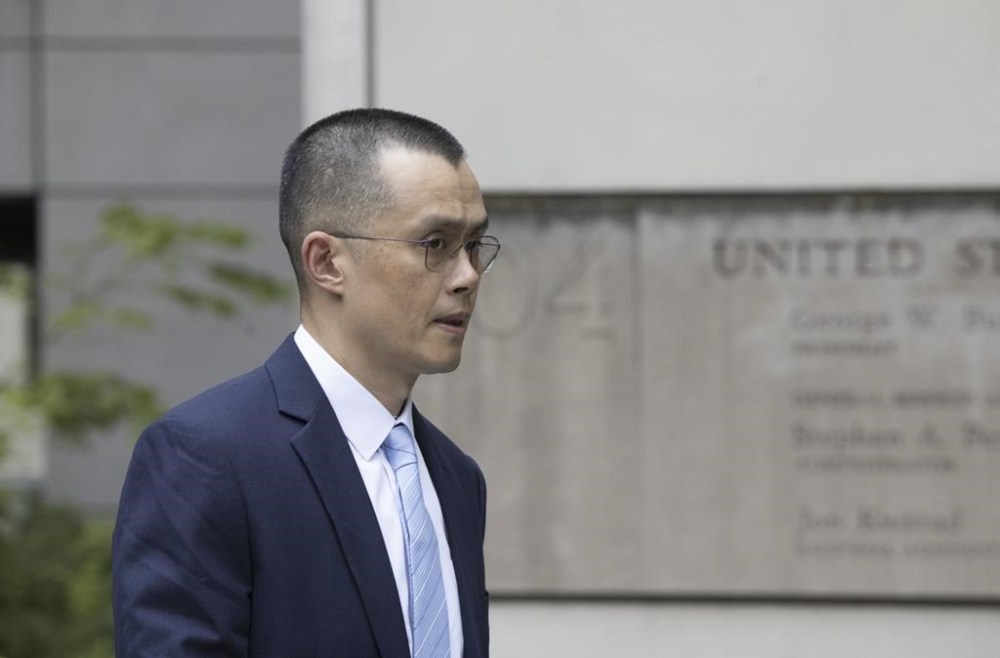
But the judge said he was troubled by Zhao’s decision to ignore U.S. banking requirements that would have slowed the company’s explosive growth. “Better to ask for forgiveness than permission,” is what Zhao told his employees about the company’s approach to U.S. law, prosecutors said.
“No person — regardless of wealth — is immune from prosecution or above the laws of the United States,” Jones said.
The sentence, which included a previously agreed-to $50 million fine, was far less than the three years the Justice Department had sought, but defense attorneys had asked that Zhao spend no time in prison.
Zhao is the first person ever sentenced to prison time for such violations of the Bank Secrecy Act, which requires U.S. financial institutions to know who their customers are, to monitor transactions and to file reports of suspicious activity. Prosecutors said no one had ever violated the regulations to the extent Zhao did. If he did not receive time in custody for the offense, no one would, rendering the law toothless, they argued.
“This wasn’t a mistake,” Justice Department lawyer Kevin Mosley told Jones. “When Mr. Zhao violated the BSA he was well aware of the requirements.”
For example, Mosley said, Zhao directed the company to disguise customers’ locations in the U.S. in an effort to avoid having to comply with U.S. law.
The Justice Department on Monday sent a letter urging Congress to stiffen penalties in such cases. Violations can allow billions of dollars to flow illicitly through the U.S. financial system, but penalties under the government’s sentencing guidelines are “poorly calibrated to address the severity of the crimes,” the letter said.
Binance allowed more than 1.5 million virtual currency trades, totaling nearly $900 million, that violated U.S. sanctions, including ones involving Hamas’ al-Qassam Brigades, al-Qaeda and Iran, prosecutors have said.
Defense attorneys Mark Bartlett and William Burck told the judge there was no evidence Zhao knew of any specific transaction that would have been barred by U.S. regulations or sanctions. Also, they argued, Binance transactions that violated U.S. sanctions constituted a miniscule portion for a company that processed trillions of dollars per year. And they noted that Zhao began making changes to improve Binance’s compliance before stepping down.
In a letter to the court, Zhao wrote that there was “no excuse for my failure to establish the necessary compliance controls at Binance.”
“I wish I could change that part of Binance’s story,” he added. “But under my direction, Binance has now implemented the most stringent anti-money laundering controls of any non-U.S. exchange, and those controls have been in place since 2022.”
Zhao, his legal team and family members left after Tuesday’s hearing without speaking to reporters. Zhao will report to serve his sentence at a date yet to be determined.
The cryptocurrency industry has been marred by scandals and market meltdowns.
Zhao was perhaps best known as the chief rival to Sam Bankman-Fried, the founder of FTX, which was the second-largest crypto exchange before it collapsed in 2022. Bankman-Fried was convicted last November of fraud for stealing at least $10 billion from customers and investors and sentenced to 25 years in prison.
Zhao and Bankman-Fried were originally friendly competitors in the industry, with Binance investing in FTX when Bankman-Fried launched the exchange in 2019. The relationship deteriorated, however, culminating in Zhao announcing that he was selling all of his cryptocurrency investments in FTX in early November 2022. FTX filed for bankruptcy a week later.
More recently, Nigeria has recently sought to try Binance and two of its executives on money laundering and tax evasion charges. The U.S. Justice Department on Tuesday charged early bitcoin investor Roger Ver, known as “bitcoin Jesus” for his avid promotion of the currency, with evading $50 million in taxes.
The judge described Zhao’s life story as remarkable: He grew up in rural China and his family immigrated to Canada following the 1989 Tiananmen Square massacre. He worked at a McDonald’s beginning at age 14 and eventually became enamored of the tech industry while in college.
He founded Binance in 2017, motivated at least in part by a desire to help people in underdeveloped countries access reliable banking. The company made him a crypto celebrity and a billionaire many times over; he announced in 2021 that he intends to give away nearly all of his fortune.
Zhao’s philanthropic interests include funding free online education programs for children across the globe and work by small research labs to cure diseases.
Zhao’s attorneys pointed to his willingness to leave the United Arab Emirates, where he and his family live, to enter his guilty plea in the U.S., even though the two countries don’t have an extradition treaty.
They also argued that he would not be safe in prison. Because he is not a U.S. citizen, he is ineligible for placement in a minimum security facility. Given his status and wealth, as well as Binance’s cooperation with U.S. law enforcement in certain investigations, he might be a target for violence in a medium security prison, they suggested.