More money is going to African climate startups, but a huge funding gap remains
Advertisement
Read this article for free:
or
Already have an account? Log in here »
To continue reading, please subscribe:

Digital Subscription
One year of digital access for only $205*
- Enjoy unlimited reading on winnipegfreepress.com
- Read the E-Edition, our digital replica newspaper
- Access News Break, our award-winning app
- Play interactive puzzles
*First annual payment billed as $205.00 + GST for one year. This annual subscription will automatically renew at $233.00 + GST every 52 weeks (10% off the regular annual price of $259.35). Offer available to new and qualified returning subscribers only. Cancel any time.
To continue reading, please subscribe:
Add Free Press access to your Brandon Sun subscription for only an additional
$1 for the first 4 weeks*
- Enjoy unlimited reading on winnipegfreepress.com
- Read the E-Edition, our digital replica newspaper
- Access News Break, our award-winning app
- Play interactive puzzles
*Your next Brandon Sun subscription payment will increase by $1.00 and you will be charged $17.95 plus GST for four weeks. After four weeks, your payment will increase to $24.95 plus GST every four weeks.
Read unlimited articles for free today:
or
Already have an account? Log in here »
Hey there, time traveller!
This article was published 01/05/2024 (882 days ago), so information in it may no longer be current.
NAIROBI, Kenya (AP) — When Ademola Adesina founded a startup to provide solar and battery-based power subscription packages to individuals and businesses in Nigeria in 2015, it was a lot harder to raise money than it is today.
Climate tech was new in Africa, the continent was a fledgling destination for venture capital money, there were fewer funders to approach and less money was available, he said.
It took him a year of “running around and scouring” his networks to raise his first amount — just under $1 million — from VC firms and other sources. “Everything was a learning experience,” he said.
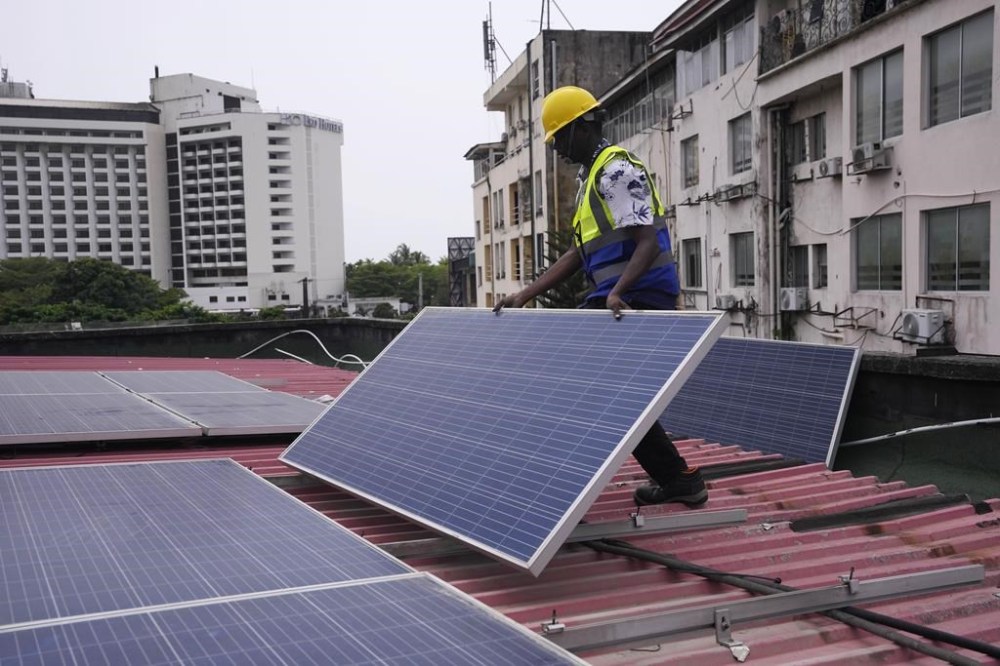
But the ecosystem has since changed, and Adesina’s Rensource Energy has raised about $30 million over the years, mostly from VC firms.
Funding for climate tech startups in Africa from the private sector is growing, with businesses raising more than $3.4 billion since 2019. But there’s still a long way to go, with the continent requiring $277 billion annually to meet its climate goals for 2030.
Experts say to unlock financing and fill this gap, African countries need to address risks like currency instability that they say reduce investor appetite, while investors need to expand their scope of interest to more climate sectors like flood protection, disaster management and heat management, and to use diverse funding methods.
Still, the investment numbers for the climate tech sector — which includes businesses in renewable energy, carbon removal, land restoration and water and waste management — are compelling: Last year, climate tech startups on the continent raised $1.04 billion, a 9% increase from the previous year and triple what they raised in 2019, according to the funding database Africa: The Big Deal. That was despite a decline in the amount of money raised by all startups in total on the continent last year.
That matters because climate tech requires experimentation, and VC firms that provide money to nascent businesses are playing an essential role by giving climate tech startups risk capital, said Adesina. “In the climate space, a lot of things are uncertain,” he said.
The money raised by climate tech startups last year was more than a third of all funds raised by startups in Africa in 2023, placing climate tech second to fintech, a more mature sector.
Venture capital is typically given to businesses with substantial risk but great long-term growth potential. Startups use it to expand into new markets and to get products and services on the market.
Venture capitalists “can take risks that other people cannot take, because our business model is designed to have failures,” said Brian Odhiambo, a Lagos-based partner at Novastar Ventures, an Africa-focused investor. “Not everything has to succeed. But some will, and those that do will succeed in a massive way.”
That was the case for Adetayo Bamiduro, co-founder of MAX, formerly Metro Africa Xpress, which makes electric two- and three-wheelers and electric vehicle infrastructure in Nigeria and has raised just under $100 million since it was founded in 2015.
Adetayo said venture capitalists “are playing a catalytic role that is extremely essential.”
“We all know that in order to really decarbonize our economies, investments have to be made. And it’s not trivial investment,” he said.
The funds can also bridge the gap between traditional and non-traditional sectors, said Kidus Asfaw, co-founder and CEO of Kubik, a startup that turns difficult-to-recycle plastic waste into durable, low-carbon building material. His company, which operates in Kenya and Ethiopia, has raised around $5.2 million since it was launched in 2021.
He cites waste management and construction as examples of traditional sectors that can connect with startups like his.
“There’s so much innovation in these spaces that can transform them over time,” he said. “VCs are accelerating that pathway to transforming them.”
Besides venture capital, other investments by private equity firms, syndicates, venture builders, grant providers and other financial institutions are actively financing climate initiatives on the continent.
But private sector financing in general lags far behind that of public financing, which includes funds from governments, multilaterals and development finance institutions.
From 2019 to 2020, private sector financing represented only 14% of all of Africa’s climate finance, according to a report by the Climate Policy Initiative, much lower than in regions such as East Asia and Pacific at 39%, and Latin America and the Caribbean at 49%.
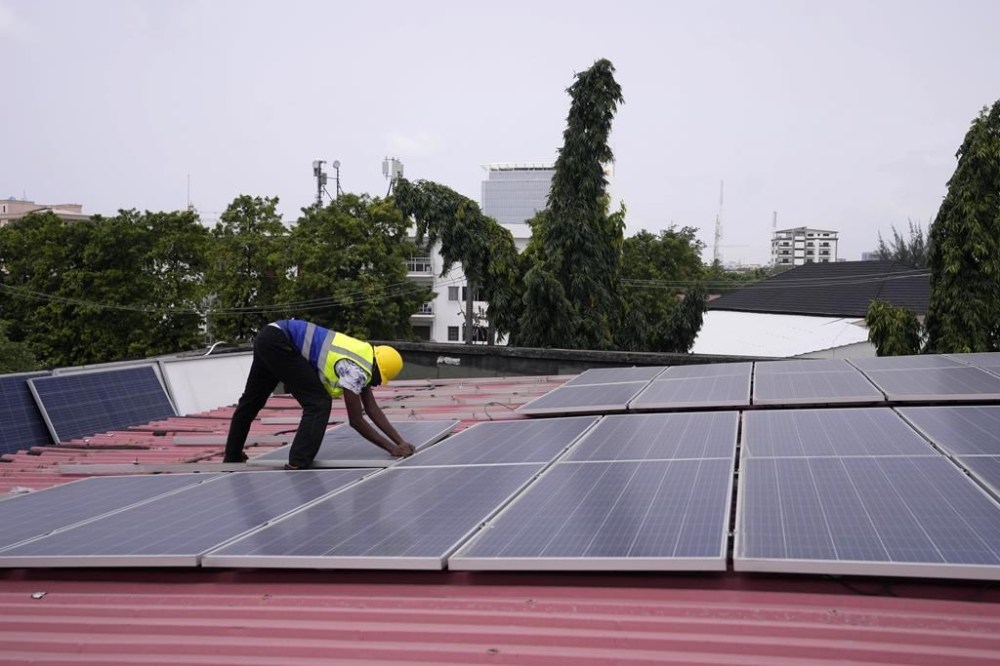
The low contribution in Africa is attributed to the investors putting money in areas they’re more familiar with, like renewable energy technology, with less funding coming in for more diverse initiatives, said Sandy Okoth, a capital market specialist for green finance at FSD Africa, one of the commissioners of the CPI study.
“The private sector feels this (renewable energy technology) is a more mature space,” he said. “They understand the funding models.”
Technology for adapting to climate change, on the other hand, is “more complex”, he said.
One startup working in renewable energy is the Johannesburg-based Wetility, which last year secured funding of $48 million — mostly from private equity — to expand its operations.
The startup provides solar panels for homes and businesses and a digital management system that allows users to remotely manage power usage, as it tries to solve the problems of energy access and reliability in southern Africa.
“Private sector financing in African climate is still rather low,” said founder and CEO Vincent Maposa. “But there’s visible growth. And I believe that over the next decade or so, you’ll start to see those shifts.”
Investors are also starting to understand the economic benefits of adapting to climate change and solutions as they have returns on investment, said Hetal Patel, Nairobi-based director of investments at Mercy Corps Ventures, an early-stage VC fund focused on startups building solutions for climate adaptation and financial resilience.
“We’re starting to build a very strong business case for adaptation investors and make sure that private capital flows start coming in,” he said.
Maëlis Carraro, managing partner at Catalyst Fund, a Nairobi-based VC fund and accelerator that funds climate adaptation solutions, urged more diverse funding, such as that which blends private and public sector funding. The role of public financing, she said, should be to de-risk the private sector and attract more private sector capital into financing climate initiatives.

“We’re not gonna go far enough with just the public funding,” she said. “We need the private sector and the public sector to work together to unlock more financing. And in particular looking beyond just a few industries where the innovation is writ large.”
___
This story corrects the money raised by startup Kubik to $5.2 million, not $4.6 million.
___
The Associated Press’ climate and environmental coverage receives financial support from multiple private foundations. AP is solely responsible for all content. Find AP’s standards for working with philanthropies, a list of supporters and funded coverage areas at AP.org.