Scientists are on a quest for drought-resistant wheat, agriculture’s ‘Holy Grail’
Advertisement
Read this article for free:
or
Already have an account? Log in here »
To continue reading, please subscribe:

Digital Subscription
One year of digital access for only $205*
- Enjoy unlimited reading on winnipegfreepress.com
- Read the E-Edition, our digital replica newspaper
- Access News Break, our award-winning app
- Play interactive puzzles
*First annual payment billed as $205.00 + GST for one year. This annual subscription will automatically renew at $233.00 + GST every 52 weeks (10% off the regular annual price of $259.35). Offer available to new and qualified returning subscribers only. Cancel any time.
To continue reading, please subscribe:
Add Free Press access to your Brandon Sun subscription for only an additional
$1 for the first 4 weeks*
- Enjoy unlimited reading on winnipegfreepress.com
- Read the E-Edition, our digital replica newspaper
- Access News Break, our award-winning app
- Play interactive puzzles
*Your next Brandon Sun subscription payment will increase by $1.00 and you will be charged $17.95 plus GST for four weeks. After four weeks, your payment will increase to $24.95 plus GST every four weeks.
Read unlimited articles for free today:
or
Already have an account? Log in here »
Hey there, time traveller!
This article was published 02/06/2024 (836 days ago), so information in it may no longer be current.
CALGARY – Plant biologist Marcus Samuel has been working for more than a decade to improve the climate resilience of crops.
At his research greenhouse at the University of Calgary, he uses cutting-edge gene editing techniques to produce hardier varieties of plants able to withstand temperature fluctuations, floods and frosts.
But while he has worked on canola, peas and other crops, perhaps the most elusive and exciting part of his work is the quest for drought-resistant wheat.
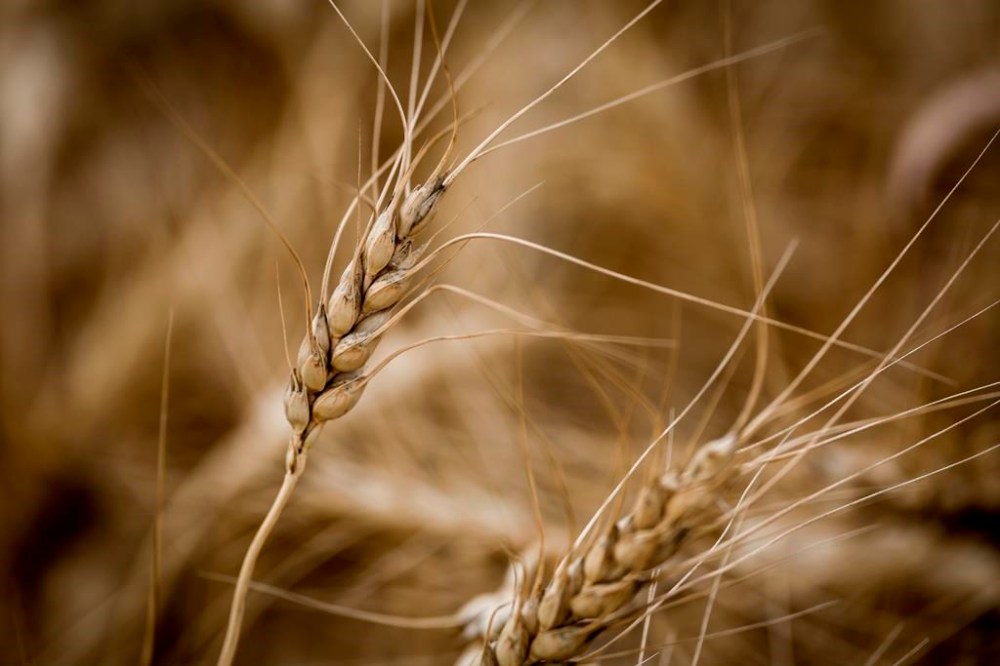
“It is definitely the Holy Grail. I think this has been one of the hardest things to crack,” Samuel said.
Samuel is just one of many scientists in Canada and around the world pursuing the development of a drought-resistant wheat strain.
It would be one of the biggest victories in agricultural research, if achieved.
Wheat is the most widely grown cereal grain, occupying 17 per cent of the total cultivated land in the world, according to the International Development Research Centre, a federal Crown corporation. It is a staple food for 35 per cent of the world’s population, and provides more calories and protein in the world’s diet than any other crop.
Yet wheat is a “thirstier” plant than other staple crops like maize, rice and soy, making it more vulnerable to water shortages. The Washington, D.C.-based World Resources Institute estimates that by 2040, nearly three-quarters of global wheat production will be under threat due to drought and climate change-induced water supply stress.
Santosh Kumar, a wheat breeder working on drought resistance for Agriculture and Agri-Food Canada in Brandon, Man., said he sometimes feels like he is racing against time.
“When our world population is projected to be doubled by 2050, we need to feed people,” Kumar said.
“If we don’t grow enough wheat, there will be food shortages.”
While no wheat is ever going to survive in zero-water conditions, scientists have found that wheat plants with certain traits — such as longer, deeper roots — have a better chance of surviving in low-water conditions.
It’s possible, using traditional plant breeding methods, to isolate plants with these desirable traits and cross them with other selected plants to create new, more drought-resistant varieties.
Gains have been made — the wheat Canadian farmers plant today is tougher and hardier than the wheat of 100 years ago. But the process remains painstakingly slow, requiring years of field trials.
And truly drought-tolerant wheat remains elusive, even as the need for it becomes more urgentdue to climate change. Canada, for example, saw its total wheat production decline almost 40 per cent year-over-year in 2021 due to extreme heat and drought on the prairies.
Drought walloped Canadian wheat production again last year, when farmers saw yields decline 12 per cent from 2022 levels, according to Statistics Canada.
One reason why science has yet to crack the problem is the sheer complexity of the wheat plant itself. The wheat genome is huge, containing five times more DNA than the human genome. Hunting for better wheat traits is infinitely more difficult than working with a crop that has a simpler genetic profile.
“It’s like doing a puzzle of 50 pieces versus 10,000 pieces,” Kumar said.
International scientists finally fully mapped the wheat genome in 2018, a breakthrough that has led to recent advancements using genetic research. The most dramatic of these was a 2020 announcement that Argentinian scientists had developed the first genetically engineered wheat, which incorporates a drought-resistant gene from the sunflower plant.
The Argentinian wheat has not been approved for growing or eating in Canada, and many markets around the world remain hostile to genetically engineered crops. But gene editing is less controversial than full-scale genetic modification, and it’s in this realm where Canadian scientists — such as the U of C’s Samuel — are making strides.
Unlike full-scale genetic modification, gene editing does not involve splicing genetic material from different species together. Instead, it’s a precision method that allows scientists to make small, targeted changes to DNA sequences.
In 2021, the Canadian government relaxed its rules around gene-edited crops, saying seeds that have been produced using the technology are safe and do not require special assessments by Health Canada and the Canadian Food Inspection Agency.

Ellen Sparry, president of the industry group Seeds Canada, said that decision was a milestone that should speed up the quest for drought-resistant wheat.
But she said a promising strain discovered in a research lab tomorrow would still require several years of testing and regulatory work before it could end up in farmers’ hands.
She added that’s why it’s vital that scientists receive the public and private funding they need to work as quickly as possible, so that agriculture’s Holy Grail can be discovered before the climate crisis takes a heavier toll.
“It’s not a question of ‘Can we do it?’ It’s a question of how fast we can do it in order to face the challenges we’re facing,” Sparry said.
This report by The Canadian Press was first published June 2, 2024.